Tag: AI Glasses

AI glasses are smart wearable glasses devices equipped with artificial intelligence algorithms and possessing perception and computing capabilities. Through cameras, microphones, sensors, and lightweight chips, they achieve real-time visual understanding, voice interaction, information display, environmental assistance, and intelligent linkage. They are a new generation of natural human-computer interaction terminals that integrate the real world and digital information.

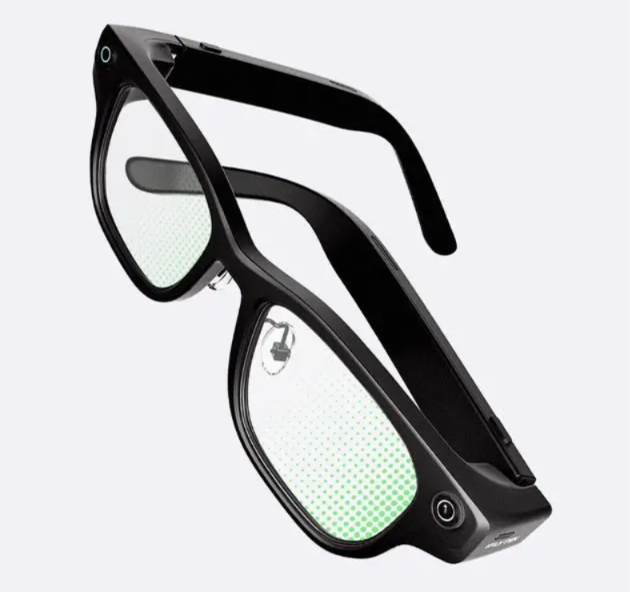
  • LOHO NIMO Holographic AI Glasses Launch: 29g with Prescription Lenses

    LOHO NIMO Holographic AI Glasses Launch: 29g with Prescription Lenses

    One-sentence verdict: If the ultimate form of AI glasses is “looking like regular glasses,” the LOHO×NIMO partnership may be the closest answer in 2026—and at 2,499 RMB including lenses, it qualifies for mainstream consumer consideration.
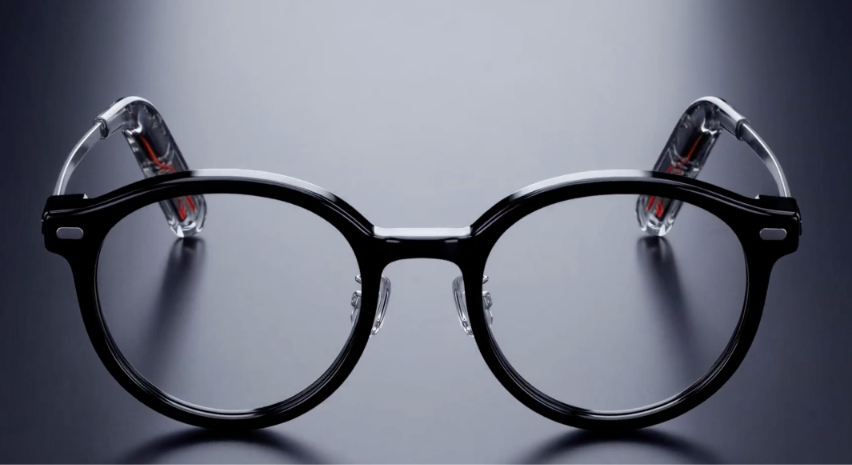
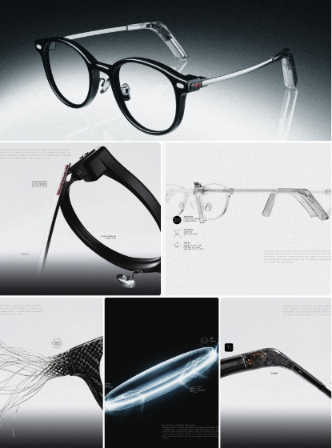
    LOHO NIMO holographic AI glasses product shot
    LOHO NIMO AI glasses lightweight frame design

    Breaking News

    On June 16, 2026, at 7:00 PM, LOHO Eyewear Group and NIMO (Bit Phantom) jointly launched holographic AI glasses. Weighing only 29 grams, the device features binocular volume holographic waveguide technology with 98% light transmittance and 1500 nits eye brightness.

    Core functions include navigation, real-time translation, and smart teleprompting. A camera-free design protects privacy, with 16-hour standby battery. Key breakthrough: supports offline optometry and prescription lens fitting, priced at 2,499 RMB including lenses, shipping 15 days after order. Simultaneously announced: 720 Glasses Festival celebrity endorsement and 100+ new product launches.


    Full Story

    LOHO’s approach to AI glasses diverges completely from tech manufacturers. This traditional eyewear retailer with a nationwide offline store network treats AI glasses not as “digital accessories” but as “next-generation eyewear.”

    The 29-gram weight is a critical number. For reference, regular optical glasses typically weigh 20-40 grams, while mainstream AI glasses (Ray-Ban Meta at ~49g, Huawei Smart Glasses at ~40g, iFLYTEK AI Glasses at ~40g) generally run heavier. LOHO×NIMO achieving 29 grams means it is the first to realize “lighter than most regular glasses”—not a spec victory, but a fundamental shift in wearing experience. Users no longer need to choose between “seeing clearly” and “wearing comfortably.”

    The optical solution employs binocular volume holographic waveguides. This technology’s core advantages are high light transmittance (98%) and slim volume. When users look through the lenses at the outside world, they barely perceive brightness loss; digital information overlays holographically in the field of view, unlike Birdbath solutions that partially obstruct sight. The 1500 nits eye brightness ensures outdoor readability under strong sunlight.

    Functionally, navigation, real-time translation, and smart teleprompting cover high-frequency commuting and office scenarios. Navigation information overlays directly in forward vision, eliminating the need to look down at phones; translated text displays on lenses in real time, suitable for cross-border meetings and travel; teleprompting targets presentations, live streaming, and recording scenarios. This feature selection is restrained, avoiding marginal-utility features like “AI Q&A” or “photo recognition” that dilute core value.
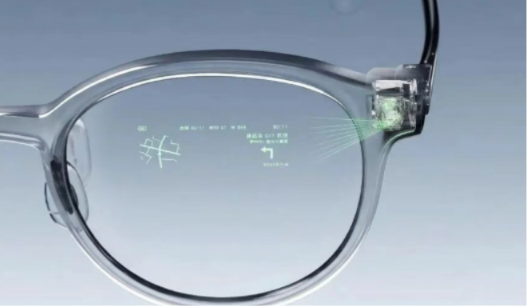
    LOHO NIMO glasses holographic navigation display
    LOHO NIMO holographic waveguide navigation overlay

    Analysis

    Prescription Lenses: The Leap from “Accessory” to “Essential”

    The AI glasses industry has long faced an awkward reality: most products do not support optometry and lens fitting, or require users to seek third-party optical shops. This means myopic users either wear contact lenses beneath AI glasses, or endure blurry vision. Both scenarios severely limit use cases.

    LOHO×NIMO’s solution is direct: leverage LOHO’s nationwide offline store network to provide one-stop optometry, lens fitting, and adjustment services. At 2,499 RMB including lenses, the product effectively bundles “AI functions” with “vision correction.” For myopic users, this is not “buying an extra tech toy” but “upgrading existing glasses”—a psychological account shift that significantly impacts purchase decisions.

    Channel Advantage: Scenario Conversion at Physical Stores

    LOHO operates hundreds of offline stores nationwide, an asset pure internet brands cannot replicate. Users walk in, try on, get eye exams, experience functions, then place orders—a path with conversion rates exponentially higher than “browse specs online → hesitate → abandon.”

    The 720 Glasses Festival IP linkage is equally clever. Embedding AI glasses into an existing annual promotional rhythm, leveraging celebrity endorsements and 100+ new product launches, creates a “browse the glasses festival and discover AI glasses” traffic entry. This is not market education, but market.

    Differentiated Positioning Against Competitors

    FeatureLOHO×NIMOHuawei AI GlassesiFLYTEK AI GlassesRay-Ban Meta
    Weight29g~40g~40g~49g
    OpticsHolographic waveguideWaveguideWaveguideNo AR display
    Transmittance98%~85%~85%N/A
    PrescriptionNative optometry supportPartial supportPartial supportNot supported
    CameraNoneYesYesYes
    Price2,499 RMB with lenses2,499 RMB4,299 RMB$299
    ChannelOffline stores + onlinePrimarily onlinePrimarily onlinePrimarily online

    LOHO×NIMO’s competitive advantage lies not in individual technical specs but in combined positioning: lightest, most glasses-like, only native prescription support, only camera-free. These “mosts” and “onlys” point toward a single user value: burden-free daily wear.


    Industry Impact

    The LOHO×NIMO launch may accelerate AI glasses’ transition from “tech enthusiast toys” to “mainstream consumer products.”

    Market impact: The 2,499 RMB pricing including lenses shifts AI glasses’ decision threshold from “additional purchase” to “normal glasses replacement budget.” China has over 600 million myopic people; if 1% consider AI functions during lens replacement, that represents a 6-million-unit potential market.

    Consumer impact: Myopic users no longer need to sacrifice visual comfort for AI glasses, while non-myopic users gain a lighter, more privacy-friendly option. The camera-free design may trigger industry follow-up, forming a dual-line格局 of “camera-equipped” and “camera-free” versions.

    Industry impact: Traditional eyewear retailers’ entry changes AI glasses’ competitive dimensions. Competition on pure technical specs is shifting toward “technology + channels + service”综合 competition. LOHO’s offline network proves that selling AI glasses, like selling regular glasses, may require optometrists and try-on experiences.
    LOHO NIMO glasses worn daily outdoors
    LOHO NIMO AI glasses user daily wear side view

    What’s Next

    • End of June 2026: First-batch user feedback, focusing on wearing comfort, actual battery performance, and prescription lens fitting quality
    • July 2026: 720 Glasses Festival sales data, validating offline channel conversion efficiency
    • Q3 2026: Whether competitors follow the lightweight + prescription lens direction
    • Q4 2026: Whether camera-free design becomes a new privacy selling point

  • iFLYTEK AI Glasses Launch: 122-Language Translation for $470

    iFLYTEK AI Glasses Launch: 122-Language Translation for $470

    One-sentence verdict: If offline translation and visual translation deliver as promised, these glasses could land on every business traveler’s 2026 packing list—especially at the subsidized $470 price point.

    iFLYTEK AI Glasses worn by businessman
    iFLYTEK AI Glasses on professional user face

    Quick Summary

    On June 15, 2026, iFLYTEK launched its AI Glasses for pre-order on JD.com. Weighing just 40 grams, the glasses feature an end-to-end voice interpretation large model supporting real-time translation across 122 languages (including dialects and accents), covering six translation scenarios with 18 languages available offline. Priced at 4,299 RMB ($595), select regions with national subsidies drop the price to 3,369 RMB ($470). The built-in GlassClaw AI assistant supports one-sentence complex task delegation and automatic meeting summary generation.


    What Happened

    iFLYTEK’s timing for the AI glasses launch is strategically interesting. Huawei’s AI Glasses had previously captured consumer attention at 2,499 RMB ($345), while iFLYTEK’s product clearly targets professional scenarios—translation capability is its core differentiator.

    At 40 grams, the weight sits in the lightweight tier for AI glasses. For reference, Ray-Ban Meta Gen 2 weighs approximately 49 grams, while Huawei Smart Glasses 2nd gen comes in at around 40 grams. iFLYTEK matches competitors on weight while packing 122-language translation and 18-language offline models.

    The breadth of translation scenarios deserves attention. Six scenarios are covered: call translation (real-time interpretation during phone/video calls), online simultaneous interpretation (remote meeting sync translation), live speech interpretation (real-time output during presentations), face-to-face translation (bidirectional dialogue relay), visual translation (look-and-translate, camera recognizes text/menus/street signs with overlaid translations), and audio/video translation (real-time subtitles for foreign language content). This granularity indicates deep understanding of business travel pain points.

    Offline translation supporting 18 languages addresses a critical privacy concern for overseas use. Many business professionals are reluctant to upload sensitive conversations to the cloud; local models eliminate this worry. Offline capability also means functionality remains available in flights, basements, and other network-dead zones.

    The GlassClaw AI assistant is positioned for “one-sentence complex task delegation.” For example, a user might say “compile last week’s meeting highlights and email the team,” and the AI automatically completes information retrieval, summary generation, and email composition. The meeting minutes function targets a common cross-border need—automatically distinguishing speakers and generating multilingual summaries.

    iFLYTEK AI Glasses camera and sensor detail
    iFLYTEK AI Glasses side camera module close-up

    Why It Matters

    The AI glasses market entered a “functional differentiation” phase in 2026. Huawei drives volume through ecosystem integration and aggressive pricing, Meta leverages social content and brand partnerships, while iFLYTEK chose a more vertical path: slicing the business demographic through translation capabilities.

    This choice is strategically sound because translation is a hard need, not a nice-to-have. A cross-border worker won’t buy glasses for their camera, but might seriously consider them if it means eliminating the need for a personal translator. The 122-language coverage (including dialects and accents) theoretically means one pair of glasses suffices from Tokyo streets to Nigerian factories.

    The subsidized pricing at 3,369 RMB ($470) is equally noteworthy. This sits close to Huawei’s 2,499 RMB ($345) while offering professional translation capabilities the latter lacks. For budget-conscious business users, “spend $125 more for 122 languages” is an easy calculation.


    Impact Analysis

    Market impact: The iFLYTEK AI Glasses launch could accelerate AI glasses’ transition from “tech toys” to “productivity tools.” If translation accuracy reaches usable levels, it will cannibalize traditional translation device markets (including iFLYTEK’s own translation hardware lineup) while squeezing demand for entry-level human interpretation services.

    Consumer impact: Business professionals and students may see significantly reduced overseas communication costs. Cross-border meetings previously required advance translation arrangements or rented simultaneous interpretation equipment; now one pair of glasses handles it. Visual translation also adds value for travel scenarios—reading menus, street signs, and product descriptions without pulling out phones and opening translation apps.

    Industry impact: Offline translation capability may become standard for AI glasses. iFLYTEK’s feat of packing 18-language offline models into 40-gram frames demonstrates the feasibility of on-device AI on wearables. This pressures competitors to evolve toward an “offline-first” direction.

    iFLYTEK AI Glasses diverse users group
    iFLYTEK AI Glasses worn by diverse users

    What’s Next

    The iFLYTEK AI Glasses’ success hinges on three critical variables:

    First, translation accuracy. One hundred twenty-two languages sounds impressive, but real-world performance for low-resource languages needs validation. Dialect and accent recognition are particularly prone to failure.

    Second, battery endurance. Real-time translation and visual recognition are both power-hungry operations. The battery capacity fitting into a 40-gram frame determines effective single-use duration.

    Third, wearing comfort. Forty grams is a paper spec; nose pad design, temple pressure distribution, and long-term wearing fatigue only reveal themselves through large-scale user feedback.

    Pre-order data will serve as an important bellwether. If business demographics show higher-than-expected adoption, iFLYTEK may rapidly iterate an international version, further disrupting the global AI glasses market.

  • Moonix AI Glasses Review: 14.9g Redefines Wearable AI

    Moonix AI Glasses Review: 14.9g Redefines Wearable AI

    Rating: 8.5/10

    The 2026 AI glasses market is an arms race. Meta Ray-Ban hit $299, Rokid squeezed waveguides into 28g, and 31 new products debuted at CES. While everyone was adding features, Moonix did something counterintuitive — it cut weight to 14.9g.

    This isn’t a concept. It’s mass production data. At 14.9g, Moonix approaches the weight of regular titanium glasses (12-15g). The physical boundary between “wearing glasses” and “wearing a device” disappears.

    Product Overview

    Moonix, from Xinmu Technology (Hangzhou), launches in June 2026 (standard), August 2026 (Pro):

    ParameterStandardPro
    Weight14.9g19.9g
    Optics0.03cc engine + holographic waveguideSame
    Lens Thickness1.8mm1.8mm
    FOV15-18 degrees15-18 degrees
    AI ChipM1 on-device (3B params)M1 on-device (3B params)
    CameraNoneYes
    MicrophonesSix-arraySix-array
    ReleaseJune 2026August 2026

    Source: Moonix Official Launch

    Technical Analysis

    0.03cc Optical Engine: Rice-Grain Engineering

    Moonix’s core optical solution is a self-developed 0.03cc micro-engine weighing under 0.1g. Mainstream AR engines range 0.5-2cc — Moonix compressed two orders of magnitude.

    Volumetric holographic waveguide technology is the key choice. Compared to waveguides and Birdbath solutions, it finds a better balance in thickness, weight, and light transmission. The 1.8mm lens thickness is far below the 3-5mm of traditional AR glasses.

    The cost is FOV compressed to 15-18 degrees, display area roughly equivalent to an A4 sheet at 3 meters. Moonix abandoned “immersive AR” — no virtual big screen, no spatial anchoring, no gesture interaction. It does one thing: quietly placing key information in the corner of vision when needed.

    M1 On-Device AI Chip: Privacy First

    Moonix features the self-developed M1 inference chip supporting local 3B-parameter LLM operation. Core AI functions need no network connection; privacy data never leaves the device.

    Unlike competitors’ passive-response AI, Moonix is proactive — using six-array microphones and environmental sensors to continuously understand context in the background, anticipating and pushing information. Example: during meetings, it automatically identifies content, generates real-time summaries in the lens corner, and syncs to Slack/Teams afterward.

    Unverified hypothesis: How accurate is proactive AI’s “anticipation”? If it pushes wrong information at wrong times, it’s more annoying than no push at all. This is the experience minefield requiring verification post-launch.

    The Camera Controversy

    Moonix standard edition has no camera; Pro (19.9g) adds it back. The official explanation: “We don’t want users wearing devices that might record others in elevators” — ethics over function.

    But no camera means abandoning the entire visual AI track: no object recognition, no QR scanning, no photos, no livestreaming. This “standard without camera, Pro with camera” segmentation raises questions: genuine ethical consideration, or pricing strategy?

    Performance Analysis

    Wearability: Imperceptible

    14.9g achieves truly imperceptible wear. Comparison: Meta Ray-Ban ~49g, Rokid Glasses ~28g. Moonix feels closer to regular glasses than electronic devices.

    Display: Sufficient

    15-18 degree FOV readability in bright light needs verification. Holographic waveguide solutions have inherent challenges in text clarity and brightness. Adequate for notifications, navigation, translation — but limited for long text reading or video watching.

    AI Interaction: Innovative but Unverified

    Proactive AI’s concept is advanced, but effectiveness depends on scene recognition accuracy. In complex scenarios — noisy restaurants, multi-person meetings, fast walking — the M1 chip’s recognition capability requires real-world testing.

    Competitor Comparison

    FeatureMoonix StandardMeta Ray-BanRokid GlassesJOVE S1
    Weight14.9g~49g~28g~35g
    PriceTBD$299¥2499¥1999
    DisplayHolographic waveguideNoneOptical waveguideOptical waveguide
    AI TypeProactive on-devicePassive cloudPassive cloudPassive cloud
    CameraNoneYesYesYes
    BatteryTBD~4hrs~3hrs~3.5hrs

    Moonix’s differentiation is “weight as selling point” — the only brand making lightweight its core competency.

    Pros and Cons

    ProsCons
    14.9g world’s lightest, imperceptible wear15-18 degree FOV, limited display
    Proactive AI, anticipates needsAnticipation accuracy unverified
    On-device AI, privacy data stays localNo camera, abandons visual AI
    Holographic waveguide, 1.8mm lensesBright light readability uncertain
    Six-array microphones, precise pickupBattery life undisclosed

    Who Should Buy

    Recommended for:

    • Daily users pursuing ultimate wear comfort
    • Privacy-conscious users avoiding cloud data
    • Business professionals needing discreet AI assistance
    • First-time adopters transitioning from regular glasses

    Should Skip:

    • Users needing photo/object recognition/visual search (choose Pro or other brands)
    • Players seeking immersive AR experiences (choose JOVE or Rokid)
    • Budget-sensitive users (await price announcement)

    Conclusion

    The Moonix AI Glasses are a product of “smart subtraction.” It precisely trims configurations minimally impacting entry users (camera, large FOV, immersive AR) while preserving core elements determining experience floor (weight, proactive AI, privacy protection).

    14.9g is not just engineering marvel — it’s a product philosophy declaration: AI glasses must first be “glasses,” then “AI.” When technology becomes light enough to forget, it truly integrates into life.

    Can Moonix become the “AirPods” of AI glasses — redefining the category through experience rather than specs? The answer will come after June launch.

  • Alibaba’s S1 AI Glasses: Multimodal Interaction Reshapes the Wearable Experience

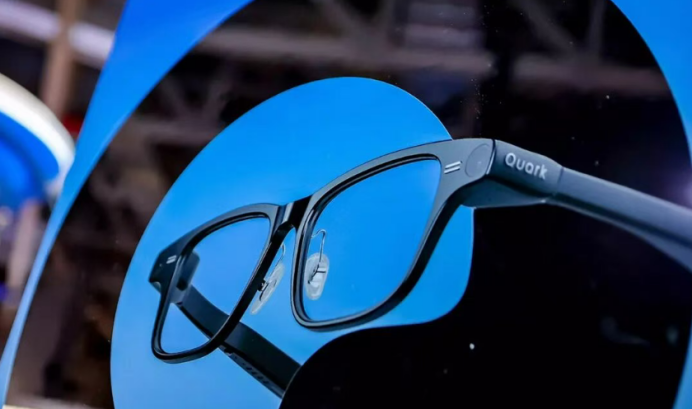
    Alibaba's Qianwen S1 AI Glasses will be available for immediate purchase on April 15th.
    Alibaba’s Qianwen S1 AI Glasses will be available for immediate purchase on April 15th.

    Alibaba’s Qianwen S1 AI Glasses will be available for immediate purchase on April 15th.

    On April 10, 2026, Alibaba’s Qianwen officially released its second AI glasses, the S1.

    As an iterative product of the deep integration of large-scale models and wearable hardware, the S1 not only debuts with the Qualcomm Snapdragon AR1 platform, but also achieves breakthroughs in binocular spatial display, hot-swappable battery replacement, and multimodal interaction logic. Priced at approximately $485 USD , it will be available for immediate purchase on April 15th. Does this pair of glasses have the capability for frequent daily use? We’ll break it down step by step through practical testing.

    Hardware Foundation: The Synergistic Evolution of Snapdragon AR1 and Optical Solutions

    The S1’s computing power comes from the Qualcomm Snapdragon AR1 chip. This SoC, specifically designed for low-power XR scenarios, adopts a heterogeneous computing architecture and can smoothly handle large-scale on-device inference in independent operation. Combined with a dual-lens Micro-OLED display module, the S1 achieves true stereoscopic depth rendering. In actual testing, the occlusion relationship between the virtual UI and the real environment is handled naturally, the motion-to-display latency is consistently within 20ms, and the dizziness is significantly lower than the previous generation. Even more noteworthy is the “front-facing light-leakage technology”: by superimposing a microprism guiding light and a polarizing filter layer, it completely solves the pain point of side light leakage and privacy exposure in traditional AR devices, ensuring clear contrast even in strong outdoor light, balancing practicality and social decorum.

    Interaction and Imaging: Multimodal Fusion and Full-Scene Voice Loop

    The essence of AI glasses lies in seamless interaction. The S1 abandons single touch control, shifting to a multimodal architecture of “voice wake-up + visual understanding + micro-gestures.” A 5-microphone circular array, combined with AI noise reduction algorithms, can accurately separate human voices even during subway commutes or in open-plan office spaces; dual voice coil speakers provide a wide sound field, ensuring excellent clarity for calls and media playback. In terms of imaging, the 12-megapixel main camera supports 3K 30fps video recording. Combined with real-time visual analysis from Alibaba’s Qianwen big data model, it can achieve functions such as “gaze translation,” “object recognition,” and “scene note-taking.” For example, when the gaze rests on a foreign language road sign, semantic prompts immediately appear at the edge of the field of vision, compressing the interaction to the level of a single blink, truly achieving “what you see is what you get.”

    Wearability and Battery Life: Lightweight Design Optimized for Asian Face Shapes

    Wearability of wearable devices is determined by comfort. The S1 features aerospace-grade titanium alloy temples and memory silicone nose pads, weighing only 78 grams. Based on 3D data modeling of millions of Asian facial features, the frame curvature and center of gravity distribution have been recalibrated to ensure comfortable wear for extended periods without pressure on the bridge of the nose or slipping. A highlight of the design is the hot-swappable dual battery compartment: each battery provides approximately 4 hours of continuous use, supporting seamless switching via blind insertion. Combined use can cover all-day commutes, meeting recording, and light navigation, completely eliminating battery anxiety. Magnetic contacts and waterproof sealing rings ensure both durability and outdoor adaptability.

    Price and Positioning: Can $485 Break Through in the Red Ocean Market?

    With a price tag of approximately $485, the S1 positions itself in the “high-end practical” market. Compared to overseas competitors in the same price range, the S1 boasts a significant advantage in large-scale model response speed, optical privacy protection, and Asian face adaptation. The fact that it was available for immediate purchase on April 15th demonstrates Alibaba’s confidence in its supply chain ramp-up and yield control. If your needs are for efficiency improvements, cross-language assistance, and a native AI experience, rather than hardcore 3D gaming, the S1’s hardware is more than adequate for the early adopter phase and possesses the attributes of a primary tool.

    In conclusion, the inflection point for the practical application of AI wearables has arrived.

    Alibaba Qianwen S1 AI Glasses
    Alibaba Qianwen S1 AI Glasses

    The Alibaba Qianwen S1 is not a concept phone piled up with specifications, but rather a productivity extension focused on real-world scenarios. Its core competitiveness lies in the energy efficiency of the Snapdragon AR1 processor, the smoothness of multimodal interaction, and engineering solutions to pain points such as light leakage, battery life, and wearing comfort. Current shortcomings include the fact that the third-party ecosystem is still in its incubation period, and high-end AR content needs to be developed. Suitable for: cross-language workers, efficiency-oriented office workers, and tech-savvy users. Priced at $485, you’re not just buying optical and computing hardware, but also the first ticket to bringing large-scale AR models to everyday use.

    (Note: 485 USD is the discounted price for mainland China. Please refer to the official website for the actual global price.)