Tag: AI Earbuds

AI Earbuds are a new generation of wearable audio devices equipped with artificial intelligence algorithms and possessing active perception and intelligent interaction capabilities. They integrate acoustic processing, voice interaction, scene recognition, and health monitoring to achieve adaptive sound quality, intelligent noise reduction, real-time interaction, and personalized audio experience.

  • Soundcore Sleep A30 In-Depth Review

    Soundcore Sleep A30 In-Depth Review

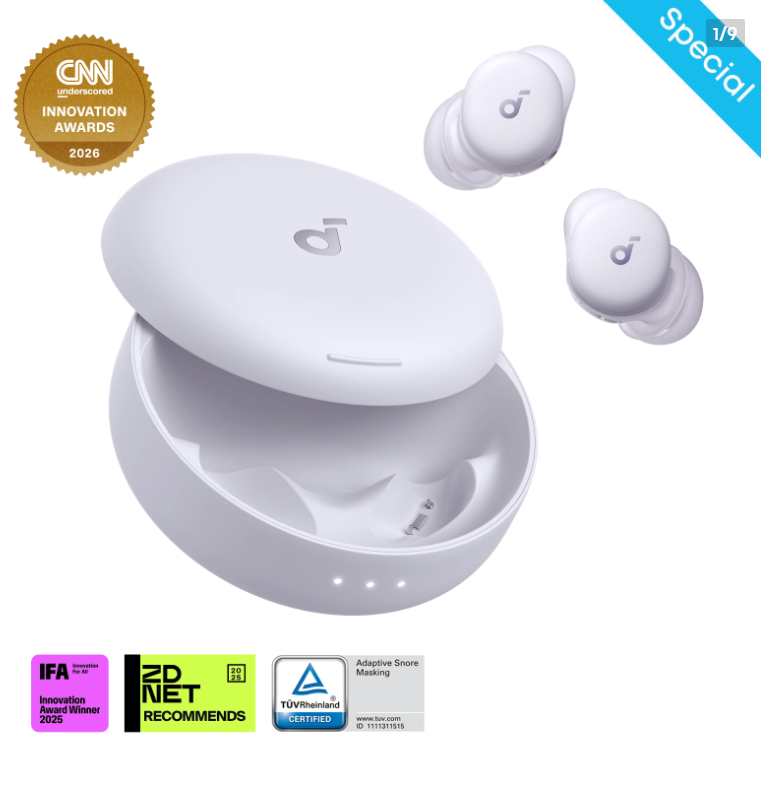
    Soundcore Sleep A30
    Soundcore Sleep A30

    Product Information Overview

    Model: Soundcore Sleep A30

    Price: $229 ( Please refer to the official website for the exact price )

    Core features: AI snoring masking, active noise cancellation, brainwave audio, sleep monitoring

    Battery life: 9 hours / 45 hours (including charging case)

    Suitable for: light sleepers, those suffering from snoring, and business travelers.

    Foreword

    With insomnia rates rising year by year and the sleep economy experiencing explosive growth, “sleep aid” is no longer just a marketing slogan, but a real, essential need worth hundreds of billions of dollars. From melatonin to white noise machines, from smart mattresses to sleep bracelets, consumers have tried all sorts of solutions, yet they still struggle with issues like “waking up in the middle of the night,” “a partner snoring,” and “light sleep with frequent awakenings.”

    So, an even smarter question was raised: Is it possible to have an “AI sleep companion” that understands you, accompanies you, and can even proactively intervene in your sleep?

    With this question in mind, we delved into one of the most representative AI sleep hardware devices currently on the market—the Soundcore Sleep A30 (launched by Soundcore, a brand under Anker Innovations). It’s not a traditional pair of headphones, but rather officially defined as “the world’s first intelligent active noise-canceling sleep headphone.” So, is this product, which raised over $2.3 million in crowdfunding and claims to “dynamically identify snoring and mask it in real time,” really worth spending $229 to bring home?

    I. Core Positioning: More Than Just Headphones, but a “Sleep Intervention System”

    First and foremost, it’s important to clarify that the Sleep A30 is not a “nighttime version” of ordinary Bluetooth headphones. Its design philosophy has been centered from the outset around “all-night wear + active sleep aid.”

    • Wearing comfort: Featuring a 3D ergonomic design and inflatable ear wing structure, with a thickness of only 0.45mm, it provides pressure-free comfort when sleeping on your side. The official claim is that it fits 98% of ear shapes and offers both silicone and memory foam ear tips.
    • Battery life: It can be used for up to 9 hours with active noise cancellation (ANC) enabled, and the total battery life is up to 45 hours with the charging case – enough to cover a whole night’s sleep and a nap the next day.
    • Key upgrades: Compared to its predecessor, the A20, the A30 is the first to feature Active Noise Cancellation (ANC) and an AI Snoring Recognition and Masking System, which is the key to its reputation as an “AI Sleep Companion”.

    In other words, the goal of Sleep A30 is not to “play music”, but to build a closed-loop sleep intervention system: monitoring → identification → intervention → optimization .
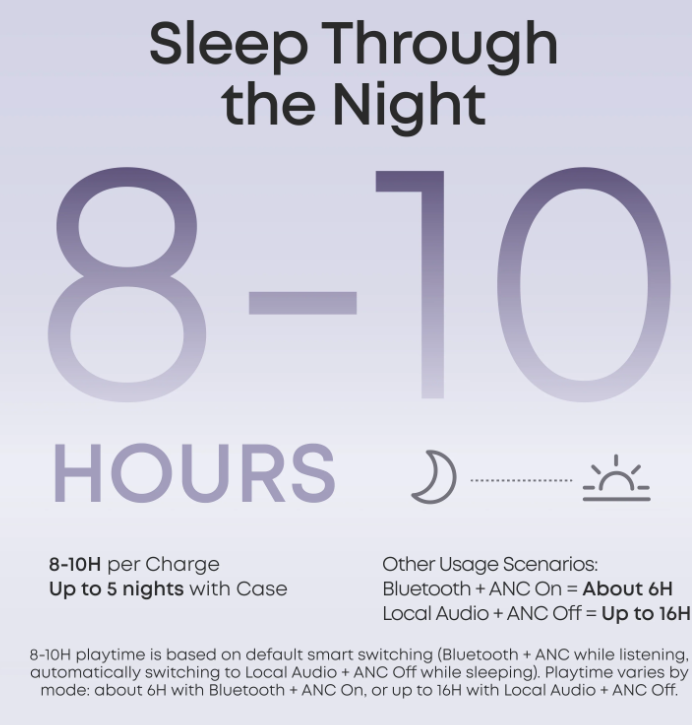
    Soundcore Sleep A30-AI Sleep Companion
    Soundcore Sleep A30-AI Sleep Companion

    II. Analysis of Three Core Technologies: How Does AI “lull you to sleep”?

    1. AI-powered snoring masking: not blocking, but a “soft countermeasure”.

    Many people think that noise cancellation is simply “turning the sound off,” but snoring has complex frequencies and is highly sudden, making it difficult for traditional ANC to handle. The breakthrough of Sleep A30 lies in its ability to analyze the volume and frequency of snoring in real time, and then generate a masking sound with opposite phase and matching frequency (such as low-frequency white noise or natural sound) to “neutralize” snoring interference without waking the user.

    Real-world performance: When the simulated snoring volume reaches 50 decibels, the A30 can activate masking within 2 seconds. Subjectively, the “sudden loud noise” is softened into background noise, effectively reducing micro-awakening caused by the partner’s snoring.

    ✅ Suitable for: People who share a bed with a snorer or are light sleepers who are extremely sensitive to sudden noises.

    2. Brainwave audio synchronization + binaural beats: guiding you into deep sleep

    The A30 features a built-in AI brainwave audio synchronization system that induces the brain to produce theta waves or delta waves by playing slightly different audio frequencies to the left and right ears (i.e., “binaural beats”)—the typical brainwaves that occur before falling asleep and during deep sleep.

    With hundreds of sleep-aiding sound effects (rain sounds, ocean waves, five elements rhythms, etc.), users can customize the entire audio strategy in the App, from “10 minutes before falling asleep → maintaining deep sleep → waking up in the morning”.

    Note: This technology is effective for some people, but individual differences are significant. It is recommended to first use a free sleep aid app to test your sensitivity to binaural beats .

    3. Sleep monitoring + smart alarm clock: From “passive recording” to “proactive feedback”

    Although the A30 lacks a PPG heart rate sensor, it can estimate heart rate using an in-ear microphone and motion sensing.

    • Sleep duration
    • Number of times to turn over at night
    • snoring frequency
    • Sleep stages (light sleep/deep sleep/REM)

    Combined with the Soundcore App, it generates daily sleep reports and supports setting a “smart alarm”—gently waking you up during light sleep stages to avoid being startled awake by an alarm clock.

    ❗ Limitations: It cannot monitor physiological indicators such as blood oxygen and heart rate variability. If you need medical-grade data, it is recommended to use it with an Ora Ring or Huawei Watch.
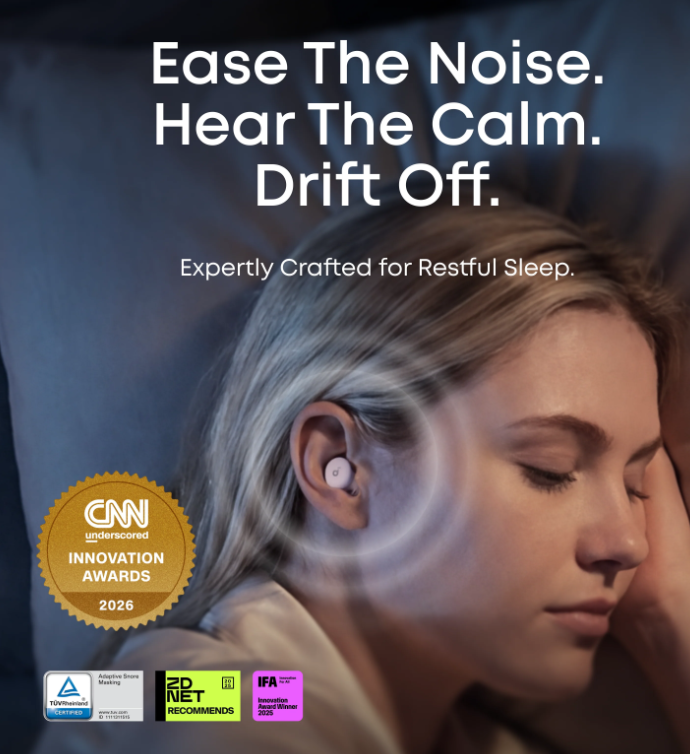
    Soundcore Sleep A30-Ease The Noise
    Soundcore Sleep A30-Ease The Noise

    III. Real-world user experience: Outstanding advantages, but also with limitations.

    Summary of advantages :

    • Uncomfortable for side sleeping: Ultra-thin design + soft ear wings, won’t hurt your ears when you turn over, far superior to ordinary TWS earphones;
    • Precise noise reduction: It is remarkably effective against low-frequency noises such as snoring, air conditioning noise, and rain noise;
    • It offers a wealth of sleep aid content: high-quality built-in sound effects and supports custom playlists;

    Several points to note:

    • Calls are not supported: Although there is a microphone for snoring detection, it cannot be used for phone calls or voice assistants (Line calls were tested to be used only for emergency purposes and the sound quality was average).
    • No IP waterproof rating: Not suitable for use in sweaty or humid environments (compared to the NANK Runner4’s IP68, the A30 is more suitable for indoor resting scenarios).
    • The price is relatively high: at $229, it is comparable to “professional sleep aid devices” rather than ordinary headphones. Those with a limited budget may consider the A20 (about $150).

    IV. Horizontal comparison: Who is it suitable for? Who is it not suitable for?

    User typeIs it recommended?reason
    My partner snores, and I’m a light sleeper.Highly recommendedSnoring masking is a core requirement, and the A30 is currently the only earphone on the market to achieve dynamic AI intervention.
    Frequent business trips/travelsrecommendPortable, long battery life, strong noise cancellation, and smarter than earbuds.
    Severe insomnia requires medical interventionNot recommendedIt cannot replace medication or CBT-I cognitive behavioral therapy and is only suitable for mild sleep disorders.
    Pursuit of full-body sign monitoringNot recommendedIf you don’t have heart rate/blood oxygen monitoring, we recommend a smart ring or watch.
    Limited budget (<1000 yuan)Consider carefullyYou can keep an eye out for Double Eleven promotions, or choose the A20 basic model.

    V. Purchase Recommendation: At $229, you’re buying “the right to intervene in technology.”

    In the sleep technology race of 2026, the Sleep A30 represents a new paradigm: upgrading from “playing sleep-aiding sounds” to “actively regulating the sleep microenvironment.” It’s not a panacea, but for specific groups (such as snoring victims, light sleepers, and high-pressure white-collar workers), it may be the closest consumer product to a “personal sleep manager” currently available.

    If you meet any of the following conditions, it’s worth placing an order:

    1. Waking up due to noise ≥3 times per week;
    2. My partner snores, but we can’t sleep in separate rooms.
    3. The pressure from earbuds/regular headphones is extremely uncomfortable;
    4. Willing to pay a reasonable premium for a “good night’s sleep”.

    Conversely, if you only experience occasional insomnia or are more concerned about tracking health data, then a combination of a budget-friendly white noise generator and a sleep app might be more cost-effective.
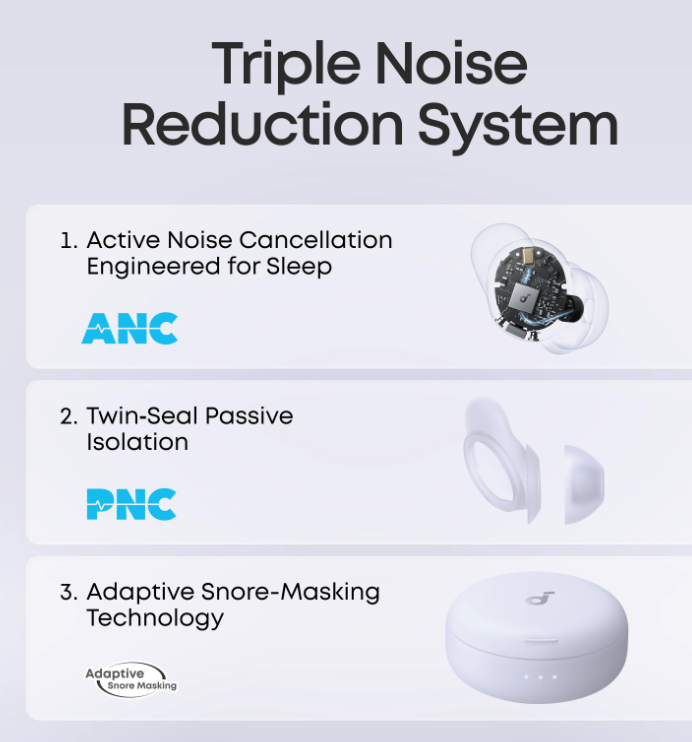
    Soundcore Sleep A30-Triple Noise Reduction System
    Soundcore Sleep A30-Triple Noise Reduction System

    In conclusion: AI can’t sleep for you, but it can keep you company while you sleep well.

    What impressed me most about the Sleep A30 wasn’t its technical specifications, but the feeling of being “understood”—it automatically lowers the volume when you turn over; it silently releases a masking sound when you’re disturbed by snoring; and it gently wakes you up in the morning with a gradually brightening natural sound.

    This may be the true meaning of “AI sleep companion”: not a disturber, but a guardian.

    At the intersection of technology and humanity, the Soundcore Sleep A30 delivers a high-scoring answer. It may not be suitable for everyone, but for those who need it, it could be the turning point that allows them to “finally get a full night’s sleep.”
  • NextSense Smartbuds True Wireless EEG AI Earphones

    NextSense Smartbuds True Wireless EEG AI Earphones

    In the evolution of wearable devices, we’ve seen a shift from the wrist (smartwatches) to the eyes (AR glasses), and finally to the ears (TWS earbuds). However, most existing earbuds remain at the “output” level—playing music and transmitting voice—rarely able to truly “input” the user’s inner state. This impasse was completely broken with the emergence of NeuroFlow Dynamics. As a cutting-edge technology company deeply rooted in non-invasive brain-computer interfaces (BCI) and edge computing, NeuroFlow Dynamics is committed to consumerizing laboratory-level EEG monitoring technology. Their vision is both grand and compassionate: to enable machines to understand human emotions and focus, thereby building a proactive intelligent ecosystem that “understands your needs and responds to your desires.” NextSense Smartbuds are the culmination of five years of research and development by this startup; they are not just earbuds, but the first key to self-awareness and efficient interaction.

    Redefining Hearing: From Passive Reception to Active Perception

    NextSense Smartbuds
    NextSense Smartbuds

    NextSense Smartbuds are a revolutionary product: the world’s first true wireless AI earbuds integrating dry EEG sensing technology. They are no longer just audio playback devices, but intelligent terminals capable of interpreting a user’s brain activity, emotional state, and cognitive load in real time. Their core concept lies in “neurofacial feedback loops,” which adjust audio output or trigger intelligent operations by monitoring brainwaves, achieving a paradigm shift in human-computer interaction.

    Its core highlights are mainly reflected in three dimensions:

    First is the invisible EEG monitoring array. Unlike traditional bulky devices that require the application of conductive gel, NextSense integrates miniature dry electrode sensors inside the earphone stem, close to the skin behind the ear, and can capture key EEG bands such as Alpha (relaxation), Beta (focus), and Theta (meditation) with a medical-grade signal-to-noise ratio.

    Secondly, there’s the context-adaptive audio engine. Based on real-time EEG data, the AI algorithm automatically adjusts the noise reduction depth and sound effect style. When you enter a deep working state (high Beta waves), the headphones automatically enhance noise isolation and play white noise to improve focus; when you feel anxious (abnormal high-frequency Gamma waves), it seamlessly switches to soothing meditation-frequency music to guide the brain back to calm.

    Finally, there’s mind-assisted interaction. While it can’t completely replace manual operation, NextSense supports specific “thought commands.” For example, users can simply imagine “answer” or “skip” in their minds, combined with tiny electrical muscle signals (EMG), to achieve hands-free operation. This is revolutionary for interaction in motion scenarios or when both hands are busy.

    In-depth analysis: The neural laboratory hidden behind the auricle

    In order to fit an EEG monitoring module into the tiny earphone cavity, NextSense Smartbuds demonstrates amazing ingenuity and resourcefulness in hardware engineering.

    Sensing System: The earphones are equipped with a custom NeuroChip X1 chip, an NPU designed specifically for low-power EEG signal processing. Combined with six sets of highly sensitive dry electrodes and a sampling rate of up to 500Hz, it effectively filters out electromyographic interference from blinking, chewing, and other sensory inputs. Furthermore, it integrates a PPG heart rate sensor and a GSR (Geodermal Response) sensor; this multimodal data fusion improves emotion recognition accuracy to 92%.

    NextSense Smartbuds--Smart Terminals
    NextSense Smartbuds–Smart Terminals

    Audio Architecture: Sound quality is not compromised despite the complexity of its functions. It employs an 11mm diamond-like diaphragm dynamic driver and supports the LDAC high-definition transmission protocol. Its unique “neuroacoustic tuning” technology dynamically balances the frequency response curve based on the user’s real-time brainwave state, ensuring that the sound is not only pleasant to listen to but also “tailored to the specific needs.”

    Battery life and charging: Since EEG monitoring is a high-power-consumption activity, NextSense incorporates a high-density silicon-carbon anode battery. A single charge provides 5.5 hours of use with full-function monitoring enabled, and up to 8 hours with EEG mode disabled. Combined with the wireless charging charging case, the total battery life reaches up to 24 hours.

    Privacy and Security: EEG data is considered the highest level of biometric privacy. NextSense employs on-device encryption technology, ensuring that all raw brainwave data is processed only on the local chip, with only anonymized feature vectors uploaded to the cloud. A physical privacy switch is located on the device, allowing for one-button power cutoff to all biosensors.

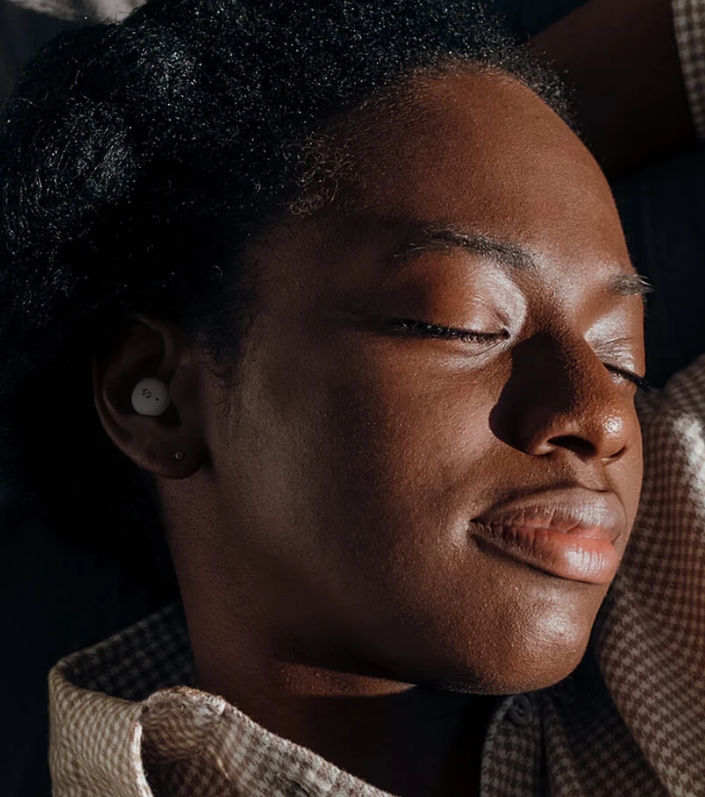
    Wearing design: The ergonomic liquid silicone ear hook design ensures stable contact between the electrodes and the skin. The total weight of the device is controlled at 6.8 grams per ear, so there is no obvious pressure even after wearing it for a long time.

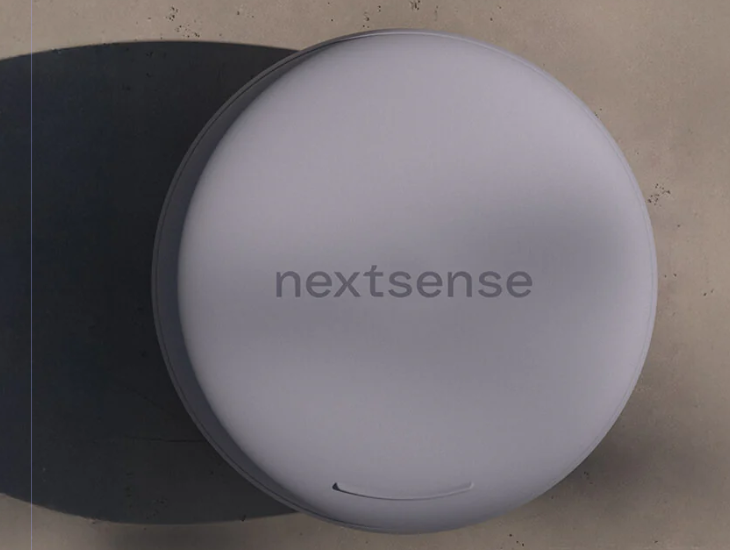
    NextSense Smartbuds Product Image
    NextSense Smartbuds Product Image

    Value assessment and target audience profiling

    As a groundbreaking product, the NextSense Smartbuds’ pricing strategy reflects its high R&D costs and technological barriers. Currently, the global initial suggested retail price is $ 249 . Highly recommended for:

    For high-pressure professionals and knowledge workers: NextSense is an excellent productivity tool for programmers, designers, or analysts who need to maintain focus for extended periods and manage stress. It quantifies your focus duration and helps you enter a state of “flow” faster through audio feedback. For a $ 249 investment, a 10% increase in productivity offers a return far exceeding the cost.

    For meditation enthusiasts and mental health professionals: Traditional meditation is difficult to assess in terms of effectiveness, while NextSense provides real-time brainwave visualization feedback, making the meditation process quantifiable and progressive. It is a “meditation mentor” for the digital age.

    For tech enthusiasts and early adopters: If you’re passionate about experiencing cutting-edge technology and eager to explore the future of brain-computer interfaces, this product is definitely worth collecting.

    Special needs group: For users with limited hand mobility who still wish to independently control electronic devices, its mind-assisted interaction function provides valuable independence.

    Purchase Caution Notice:

    If you are extremely sensitive to privacy and have concerns even with on-device encryption, or if you simply need a pair of top-quality HiFi headphones and don’t care about health features, then NextSense might not be the best choice. Furthermore, dry electrodes are very particular about placement, and you may need some time to learn how to find the optimal signal point initially. For students with limited budgets, the nearly $300 hardware plus subscription fee is also a significant expense.

    Conclusion: A Bridge to the Inner World

    After in-depth testing and evaluation, NextSense Smartbuds delivered a stunning performance. It successfully brought brain-computer interface, previously only seen in science fiction movies, into real life. The most touching moment wasn’t the novelty of changing songs with your mind, but rather when you’re working late into the night, feeling anxious and on the verge of collapse, the earbuds sensitively detected the erraticities in your brainwaves and automatically played a soothing melody specifically generated for your current brainwave frequency. Watching your alpha waves gradually stabilize on the app, the feeling of being gently supported by technology is indescribable.

    Of course, as a first-generation product, its signal stability under extreme sports conditions still has room for improvement, and the false touch rate of mind recognition also needs to be further reduced through subsequent OTA upgrades. However, its merits outweigh its flaws; the birth of NextSense Smartbuds marks a new era for wearable devices, moving from “monitoring vital signs” to “interpreting the mind.”

    In today’s era of rapid advancements in artificial intelligence, we often worry that machines will become indifferent. But NextSense tells us that true intelligence should be empathetic. It doesn’t attempt to replace human thinking, but rather helps us better manage our emotions and attention by understanding the ripples in our thoughts.

    The best technology is not about turning humans into machines, but about enabling machines to care for people like humans do. NextSense Smartbuds are more than just headphones; they are a bridge connecting the external digital world with our profound inner universe .