Foreword: When Snoring Meets Artificial Intelligence
Snoring is not just a noise problem that affects a partner’s sleep; it can also be a sign of obstructive sleep apnea. Traditional anti-snoring solutions , such as anti-snoring pillows, orthodontic appliances, or CPAP machines, often suffer from drawbacks such as low comfort, high invasiveness, or high cost.
With the development of AI technology and the rapid maturation of IoT, AI-powered anti-snoring devices, represented by Q.Reverse, have begun to enter the public eye .
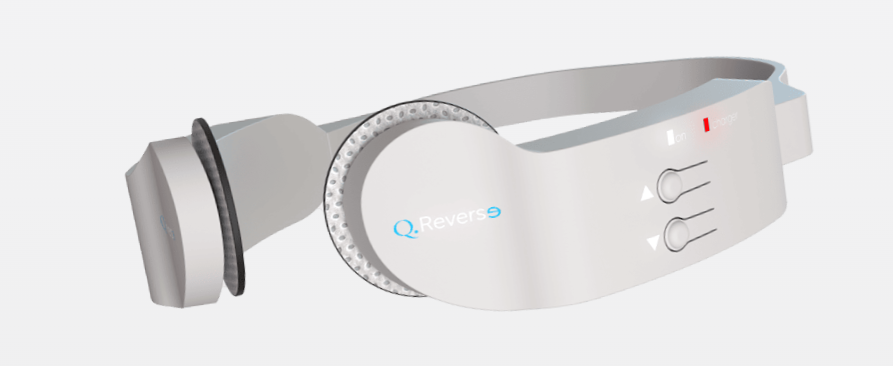
Q.Reverse claims to achieve “seamless intervention” through artificial intelligence algorithms. This article will provide an in-depth analysis of the technical logic, actual experience, and target audience of the Q.Reverse AI anti-snoring device, aiming to provide consumers troubled by snoring with an objective and rigorous purchasing guide.
Important Note: This article analyzes the general technical principles and publicly available product characteristics of this type of AI anti-snoring device. Specific parameters (such as battery life, sensor accuracy, etc.) may change with product iterations; please refer to the latest official specifications before purchasing. If you suspect you have moderate to severe sleep apnea syndrome, please consult a doctor first.
I. Core Principle Analysis: What exactly does Q.Reverse’s “AI” do?
Many consumers are skeptical of “AI anti-snoring,” believing it to be just a simple voice-activated switch. To evaluate the value of Q.Reverse, it’s essential to first understand its working loop.
1. Sound Recognition and Waveform Analysis
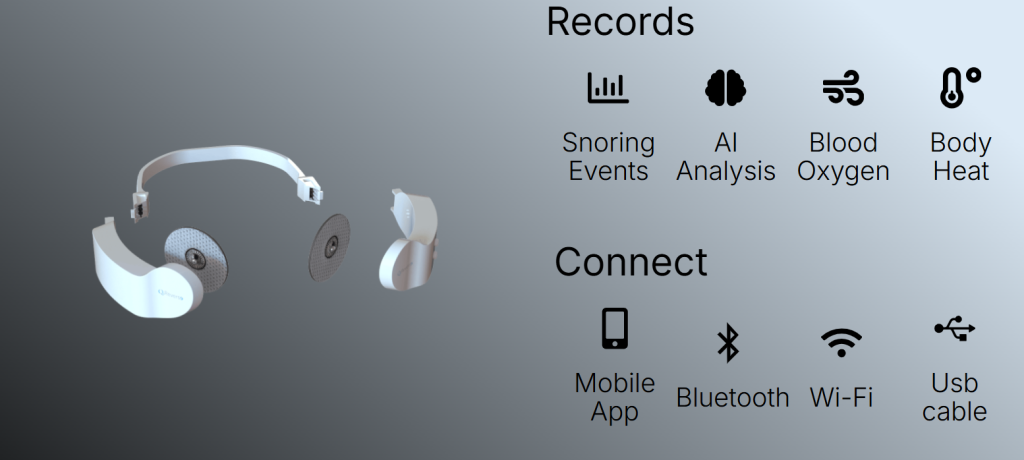
The core of the Q.Reverse device lies in its built-in microphone array and audio processing chip.
Traditional equipment only detects volume in decibels, which can easily misinterpret ambient noise (such as the sound of air conditioning or a partner turning over) as snoring.
Q.Reverse Solution: This solution uses AI algorithms to extract features from the sound waveform. It can distinguish the unique frequencies and rhythms of snoring and filter out background noise. This is crucial in determining whether the device will be “falsely triggered.”
2. Intervention Mechanism: Physical Perturbation
Once snoring is detected, the device will not emit a sound to cover it (which would wake the user), but will instead physically change the sleeping posture or airway status.
The QReverse anti-snoring system uses smart sensors to detect snoring events in real time and employs algorithms to distinguish snoring from other nighttime noises. When genuine snoring is detected, it emits gentle infrasonic pulses designed to stimulate muscles that help maintain proper tongue position and keep the upper airway open. Once the event is resolved, the stimulation immediately stops, and the device returns to standby mode.
Common methods: Wristband devices typically remind users to turn over through subtle vibrations; bedside devices may do so by adjusting the pillow angle or releasing a gentle airflow.
Q.Reverse’s logic: It focuses on non-invasive micro-intervention. Its purpose is to prompt users to adjust their sleeping position while they are not fully awake, thereby opening their airways and stopping snoring.
3. Data closed loop
The device syncs the number of snoring sounds, interventions, and sleep quality scores each night to a mobile app. Long-term data trends are more valuable than single-night data, helping users understand the impact of lifestyle habits (such as alcohol consumption and fatigue) on snoring.
II. In-depth Experience Dimension Analysis
When choosing Q.Reverse or similar products , it is recommended to consider the following four dimensions:
1. Wearing comfort
Pain point: Many anti-snoring rings are too heavy or the strap material is not skin-friendly, causing users to give up using them due to discomfort.
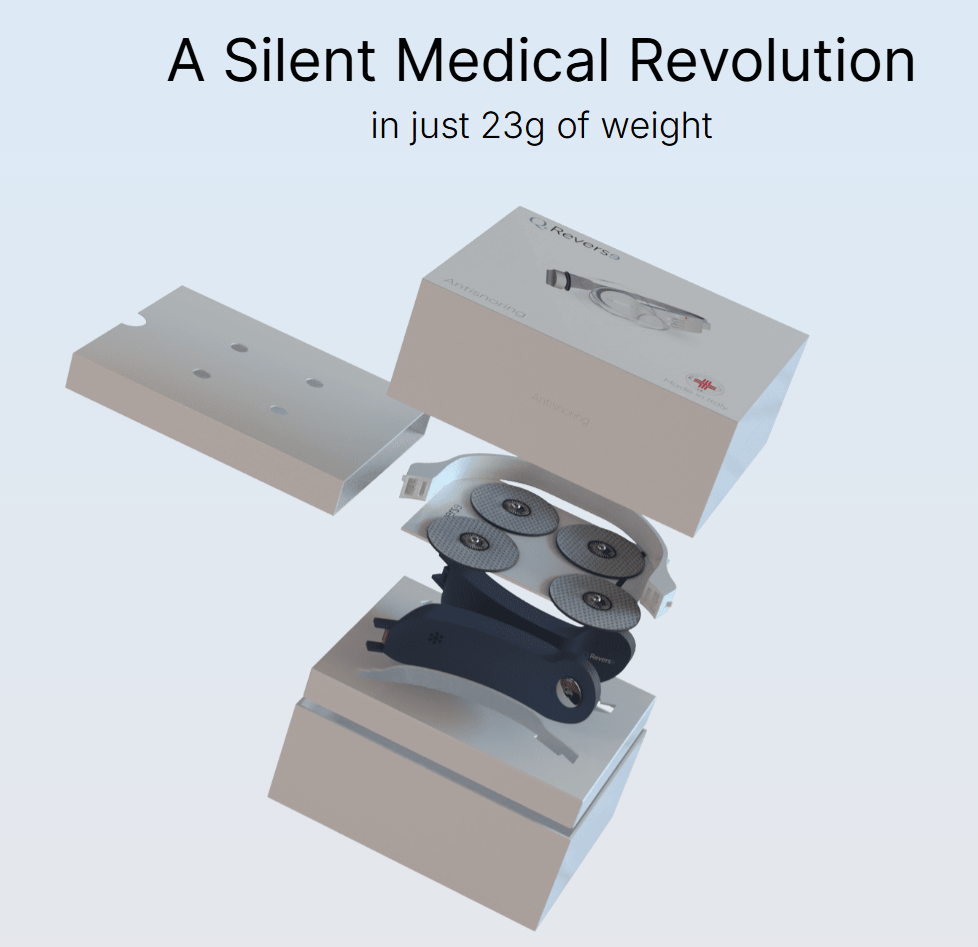
Q.Reverse Features: Lightweight design, made of skin-friendly silicone.
Purchase recommendations: Confirm the weight of the device (recommended <30g) and the breathability of the strap. If it is a bedside device, consider whether its operating noise is below 30 decibels to avoid the device itself becoming a noise source.
2. Recognition accuracy
Pain points: High false alarm rate; the device keeps vibrating even when the user is not snoring, which seriously disturbs sleep.
Key technology: Whether it possesses “adaptive learning” capabilities. A superior AI model will become more accurate in identifying specific snoring characteristics as usage increases.
Objective assessment: Currently, consumer-grade AI anti-snoring devices cannot achieve the 100% accuracy of medical-grade monitoring. Mainstream products such as Q.Reverse can typically cover most typical snoring sounds, but may miss very faint or unusual breathing sounds.
3. Intervention effectiveness
Pain points: Excessive intervention can wake users, while insufficient intervention may fail to stop snoring.
Expected Experience: Q.Reverse is designed with a “gentle reminder” principle. Unlike medical ventilators, it does not forcibly open the airway, making it most effective for positional snoring (snoring when lying on your back, relieved when lying on your side).
Data reference: For habitual snoring, such devices can usually reduce the frequency of snoring, but cannot promise to “completely eliminate” it.
4. Battery Life and Ecosystem
Battery life: Due to the need to keep the microphone and processing chip running overnight, power consumption is relatively high. Mainstream devices typically last 3-7 days. It’s necessary to check if the device supports fast charging to avoid frequent charging affecting continuous use.
App Experience: Is the data visualization clear? Does it provide improvement suggestions (such as avoiding alcohol before bed or weight loss advice)? These are the soft power indicators of whether an app is “intelligent”.
III. Limitations of Q.Reverse: In what situations is it “useless”?
As a purchasing guide, it’s essential to honestly point out the limitations of these products. AI-powered anti-snoring devices are not a panacea. These devices primarily target individuals with simple snoring or mild sleep apnea, alleviating symptoms through methods such as posture adjustment. However, for patients with moderate to severe sleep apnea, whose airway obstruction is more severe, non-invasive interventions alone are insufficient to achieve clinical treatment standards.
If the user experiences symptoms such as apnea (breathing stops for more than 10 seconds), extreme daytime sleepiness, or high blood pressure, consumer-grade devices like Q.Reverse cannot replace medical CPAP machines. Forcing their use in these situations may delay treatment.
Structural problems:
Snoring caused by anatomical problems such as deviated nasal septum, enlarged tonsils, or receding mandible can be largely resolved with physical intervention and requires the help of an ENT specialist.
Deep sleep disturbance:
A very small number of sensitive individuals may experience discomfort from any vibration of the device, leading to a decrease in sleep quality. It is recommended to use the product’s “trial period” to verify this.
IV. Purchase Decision Checklist
Before deciding to purchase a Q.Reverse, please conduct a self-assessment using the following checklist:
| Evaluation Dimensions | Key issues | suggestion |
| Symptom types | Is it just snoring, or is it accompanied by sleep apnea? | If there is a pause, go to the hospital for sleep monitoring first. |
| Causes of snoring | Do you snore primarily when lying on your back? | If so, AI-assisted body positioning intervention devices are more effective. |
| Partner feedback | Is your partner extremely sensitive to sound? | Choose a model with a quieter design to avoid equipment noise. |
| Wearing habits | Is it acceptable to wear a device on your wrist to fall asleep? | If you are not used to it, consider bedside monitoring equipment. |
| Budget range | Are you willing to accept consumer electronics products priced around 1000 yuan? | Compared to medical ventilators, AI anti-snoring devices are cheaper, but they are not classified as medical devices. |
| After-sales policy | Does it support “7-day no-reason return” or trial use? | We strongly recommend choosing channels that support trial use, as sleep experiences vary from person to person. |
V. Summary and Recommendations
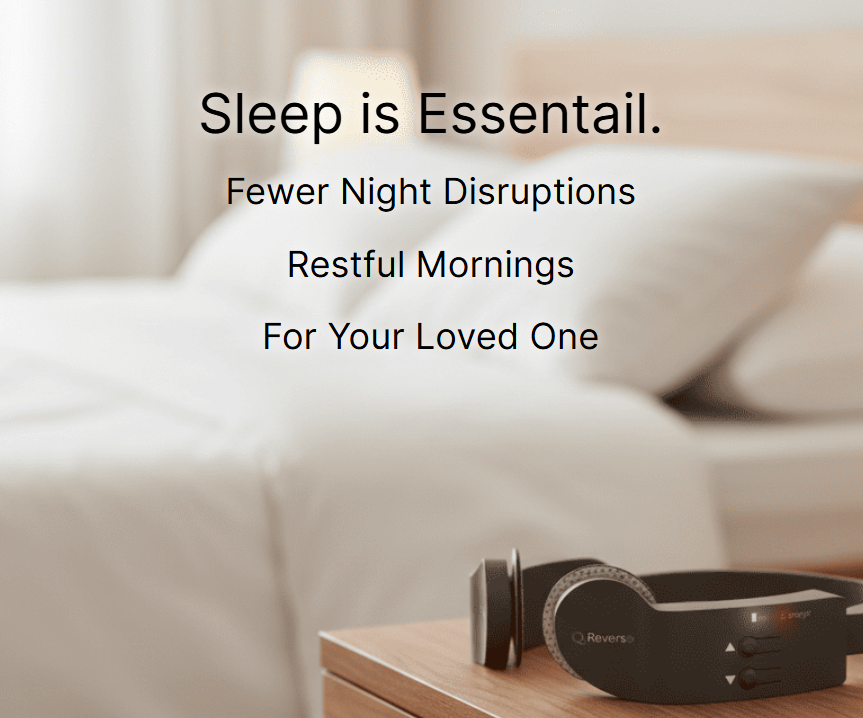
The Q.Reverse AI anti-snoring device represents a forward direction for consumer sleep health products: improving sleep quality through non-invasive, data-driven methods.
Recommended for:
- Simple snoring without severe sleep apnea symptoms.
- For those with positional snoring (snoring can be relieved by lying on their side).
- Users who want to quantify sleep data and monitor the impact of their lifestyle habits.
- Mild patients who cannot tolerate medical ventilator masks (as an adjunct).
Not recommended for the following groups:
- The patient was diagnosed with moderate to severe obstructive sleep apnea syndrome (OSAHS).
- People who are extremely sensitive to sounds/vibrations in their sleep environment.
- For users who expect “one-time purchase, permanent cure” (snoring relief requires lifestyle changes such as weight loss and quitting alcohol).
Sleep health is a systemic issue. Devices like Q.Reverse can serve as aids to help you and your partner get a quieter night, but they are not a medical substitute.
Before placing an order, please be sure to confirm the after-sales policy through official channels, and it is recommended to undergo a professional sleep risk assessment first. Technology should serve health; rational purchasing is the key to restful sleep.