As modern people suffer from musculoskeletal pain caused by prolonged sitting and sports injuries, traditional physiotherapy either relies on the cumbersome process of clinic appointments or is limited to the inefficient experience of home devices. Lifemed, an innovative medical company in India, is attempting to reshape this market landscape with its Curapod wearable phototherapy device, which brings clinical-grade technology to the home. This product, registered with the US FDA and receiving CDSCO Class B certification in India, bridges the gap between professional medical care and daily rehabilitation with its unique photobiological modulation technology and intelligent design, reflecting the profound transformation of the global medical device industry from “in-hospital treatment” to “out-of-hospital management.”
Since its inception, Lifemed has focused on a core issue: how to make professional medical technology accessible beyond the clinic, becoming a rehabilitation tool easily available to the general public. Facing the ever-expanding global population suffering from musculoskeletal sub-health—according to the World Health Organization, approximately 15% of adults worldwide suffer from chronic musculoskeletal pain, with working professionals and sports enthusiasts accounting for over 60%—this company has avoided the pitfalls of traditional medical devices that prioritize “heavy equipment and high costs.” Instead, it has chosen to focus on photobiological modulation (PBM) technology, combined with smart wearable hardware, to create non-invasive, drug-free home rehabilitation solutions.
Unlike most consumer-grade health products, Lifemed’s core competitiveness lies in its “clinical endorsement.” Its R&D team comprises experts in medical engineering and photobiology, and all its product lines have undergone rigorous clinical validation. Curapod, in particular, has received FDA registration in the United States and CDSCO Class B certification in India—these certifications signify that the product’s safety and effectiveness meet medical-grade standards, rather than being merely an ordinary electronic health care product. “Our goal is not to create a ‘discomfort-relieving’ toy, but to allow users to experience phototherapy at home with the same quality as in a clinic,” said the CEO of Lifemed in an interview.
Curapod: Breaking Barriers with Technology, Redefining the Home Phototherapy Experience
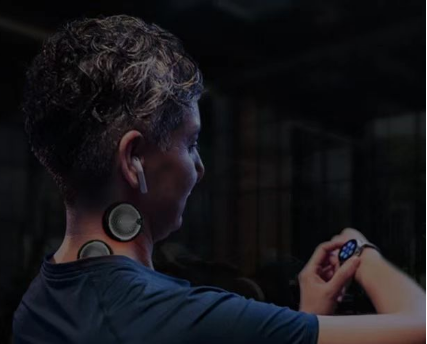
As Lifemed’s flagship product, Curapod’s design and technological details embody the concept of “clinical-grade home use.” This disc-shaped wearable device comes with two treatment units per box. Using the included reusable strap or medical-grade adhesive patch, it can be securely attached to pain points such as the neck, shoulders, back, and knees, supporting simultaneous treatment at multiple points—a design that addresses the limitations of traditional home phototherapy devices, which offer “single-point treatment and limited coverage.”
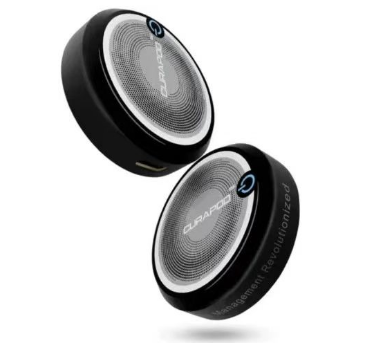
Its core technology originates from photobiological modulation (PBM), emitting specific wavelengths of red and near-infrared light that penetrate up to 70 millimeters, reaching the subcutaneous tissue layer. This is fundamentally different from traditional heat therapy, which only affects the epidermis: Curapod’s light stimulates mitochondrial activity, promoting cell repair and local microcirculation, assisting the body’s natural recovery from the root, rather than simply relieving surface discomfort. “Traditional heat therapy only treats the symptoms, while our technology addresses the root cause,” explained the R&D director of Lifemed. “Due to double-blind clinical trials, consistent use 2-3 times daily for 30 minutes each time can significantly improve chronic pain caused by prolonged sitting or sports injuries.”
Curapod has also made targeted optimizations for user experience. Unlike the stinging sensation of electrical pulses in traditional physiotherapy devices, this device operates silently and without vibration, allowing users to complete treatment “without feeling” while working, reading, or sleeping. The device uses a Type-C interface, and a one-hour charge supports two complete treatment sessions, solving the pain points of home devices such as “short battery life and cumbersome charging.” The accompanying smart app provides visualized data tracking and a standardized “Cura Conversation” solution, allowing even users without professional physiotherapy knowledge to quickly get started.
It is worth noting that Curapod does not advertise “instant pain relief” but emphasizes “the efficacy of long-term, regular use”—this rational positioning distinguishes it from many consumer health products on the market that exaggerate their claims. To date, the product has been used daily by over 25,000 users worldwide, covering more than 30 musculoskeletal discomforts. Clinical data shows that long-term users experience pain relief rates exceeding 78%.
Industry Observation: AI + Wearables, a “Home-Based Revolution” in Medical Devices
The rise of Curapod is not an isolated product innovation, but rather a microcosm of the global medical device industry’s transformation. With the increasing aging of the global population and the growing trend of chronic diseases affecting younger people, the traditional “in-hospital treatment” model can no longer meet people’s needs for convenient and efficient rehabilitation. “Out-of-hospital management” has become a new growth engine for the industry, and the integration of AI and smart wearable technology is accelerating this transformation.
Firstly, the “decentralization” of treatment scenarios has become an inevitable trend. Traditional physical therapy heavily relies on professional physicians and large equipment, which is not only costly but also limited by time and location, making it difficult for most chronic pain patients to adhere to treatment. Wearable phototherapy devices like Curapod, through miniaturization technology and breakthroughs in battery life, bring phototherapy technology, originally confined to hospitals, into the home, reducing the burden on the medical system and empowering patients with self-management of their health. Industry analysts predict that the market size of home-use medical wearable devices will grow at a compound annual growth rate of 18% over the next five years, with phototherapy products expected to grow at a rate exceeding 25%.
Secondly, AI-driven personalized precision medicine will become a core competitive advantage. Currently, Curapod primarily relies on pre-set programs, but Lifemed has revealed that its next-generation product will integrate AI algorithms and high-precision sensors to collect real-time data on user skin temperature, blood flow changes, and muscle tension, dynamically adjusting light wavelength, intensity, and duration through machine learning. For example, AI can automatically switch spectral combinations for acute inflammation and chronic recovery phases, achieving customized therapy tailored to each individual – this upgrade will significantly improve the efficacy of phototherapy, reduce ineffective treatments, and differentiate it from ordinary home-use devices.
Finally, compliance and clinical evidence are becoming the “stepping stones” to market access. In the wave of medicalization of consumer electronics, the market is shifting from “functional innovation” to “evidence-based medicine” driven growth. Curapod’s success hinges on its FDA registration and double-blind clinical trials, establishing a solid clinical data moat. Industry insiders point out that in the future, if AI medical wearable devices want to gain doctor recommendations, medical insurance coverage, and even enter the mainstream market, they must overcome the hurdle of “clinical validation”—simple functional innovation or appearance design is no longer sufficient to stand out in fierce competition. Furthermore, data security and privacy protection will also become industry focuses; ensuring the security of user health data during cloud transmission and analysis will be a problem that companies must solve.
Conclusion: Technology Empowers the Future of Home-Based Rehabilitation
The emergence of Curapod not only provides a convenient and scientific non-drug intervention solution for patients with chronic musculoskeletal pain, but also marks the medical device industry entering a new era of “hardware and software integration, data-driven” development. Lifemed, by combining clinical-grade phototherapy technology with smart wearable design, has successfully solved the pain points of traditional physiotherapy being “time-consuming, expensive, and difficult to adhere to,” and has also pointed out the development path of “clinical-grade technology for home use” for the industry.
Of course, these devices are not a “panacea”; their effectiveness depends on long-term, regular use and varies from person to person. However, it’s undeniable that with technological iterations, the deep application of AI algorithms, and the advancement of market education, wearable medical devices integrating optoelectronic technology and intelligent algorithms are poised to become the standard configuration for future family health management. For Lifemed, Curapod is just a starting point—the core challenges it will face going forward are how to continuously strengthen its technological barriers, expand its clinical data accumulation, and develop the global market. For the entire industry, Curapod’s exploration is driving a profound transformation in societal health management models, truly integrating professional rehabilitation care into the daily lives of ordinary people.
Leave a Reply