Category: Home AI Mobile Robot

Home AI mobile robots refer to service robots designed for home environments, possessing autonomous mobility and equipped with artificial intelligence technology. Through perception, positioning, navigation, interaction, and decision-making algorithms, they can autonomously walk, perform tasks, and interact with people in the home environment, completing home services such as cleaning, companionship, caregiving, and security.

  • RoboBooster Panther 4-in-1 Robotic Lawnmower

    RoboBooster Panther 4-in-1 Robotic Lawnmower

    In the realm of smart home hardware, “robotic lawn mowers” are hardly a novelty anymore. Much like the smartphone market of yesteryear, this sector has entered a “Red Ocean” phase—a fierce battleground characterized by intense competition among a multitude of players. However, for users in the past, traditional robotic lawn mowers have consistently addressed only one specific issue: “cutting the grass short.”

    Subsequent tasks—such as leaf removal, edge trimming, and aesthetic lawn grooming—have invariably required human intervention. Today, AICRUNCHX presents an in-depth review of a device touted as the “world’s first 4-in-1 lawn care robot”: the RoboBooster Panther. Is this product—set to make its debut on Kickstarter (KS)—truly worth the wait? Can it genuinely redefine the concept of “situational intelligence”? Join us in this buying guide as we uncover the answers.
    RoboBooster Panther
    RoboBooster Panther

    I. Market Pain Points: Why Do We Need a “4-in-1” Solution?
    Over the past decade, mainstream robotic lawn mowers on the market—whether traditional random-collision models relying on buried boundary wires, or advanced products utilizing RTK (Real-Time Kinematic) positioning and visual navigation—have consistently confined their functional scope to a single dimension: “cutting.”

    For homeowners living in detached suburban properties across North America, lawn care constitutes a comprehensive, multi-step process. Mowing is merely the first step; the subsequent tasks—such as “clearing fallen leaves or grass clippings” and “trimming lawn edges and curbs”—often require users to manually switch between different tools (such as leaf blowers and string trimmers) to complete the job. This process is not only time-consuming, but the need to store multiple pieces of equipment also places a significant burden on limited yard space. Current high-end market players—such as Yarbo—have already achieved a “3-in-1” functionality (combining snow blowing, mowing, and leaf blowing) through modular design; however, this comes at the cost of a higher price point and still requires users to manually swap out the various modules.

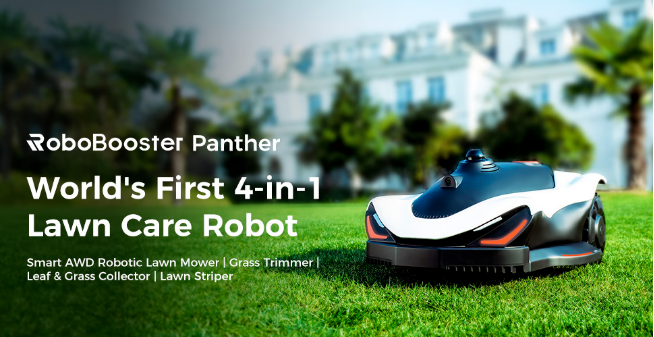
    The RoboBooster Panther emerges precisely to address this critical pain point. According to official releases, the Panther is far more than a simple lawn mower; it is a comprehensive system integrating four distinct functions: mowing, blowing/sweeping, edge trimming/collection, and lawn striping. This all-in-one design aims to completely liberate users from the drudgery of yard work.

    II. In-Depth Analysis of RoboBooster Panther’s Core Features

    Based on pre-launch materials, AICRUNCHX has broken down the Panther’s core competitive strengths into the following four dimensions:

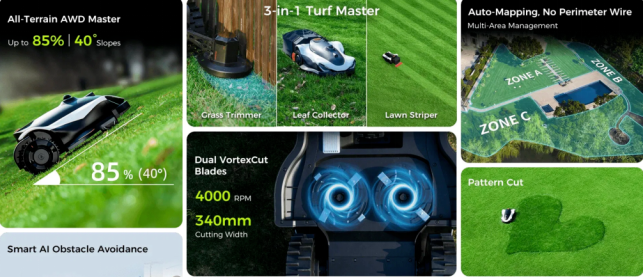
    1. Intelligent Mowing System: The Panther inherits the advanced navigation capabilities found in current high-end models. While the specific navigation solution awaits final confirmation upon mass production, its positioning accuracy is sufficient to handle complex yard layouts, thereby minimizing damage to grass roots caused by repetitive mowing.
    2. Powerful Blowing and Grass Collection: This stands as the Panther’s most significant differentiator compared to its competitors. The machine can switch to a “blowing” mode, utilizing airflow to sweep grass clippings and fallen leaves scattered across paved surfaces or lawns into a single pile, or to vacuum them directly into a collection bag. This means users no longer need to purchase a separate handheld leaf blower.
    3. Automatic Edging: Trimming the borders between lawns and paved edges is often the most tedious and frustrating task for manual labor. The Panther features a dedicated edging module designed to cut precisely along curbs and edges, effectively resolving the awkward “uncut strips” issue commonly associated with traditional lawnmowers.
    4. Lawn Patterning (Embossing): Catering to users with exceptionally high standards for their outdoor living spaces, the Panther even offers a lawn patterning feature, allowing the turf to display the aesthetic beauty of the striped patterns typically seen on professional sports fields.

    To help readers make a more intuitive assessment, AICRUNCHX has compiled the following comparison dimensions.

    Traditional models—exemplified by brands like Husqvarna—leverage decades of accumulated technical expertise to refine their mowing capabilities to a high degree of maturity. Their core strengths lie in focus and stability: they require no complex manual operation—once parameters are set, they automatically handle lawn trimming—and fall within a price range of $1,000 to $3,000, offering exceptional value. These models are perfectly suited for households with modest yard care expectations, where the primary requirement is simply basic lawn mowing. As pioneers in the field of smart robotic mowers, Husqvarna models also feature practical functions such as waterproofing, silent operation, and automatic recharging. They are capable of navigating narrow spaces and lawns with moderate slopes, can operate normally even in rainy weather, and feature critical components effectively shielded against dust and grass clippings—making the basic mowing experience truly hassle-free. However, constrained by their single-function design, the limitations of these robots are equally apparent: they perform only the act of mowing. Subsequent tasks—such as clearing grass clippings or trimming lawn edges—still require manual intervention, preventing full-process automation of yard care and making it difficult to satisfy users who prioritize maximum efficiency and convenience.

    Modular robots—such as those introduced by brands like Yarbo—employ an innovative “core unit plus interchangeable modules” design that effectively resolves the “seasonal idleness” pain point associated with traditional robotic mowers. By pairing a single core unit with various modules, users can perform mowing tasks in the spring and summer, then switch to snow-clearing or leaf-blowing modes in the autumn and winter. This approach provides a one-stop solution for year-round yard maintenance, eliminating the need for users to stockpile multiple large pieces of equipment; it saves valuable storage space while simultaneously reducing long-term investment costs. The modular attachments on these products require no tools for installation or removal—offering a true “plug-and-play” experience. Furthermore, powered by intelligent AI navigation algorithms, they can automatically optimize their operational paths based on the yard’s size and vegetation type. Combined with autonomous charging capabilities, they deliver a seamless user experience where, once a task is set, the entire process unfolds without any need for human intervention. However, this modular design does come with its own set of limitations: switching functions still requires the manual swapping of modules, meaning true, end-to-end automation remains out of reach. Additionally, due to the cumulative cost of supporting multiple modules, their price points generally exceed $3,000. Positioned as premium products, they are best suited for households or owners of large properties who have multi-seasonal yard care requirements and a sufficiently flexible budget. The RoboBooster Panther distinguishes itself with “integrated intelligence” as its core highlight, pioneering a new frontier in precision yard care and emerging as a compelling choice that strikes an optimal balance between convenience and cost-effectiveness. Compared to the two aforementioned product categories, this robot’s most significant breakthrough lies in its “all-in-one multifunctionality”—it can automatically execute four core operations—mowing, blowing, edging, and striping—without the need to swap out modules. This truly ensures a completely hands-free experience, requiring absolutely no human intervention from start to finish. Equipped with dual-vortex cutting blades and a high-power motor, it delivers professional-grade mowing results with no missed spots and smooth, clean edges. Its edging function is adept at navigating tight pathways and the perimeters of flowerbeds; the blowing function simultaneously clears away grass clippings and fallen leaves; and the striping function allows users to create personalized lawn patterns, elevating yard care from a mere chore to a refined art form. On the technical front, the unit employs a navigation system that fuses 3D LiDAR with visual recognition technology. This eliminates the need to lay down physical boundary wires, allowing the robot to generate a real-time digital map of the lawn, precisely identify obstacles, and dynamically adjust its route. Furthermore, it boasts all-terrain adaptability, effortlessly handling steep slopes and complex landscapes, all while operating at a low noise level of just 55dB—ensuring it never disrupts the tranquility of home life.

    IV. Buying Guide: Who Should Buy the RoboBooster Panther?
    As a startup hardware product poised to make its debut on Kickstarter, consumers are advised to make their purchasing decisions with careful consideration. AICRUNCHX recommends that the following groups pay particular attention to this device:

    1. North American Suburban Homeowners: Those owning detached single-family homes with yard areas ranging from 0.5 to 2 acres, and who place an exceptionally high priority on lawn aesthetics.
    2. Early Adopters of Technology: Individuals willing to support innovation and comfortable with the possibility of firmware iterations inherent in early-stage products.
    3. Budget-Conscious Users Seeking a Premium Experience: Those who wish to solve all their yard maintenance needs with a single device, rather than purchasing multiple single-function machines.
      Risk Advisory:
      Delivery Timeline: Crowdfunded products often face shipping delays; users should closely monitor official updates regarding delivery schedules.
      After-Sales Support: As a startup company, its global after-sales support network may not be as comprehensive or established as those of major brands (e.g., Worx, Husqvarna).
      Complex Terrain: For yards featuring extremely steep slopes or an abundance of obstacles, it is advisable to wait for real-world testing videos before making a final decision.

    V. The Future of Smart Yards: From “Single Devices” to “Integrated Scenarios”
    The launch of the RoboBooster Panther serves as a microcosm of the evolution of smart yard devices—shifting from “single-device intelligence” to “scenario-based intelligence.” By choosing Kickstarter as its launchpad for the Western market, this hardware startup is leveraging the platform’s inherent affinity for “disruptive innovation” products, which naturally attracts a high volume of relevant traffic.
    The trend of the future lies in interconnectivity and integration. Imagine a scenario where the Panther detects an increase in fallen leaves during autumn and automatically increases its blowing frequency; or recognizes that lawn growth has slowed and automatically adjusts its cutting height. This type of scenario-based automation represents the ultimate form of the smart home ecosystem. For readers of AICRUNCHX, our focus extends beyond mere technical specifications; we are primarily interested in how technology transforms our daily lives.
    RoboBooster Panther Formidable Professional Capabilities
    RoboBooster Panther Formidable Professional Capabilities

    VI. Summary and Purchase Recommendation
    The RoboBooster Panther is an ambitious product. It precisely targets the deep-seated pain points of yard maintenance in Western markets, attempting to eliminate the tediousness of coordinating multiple single-purpose tools through a comprehensive “4-in-1” integrated solution. • Recommendation Rating: ⭐⭐⭐⭐ (4/5)
    • Estimated Launch Price: $1,999 – $2,999 USD (Kickstarter Early Bird Pricing)
    • Launch Platform: Kickstarter
    AICRUNCHX Recommendation: If you are tired of spending your weekends pushing a leaf blower and trimmer around your yard—and are open to embracing emerging tech brands—the Panther is definitely worth keeping an eye on on Kickstarter. We recommend subscribing to our website; once the product officially begins shipping, we will provide a first-hand, long-term field review.

    📢 Frequently Asked Questions (FAQ)
    Q1: Does the RoboBooster Panther support boundary-wire-free navigation?
    A: Based on current pre-launch information, the Panther is positioned for the high-end market and is highly likely to utilize RTK or vision-fusion navigation, meaning no buried boundary wires are required.
    Q2: Is the power of the blowing function sufficient to clear wet leaves?
    A: The manufacturer claims it offers “powerful blowing capabilities,” but regarding its effectiveness against heavy, wet fallen leaves, we recommend waiting for AICRUNCHX’s upcoming real-world test results.
    Q3: How can I purchase it on Kickstarter?
    A: The product is currently in the pre-launch phase. Please visit Kickstarter and search for “RoboBooster Panther,” or follow AICRUNCHX to get the latest crowdfunding link.
    Q4: What is the warranty policy?
    A: Startups typically offer a 1–2 year limited warranty. Since this involves an international purchase, you should verify whether local repair services are included.

  • Gen DAS Dex: Reshaping Data for Embodied AI Hands

    Gen DAS Dex: Reshaping Data for Embodied AI Hands

    At this critical juncture where embodied intelligence is moving towards the real physical world, data quality has become a core bottleneck restricting model generalization. Gen DAS Dex (hereinafter referred to as Dex), officially released by Jianzhi, takes “head-hand full-modality” as its entry point, attempting to solve the long-standing industry challenge of agile behavior acquisition.

    Gen DAS Dex
    Gen DAS Dex

    one of the key AI hardware focuses of aicrunchx , can Dex transform the fine manipulation of human hands into structured data that machines can understand? This article will provide an in-depth analysis from the perspectives of technical parameters and application scenarios.

    🔍Core Functionality Analysis: Breaking Down Data Silos in “Head-Hand Collaboration”

    In the past, traditional embodied training has long faced a gap of “seeing but not being able to grasp” , but now Dex’s breakthrough lies in achieving full modal closed loop with a single device .

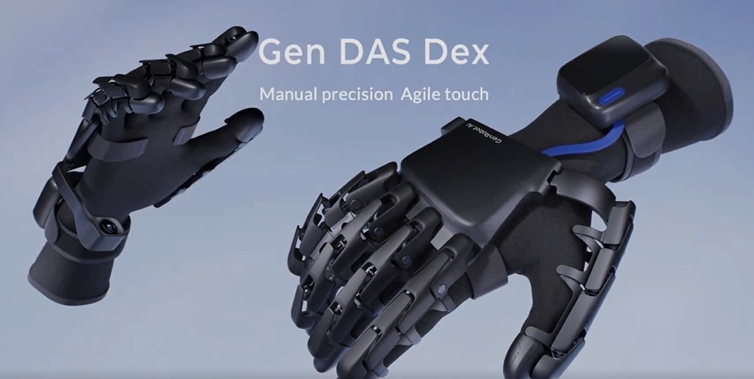
    On the hardware level, the self-developed micro magnetic encoder pushes the joint angle detection accuracy to 0.02°. Combined with IMU and infrared vision fusion positioning, the fingertip spatial error is reduced to the millimeter level, and the 23 degrees of freedom fully approach the physiological limits of the human hand.

    Multimodal fusion is another highlight: the fingertip is equipped with a 0.05N high-sensitivity tactile sensor and a 1mm spatial resolution module, combined with a 150° ultra-wide-angle camera on the back, to achieve physical interaction restoration of “visual tracking of trajectory and tactile understanding of force”.

    To address the industry’s pain point of multi-device synchronization, Dex also uses the SUB-G wireless protocol to connect with the underlying clock of the Ego headset, achieving sub-millisecond alignment at the 1ms level, completely eliminating timing misalignment between vision, motion, and touch.

    In terms of weight, the lightweight 210g exoskeleton and adaptive structure make the data collection process seamless, ensuring that the data comes from natural life rather than laboratory performances.

    Real Shot of Gen DAS Dex
    Real Shot of Gen DAS Dex

    🌍Consumption and Industrial Application: What real-world problems can Dex solve?

    Currently, the value of Dex is rapidly penetrating into the consumer and vertical sectors.

    In the field of home service robots, Dex can generate a large number of real housework, cooking and tidying samples at low cost, directly solving the pain points of current home service robots such as “high failure rate of fine grasping and improper force control”.

    In XR and spatial computing scenarios, high-precision hand tracking and haptic feedback data will significantly enhance the immersiveness of virtual interaction and lower the development threshold for 3D gesture training; for the medical rehabilitation market, Dex can quantify patients’ hand motor function and provide a trackable, personalized digital therapy platform for people with stroke or peripheral nerve injury.

    In vocational education and skills training, experienced workers’ “muscle memory” and operational mechanics can be fully digitized and transformed into standard digital assets that can be reused remotely.

    As the threshold for data collection decreases, Dex is driving a paradigm shift in embodied AI from “passively watching videos” to “active physical interaction”.

    👥Background of the R&D Team and Future Evolution Path

    Gen DAS’s core team has deep expertise in embodied intelligence’s underlying data infrastructure, spanning robot kinematics, micro-sensor hardware, and multimodal algorithms. The launch of Dex marks a strategic upgrade for the team, moving from a single algorithm provider to a “hardware-software integrated data engine.”

    Looking to the future, Dex anticipates building a cross-brand robot training ecosystem through open SDKs and standardized data protocols; meanwhile, the mass production iteration of flexible sensors and micro magnetic encoders will drive down equipment costs, gradually opening up to independent developers and the geek market.

    If data cooperation can be established with mainstream embodied basic model manufacturers, Dex has the potential to become an industry-level data acquisition standard.

    📝Overview : The Inevitable Path from Data Infrastructure to Physical Intelligence

    The Gen DAS Dex is not only a high-precision dexterity hand data glove, but also an indispensable “tactile and motion base” for embodied world models.

    As AI begins to understand the world based on real-world human physical interactions, the large-scale deployment of dexterous machine operations has the necessary data foundation. Despite challenges in adapting to large models and commercial validation, Dex’s breakthroughs in accuracy, synchronization rate, and lightweight design have set a new benchmark for embodied data collection.

    For professionals who are interested in the evolution of AI hardware and robotics, Gen DAS Dex is undoubtedly one of the most promising underlying infrastructures of the year.

  • Changba Gogobot D1 Smart Robotic Dog

    Changba Gogobot D1 Smart Robotic Dog

    Introduction: From Karaoke King to Robot Dog: Changba’s Cross-Industry Bet

    Changba, a name absolutely familiar to Chinese people who have experienced the internet boom, is the karaoke app that has been a hit for 14 years and the “Little Giant Egg” microphone that swept the market.

    Gogobot D1
    Gogobot D1

    However, in 2026, this audio giant made a surprising decision: to cross over into the smart device market, launching its first emotional companion robot dog—Gogobot D1.

    This product quickly gained popularity after its debut at CES 2026, and subsequently launched a crowdfunding campaign on Kickstarter in March 2026. As of March 30th, the project had raised over 16 million RMB and received an official recommendation from the platform’s “PROJECT WE LOVE” initiative.

    For consumers, is this a worthwhile AI companion robot, or simply a tech giant jumping on the bandwagon?

    AICRUNCHX will provide you with a comprehensive Gogobot D1 buying guide from four dimensions: hardware specifications, AI interaction experience, privacy and security, and cost-effectiveness.

    I. Hardware Specifications: Designed for Companionship

    Unlike robot dogs from Unitree or Boston Dynamics that emphasize “sports performance,” the Gogobot D1’s design logic leans more towards consumer-grade electronic pets.

    1. Appearance and Materials
    • Main Body Material: Utilizes ABS engineering plastic and silicone composite materials, providing a smooth touch and avoiding the coldness of traditional metal robots, making it more suitable for family interaction.
    • Customization: Supports changing multiple skin outfits (pilot, detective, cowboy, etc.) to meet individual needs.
    • Display: Features a 2.4-inch TFT display on the front, capable of showing 50+ dynamic expressions. This is the core window for its emotional expression.
    1. Battery Life and Charging
    • Interface: USB Type-C (mainstream and universally compatible, convenient).
    • Battery Life: 2-3 hours of runtime on a full charge. For a desktop/floor robot primarily focused on interaction, this battery life is average for the industry. It’s recommended to use it with the charging dock for convenient charging.
    1. Perception System
    • Audio: Built-in four-microphone array, supporting 360° omnidirectional sound pickup, automatically identifying sound sources and turning towards the speaker.
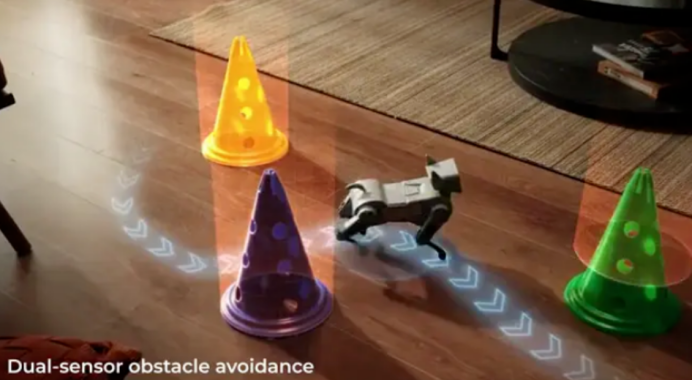
    • Vision/Obstacle Avoidance: Employs dual ToF laser sensors + front-facing anti-fall detection. The camera-less design is a significant advantage in a market rife with privacy concerns.

    II. Core Experience: Is AI Really “Emotional”?

    For AI hardware, the hardware is the skeleton, but the AI ​​is the true soul. The biggest selling point of the Gogobot D1 lies in its claimed “emotional companionship” capability.

    1. Multilingual and Interactive Response
      Supports 15+ mainstream languages ​​including English, French, and Spanish. Thanks to years of audio algorithm accumulation from Changba (a popular karaoke app), its voice recognition rate performs excellently even in noisy environments. It can automatically match facial expressions and body movements based on dialogue content, achieving synchronized “listening, speaking, and moving.”
    2. Long-term Memory System
      This is key to its differentiation from traditional toys. Gogobot D1 has a built-in long-term memory system that can generate customized responses based on historical interactions.
    • Example Scenario: If you tell it you’re in a bad mood today, the next day it might proactively ask about your mood instead of mechanically repeating “hello.”
    • Growth Mechanism: Just like its crowdfunding slogan “Listens, reacts, and grows with you,” it will become more understanding of you as you use it.
    1. Openness and Programming
      For tech-savvy users, Gogobot D1 supports visual programming and Open Bluetooth APIs.
    • Advanced Play: After completing advanced programming, you can extend the permissions for actions, connect to third-party AI models, and customize interaction rules. This means its longevity depends not only on official updates but also on the developer community.

    III. Privacy and Security: Advantages and Disadvantages of Camera-Free Solutions

    Gogobot D1 Vision System
    Gogobot D1 Vision System

    In 2026, data privacy is one of the most sensitive topics for consumers.

    • Advantages: The Gogobot D1 uses a camera-free ToF sensor solution. This means it won’t photograph your home environment, fundamentally eliminating the risk of visual privacy leaks. This is a core reason to buy for families with children or those who value privacy.
    • Limitations: Due to the lack of computer vision, it cannot perform advanced tasks such as “object recognition” or “facial recognition.” Its functional scenarios are mainly limited to voice interaction and basic obstacle avoidance.

    IV. Brand Endorsement and Cross-Industry Challenges

    1. Changba’s Advantages
    • Audio Algorithms: 14 years of experience in the karaoke industry gives it a natural advantage in voice recognition and sound effect processing.
    • Supply Chain Capabilities: The millions of microphones shipped by the Gogobot D1 validate its supply chain bargaining power and quality control experience in consumer hardware.
    • Business Model: Adopting a buy-to-play model, the core AI dialogue function is permanently free with no mandatory subscriptions, a refreshing approach in the AI ​​hardware market.
    1. Potential Risks
    • Robotics Technology Accumulation: Compared to manufacturers like Unitree Robotics and Calcium Robotics, which have been deeply involved in quadruped robots for many years, Changba has relatively less experience in dynamic modeling and multi-sensor fusion.
    • Motion Capabilities: Don’t expect it to run and jump like a professional robot dog. It’s better suited for slow movement on a desktop or flat ground.

    V. Conclusion: The “Gentle” Implementation of Embodied Intelligence
    The emergence of Changba Gogobot D1 marks a shift in embodied intelligence from “showy technology” to “practical companionship.” It doesn’t pursue ultimate motion performance, but instead chooses emotional interaction and privacy security as its entry point.

    If you’re looking for an intelligent companion that can be placed on your desktop, chat, doesn’t secretly take pictures, and can grow with you, Gogobot D1 is worth adding to your shopping cart.

  • Enabot EBO Air 2S: Smart Home Monitoring

    Enabot EBO Air 2S: Smart Home Monitoring

    At 3 a.m., you’re working overtime in a foreign country when your phone suddenly vibrates—it’s a message from your wife : “The child has a fever … “

    At that moment, what did you most want to do? Not watch the surveillance footage, but to be “present” immediately .

    Some say that the loneliness of modern people is having all the information in the world in their hands, yet not being able to see the smiling face of the person they love most right in front of them .

    Video calls and surveillance can certainly bring us images that we care about, but in these moments, we always feel like an observer.

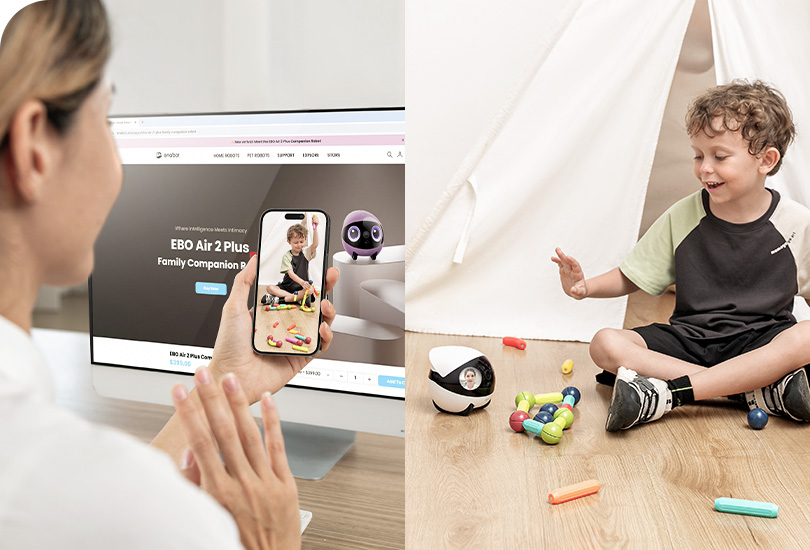
    With smart home devices becoming increasingly popular, Enabot’s newly launched EBO Air 2S robot offers a new answer—a bridge to your loved ones, designed to provide family users with remote companionship, pet care, and lightweight security services.  

    Next, this article will analyze whether you need an EBO Air 2S from three aspects: product performance, pricing strategy, and purchase recommendations .

    01 Core Advantage: Superior Experience

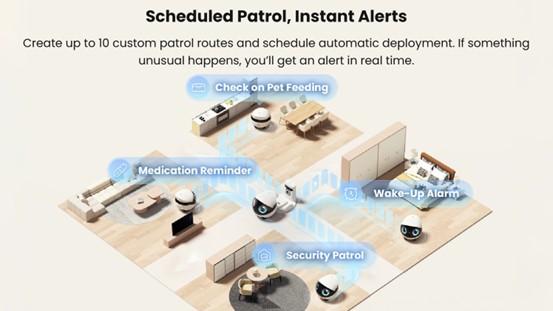
    EBO Air 2s Scheduled Patrol
    • Image and Communication

    The EBO Air 2S features a 2.5K high-definition camera and a 137° wide-angle lens, along with infrared night vision, providing clear images in indoor environments and sufficient for basic nighttime monitoring needs.

    EBO Air 2s 2.5K Quality

    AI noise reduction technology optimizes call quality, supports one-click calling, WeChat answering, and robot interconnection, and has a low operating threshold, making it suitable for the elderly and children.

    •    Mobility

    Featuring a self-righting design, the robot can traverse obstacles less than 10mm in height and slopes up to 15° in angle. Its ultra-low height of 11cm allows it to easily enter corners such as under sofas and beds.

    Dual-band Wi-Fi and dual-antenna design ensure network stability, and video playback is smooth and lag-free when moving around the house.

    • Battery life and storage

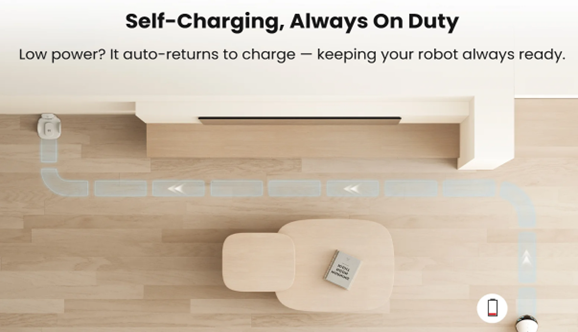
    It has a built-in 5000mAh battery, providing up to 9-10 hours of standby or recording time and about 4 hours of continuous exercise. It also supports automatic recharging and Type-C external charging.

    EBO Air 2s Self-charging

    In terms of storage, it has 32GB of built-in space (21GB usable), and comes with a free 32GB microSD card, which can be expanded up to 256GB.

    • Functional coverage

    Features include AI-powered face/pet detection and tracking, one-click pet finding, intelligent pet interaction, scheduled patrols, and abnormal activity recording alerts, covering four major scenarios: childcare, elderly care, pet ownership, and light security.

    EBO Air 2S Color Selection

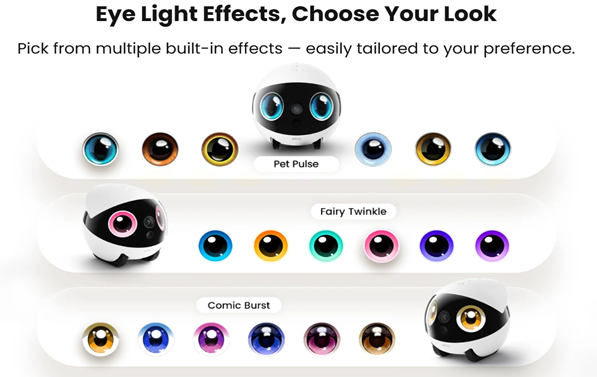
    Eighteen eye-light expressions and an electronic parrot mode enhance interactive fun, while multi-account sharing and master account permission management make it suitable for multiple family members to use.

    02 Disadvantage: Insufficient Functionality

    • Image specifications are not top-of-the-line

    Compared to the flagship model’s 3K image quality, the 2.5K resolution shows a significant difference in detail, which users who require high-definition shooting may perceive.

    • Movement speed is relatively slow

    Designed for home security, it moves slowly, cannot quickly respond to cross-regional needs, and is ineffective in high-threshold or complex terrain.

    • Cloud storage requires payment.

    vary for users who require remote access or long-term backups .

    03 Full Series Comparison: Matching to Your Needs

    The Enabot EBO Air series currently offers three different versions , with their core differences focusing on imaging, AI capabilities, mobility, and interactive experience. Prices increase with each upgraded configuration.

    VersionresolutionCore functional differencesPrice range (USD)position
    EBO Air 22KTwo-way audio, basic movement, simple pet play$199Entry-level basic model
    EBO Air 2S2.5KVideo calls, AI tracking, scheduled patrols$299Balanced and practical
    EBO Air 2 Plus3KAI voice assistant, advanced obstacle avoidance, desktop mode$399Flagship model

    Note: The EBO Air 2S is priced at $299 for the first time, and as low as $279 after subsidies on some e-commerce platforms. The standard package includes the main unit, charging dock, 32GB microSD card and data cable.

    04 Purchase Recommendation: Who should choose EBO Air 2S?

    • People who prioritize EBO Air 2S :
      • Families seeking a balanced range of functions, covering childcare, elderly care, pet ownership, and basic security, but not necessarily top-of-the-line imaging or advanced AI.
      • With a budget of $299, I prioritize battery life and practicality, hoping to meet my daily needs in one go.
      • The home environment is a standard apartment layout with no high thresholds or complex terrain, and there are no strict requirements for movement speed and image quality.
      • Multiple users share the device, which relies on local storage and only requires basic anomaly alerts and short-term video recording.
    • People who can upgrade to EBO Air 2 Plus :
      • Those who require high image quality, such as 3K ultra-high definition shooting, or who wish to achieve advanced interactions such as AI voice assistants and intelligent dialogue.
      • For complex home environments, stronger obstacle avoidance and obstacle crossing capabilities are needed, or advanced functions such as desktop mode and pick-up detection are desired.
      • With a sufficient budget (over $299), I am looking for a fully functional experience and hope that the robot can serve as a companion, intelligent assistant, and professional security device.
    • People who can choose the entry-level EBO Air 2 :
      • With a limited budget (below $199), only basic mobile monitoring and two-way audio are needed, without video calls or AI tracking.
      • The application scenario is singular, such as basic pet care or light security in a fixed area, with no requirements for interactivity or shooting details.

    05 Purchase Notes

    EBO Air 2S product features
    1. Assess your home environment : Check the threshold height (≤10mm) and slope angle (≤15°) in advance to ensure Wi-Fi signal coverage throughout the house.
    2. Planning storage needs : If long-term storage of recordings is required, a 256GB SD card can be provided or you can learn about cloud subscription packages.
    3. Set up multiple account permissions : Assign permissions to the main account and sub-accounts in the app in advance to protect privacy.
    4. Note for cross-border use : The robot-connected call answering function is limited by regional version. For cross-border use, please confirm the compatibility of your device and network.

    06 Summary

    The warmth of technology is never about piling up the ultimate parameters, but about giving distant concerns a real sense of “presence” and making daily companionship more convenient and readily accessible.

    With its moderate configuration and balanced experience, the Enabot EBO Air 2S precisely addresses the core needs of ordinary families for smart care— eliminating the need to pay for non-essential high-end functions while fulfilling the beautiful expectations of remotely accompanying children, caring for the elderly, and raising pets, giving you the “right to be present” when your family needs you most .