
One-sentence verdict: If you’ve been waiting for a robot roommate that can walk, act spoiled, and remember your preferences, RUMI is probably the closest thing to that vision in 2026—provided its bipedal stability survives daily wear and tear.
Introduction
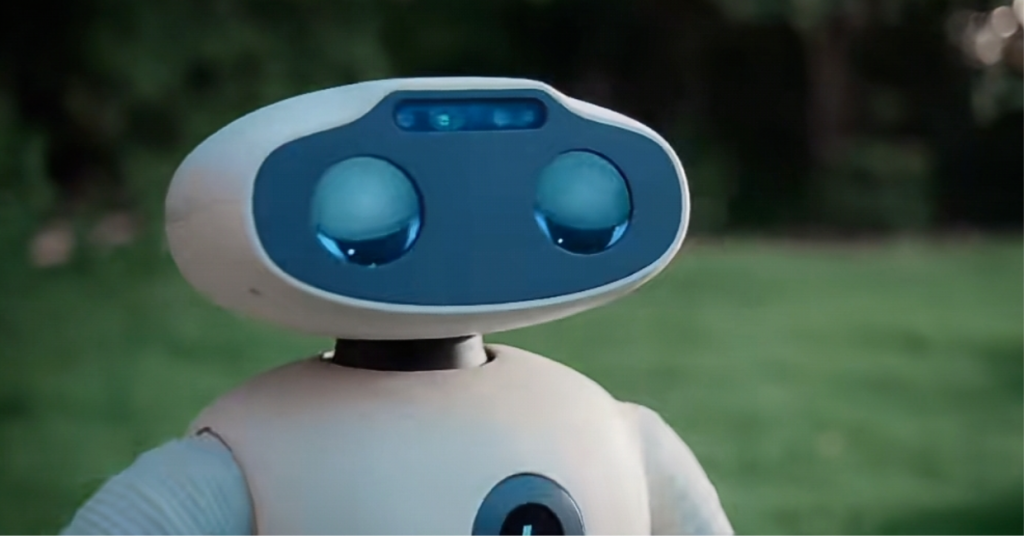
The home robot market has long faced a contradiction: wheeled solutions are mature and affordable, but always look like a vacuum cleaner with a screen attached; bipedal designs feel sci-fi premium, yet prices typically start at five figures. Luvbotics’ RUMI attempts to break this deadlock—a fully autonomous bipedal robot at the 6,000 RMB tier, not a crowdfunding concept, but a product that went on open sale at JD.com on June 12.
This pricing is strategically interesting. It occupies the empty space between “premium toy” and “entry-level service robot,” targeting a specific user group: young people who want pet companionship but dread the hassle, solo dwellers needing emotional outlets, and tech early adopters. RUMI’s core selling point is not task execution, but “presence”—a walking, responsive, gradually familiarizing household member.
Product Overview
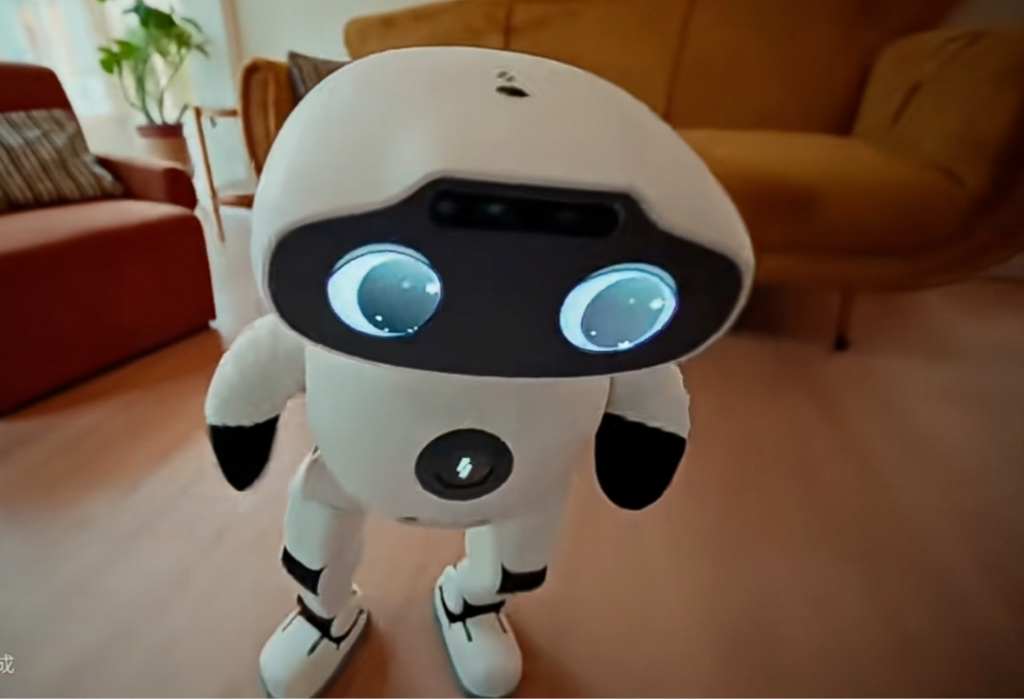
RUMI’s physical form breaks the stereotype that “home robot = wheeled screen.” The fully autonomous bipedal architecture means it can cross thresholds, transition between carpet and flooring, even “stroll” around your living room. Ninety-five percent of the body is covered in skin-like soft material, with the abdomen maintaining a constant 35-40°C temperature. This thermal design is not a gimmick—it simulates the body warmth of pets or infants, reducing psychological distance between human and machine.
The perception system comprises a 360° microphone array and binocular depth cameras, enabling full-body environmental awareness. This means RUMI is not “only listening when facing you,” but can respond to calls from any position in the room while understanding your direction and distance.
Emotional interaction is RUMI’s core differentiator. The system employs a raising-style three-stage architecture: First Meeting (basic interaction), Exploration (unlocking new expressions and movements), and Symbiosis (deep personalized responses). With 50,000+ emotional expression combinations and family-exclusive voice generation, the theoretical result is “your RUMI behaves differently from your neighbor’s.” After each interaction, the AI dynamically adjusts personality parameters—it becomes more enthusiastic when praised, quieter when neglected.
Technical Specifications and Functional Architecture
| Module | Technical Approach | Key Metrics |
|---|---|---|
| Locomotion | Fully autonomous bipedal walking | Non-wheeled, threshold-crossing capable |
| Shell Material | Skin-like soft material | 95% coverage |
| Haptic Interaction | Abdominal thermal module | 35-40°C temperature maintenance |
| Perception | 360° microphone + binocular depth cameras | Full-body environmental awareness |
| Emotional Engine | Raising-style three-stage AI | First Meeting → Exploration → Symbiosis |
| Expression | Dynamic expressions + exclusive voice | 50,000+ emotional combinations |
| Personality Evolution | Interaction feedback learning | Dynamic parameter adjustment per exchange |
The architecture’s trade-offs are clear: no resources wasted on “fetching packages” or “cleaning rooms,” but all-in on emotional companionship. Bipedal locomotion increases mobility freedom, soft materials reduce safety concerns, and raising-style AI extends user engagement cycles.

Bipedal Locomotion: Romance vs. Reality
RUMI’s choice of bipedal over wheeled design is a high-risk, high-reward technical decision. The advantages are obvious: obstacle traversal, more natural movement trajectories, and no need for specially planned flat paths when sharing space with humans. But bipedal stability, battery endurance, and noise control remain engineering challenges.
What can the 6,000 RMB tier deliver? From official information, RUMI emphasizes “fully autonomous” rather than remote-controlled operation, implying underlying SLAM or visual navigation for autonomous path planning. However, the robustness of bipedal dynamic balance in real home environments—being bumped by pets, stepping on slippers, wet floors—requires extensive user feedback to validate.
A pragmatic observation: if RUMI’s bipedal system can stay upright in 90% of daily scenarios, it already wins. Because competitors at the same price point cannot even lift their legs.
Emotional Interaction: From “Voice Assistant” to “Raising Object”
Existing home companion devices (smart speakers, screen-equipped robots) operate on a “you ask, I answer” model—the relationship is functional. RUMI’s raising-style design attempts to make the relationship emotional.
The three-stage mechanism borrows from game raising logic: during First Meeting, RUMI behaves like a cautious new roommate; Exploration unlocks more personality facets; Symbiosis forms unique behavior patterns based on your household interaction history. The design’s intelligence lies in creating motivation for continued use—ignore it, and its growth stalls; invest time, and it becomes more “attuned” to you.
50,000+ emotional expressions sounds like a marketing number, but the key is combination granularity. If RUMI can select different response combinations based on your tone, timing, and context (a lazy morning greeting vs. quiet late-night companionship), rather than randomly playing preset animations, this number has meaning.
Family-exclusive voice generation is another differentiator. RUMI can learn and mimic specific voice profiles, theoretically replicating family members’ voices. Psychological acceptance of this feature varies—some find it heartwarming, others creepy. Luvbotics making it optional rather than default is a wise choice.
Competitive Comparison
| Feature | Luvbotics RUMI | Amazon Astro | Xiaomi CyberDog | Tesla Optimus (Concept) |
|---|---|---|---|---|
| Locomotion | Bipedal | Wheeled | Quadruped | Bipedal (R&D) |
| Price | ~$850 | ~$1,450 | ~$1,500 | Unpriced (est. $20,000+) |
| Emotional AI | Raising-style three-stage | Basic voice + follow | Command response | Unreleased |
| Material | 95% soft coverage | Hard plastic | Metal + plastic | Hard shell |
| Thermal Interaction | Abdominal 35-40°C | None | None | None |
| Voice Customization | Family-exclusive generation | Standard Alexa voice | None | None |
| Availability | Open sale | Limited invite-only | Limited release | Concept stage |
RUMI’s competitive advantage is not in individual specs but in combined positioning: it is the only home robot at the $850 tier simultaneously offering bipedal locomotion, soft material, raising-style emotion, and voice customization. Astro and CyberDog lean more “tool-oriented”; Optimus remains far from consumer markets.
Pros and Cons
| Pros | Cons |
|---|---|
| Bipedal walking delivers real spatial presence | Bipedal stability needs long-term validation |
| Soft material + thermal design reduces psychological distance | Battery life and noise data not disclosed |
| Raising-style AI creates sustained engagement motivation | Emotional depth depends on AI training quality |
| Family voice customization enhances personalization | 6,000 RMB remains non-impulse purchase for average families |
| Open sale reduces waiting risk | Low brand recognition, after-sales network to be built |
Buying Guide
Recommended for:
- Solo young professionals/white-collar workers: needing emotional companionship but restricted from pet ownership (renting, allergies, frequent travel)
- Young families: RUMI serves as a “tech pet” to cultivate children’s AI literacy
- Tech early adopters: wanting bipedal home robot experience without five-figure investment
- Adult children of elderly solo dwellers: serving as a physical remote companionship warmer than cameras
Consider carefully if:
- You demand extreme robot stability: bipedal designs still carry fall risks on complex terrain
- Budget-sensitive and indifferent to “raising” concepts: RUMI’s core value requires time investment to materialize
- Living in extremely small spaces (<20㎡ studio): bipedal mobility advantages cannot be utilized

FAQ
Q: Does RUMI require Wi-Fi?
A: Network connection is needed for voice recognition and cloud emotional model updates, but local caching supports basic offline interaction.
Q: How noisy is bipedal walking?
A: Official decibel data is not published, but soft material and home positioning suggest noise control was a design priority.
Q: Can it climb stairs?
A: Current information does not mention stair capability; expected to support single-floor flat surfaces and threshold crossing only.
Q: Will pets attack it?
A: Soft material reduces collision damage, but initial supervised introduction between pets and RUMI is recommended.
Conclusion
Luvbotics RUMI is not a perfect home robot—its bipedal stability, battery endurance, and after-sales network all need time to validate. But it precisely targets an overlooked need: people want not just “obedient devices,” but “things with presence.”
Bipedal locomotion lets it truly “walk into” your living space rather than being trapped on a charging dock. Soft material and thermal design make it feel unlike a machine. Raising-style AI makes it irreplaceable over time. This combination forms RUMI’s core value proposition: not a tool, but a roommate.
The 6,000 RMB pricing pulls bipedal emotional robots from sci-fi display cases into ordinary family shopping carts. If RUMI can prove its reliability and emotional interaction depth in real home environments, it may become the landmark product signaling home robots’ evolution from “functional devices” to “emotional companions.”
After all, when a robot remembers you hate cilantro, knows to stay quiet when you’re working late, and says goodnight in your family member’s voice—it has already transcended the realm of “smart” and entered the territory of “companionship.”