AI Mobility coverage, including AI-powered vehicles, autonomous driving technology, in-car AI systems, electric scooters and drone delivery services. Expert reviews, industry news and technical analysis of the future of transportation.
According to reports, Mercedes-Benz China is implementing a new round of structural layoffs, aiming to reduce the number of employees at Beijing Mercedes-Benz Sales and Service Co., Ltd. from approximately 900 to less than 600. This is the second large-scale personnel reduction by Mercedes-Benz China in less than a year and a half, following the first round of layoffs in February last year.
Mercedes-Benz
Multiple sources familiar with the matter have revealed that this round of adjustments is not limited to the sales and service company. Since 2025, personnel adjustments within Mercedes-Benz’s China system have been occurring across various departments, including automotive finance, sales, IT, and R&D and manufacturing. These adjustments are distributed across different business entities and employment relationships, and the compensation standards are not uniform. The R&D system is one of the key departments targeted for staff reduction. Public information shows that Mercedes-Benz’s R&D centers in China are mainly located in Beijing and Shanghai, with approximately 2,000 R&D personnel covering multiple areas such as local model development, intelligent technology, electrification, software, and in-vehicle systems.
However, this round of layoffs failed to stem the company’s continued decline, forcing it to initiate two more rounds of layoffs this year: one currently underway with a 10% reduction, and the other to begin at the end of the year. The goal is to reduce the number of employees at Mercedes-Benz Sales Company from over 900 to just over 600 after these two rounds.
Besides layoffs, Mercedes-Benz China is also experiencing a deep organizational upheaval. On May 25th, the head of Mercedes-Benz Sales Company’s North China region resigned after a company-wide meeting, and the following day, a company-wide email announced that he would no longer serve as the general manager of the North China region.
It is understood that Mercedes-Benz’s R&D system is expected to lay off 10% of its staff this year. This figure has not yet been officially confirmed by Mercedes-Benz China.
Two months ago, the vice president in charge of after-sales service also suddenly resigned. Even earlier, Duan Jianjun, Mercedes-Benz China’s first Chinese CEO, resigned in March of this year, and was succeeded by Li Desi, the executive vice president of sales. Within just a few months, there has been a flurry of changes in the core management team, from CEO to regional heads to vice presidents.
Sources familiar with the matter revealed that SenseAuto expects to lay off more than 200 employees, bringing the company’s total workforce to over 400. The layoffs will affect departments including algorithm engineering and software.
SENSEAUTO
This restructuring by SenseTime’s SenseAuto division is a microcosm of the increasingly competitive landscape of intelligent driving. Following the layoffs, the workload for remaining employees will increase significantly, posing a considerable challenge to ensuring mass production and delivery of projects to automotive clients.
Over the past two to three years, SenseTime’s SenseAuto has aligned its intelligent driving solutions and technologies with industry changes.
In terms of solutions, SenseTime SenseAuto has launched three solutions: AD Pro, based on the Horizon J6E with 80T computing power; AD Max, based on the Horizon J6M with 128T computing power; and AD Ultra, based on Orin/Thor with 200T+ computing power. These three solutions represent the most mainstream demands from automotive companies over the past two years and represent the largest volume of demand in the industry.
Technically, SenseTime’s SenseAuto platform released a world model back in November 2024, placing it among the earlier companies in the intelligent driving industry to release cutting-edge technology.
Whether in terms of intelligent driving solutions or technology, SenseTime’s SenseAuto demonstrates strong foresight and strategic planning. However, compared to leading companies, it has secured relatively few targeted projects, the reasons for which are complex.
It is understood that SenseTime’s SenseAuto is in talks with Dongfeng Motor for strategic investment, which presents a good opportunity for the company. Strategic investment from automakers not only means money but also targeted projects and deep collaboration.
Informed sources revealed that this investment may be cancelled or significantly reduced.
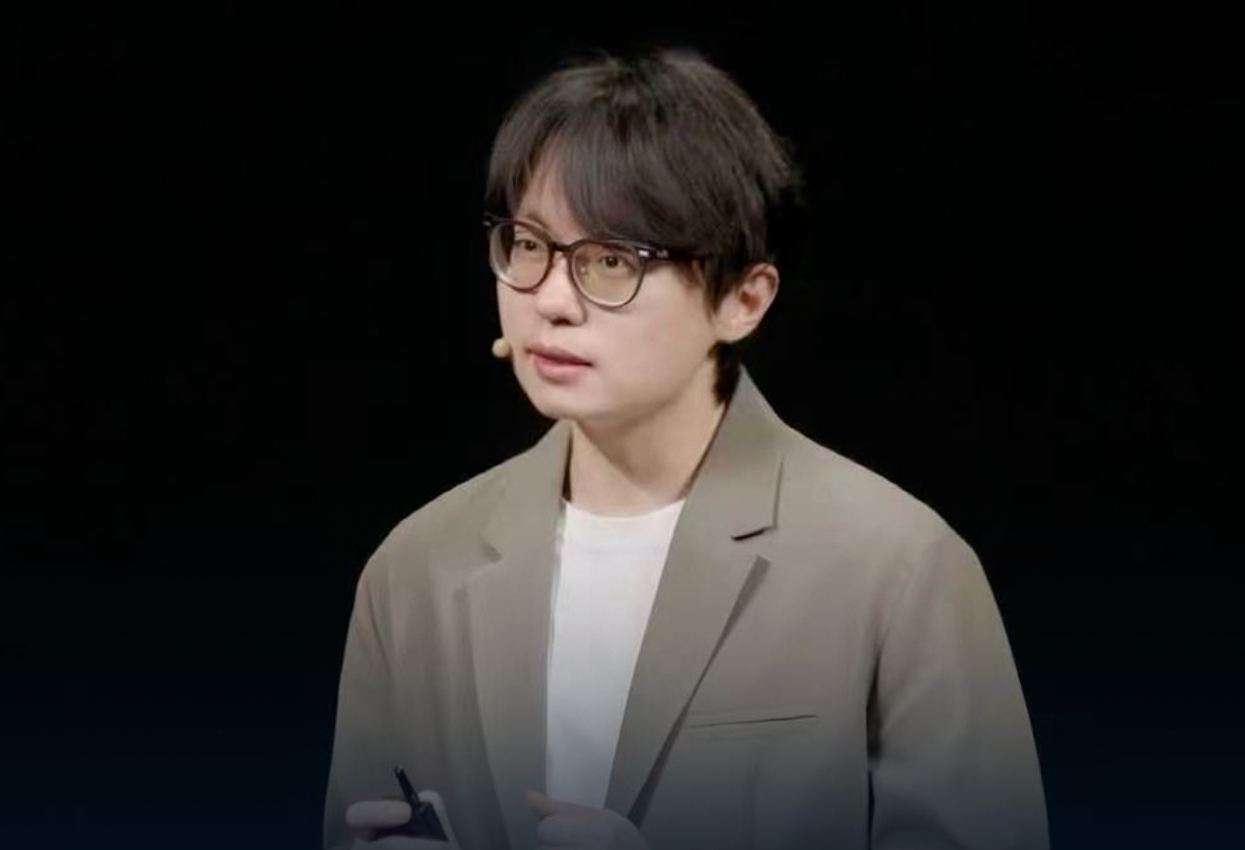
However, at a crucial juncture in the 2025 intelligent driving competition, SenseTime’s SenseAuto Chairman Wang Xiaogang co-founded Daxiao Robotics with Academician Tao Dacheng of the Australian Academy of Science in the second half of 2025.
Both highly competitive sectors require core operators to go all in. For Wang Xiaogang, as the core operator, managing both the highly competitive intelligent driving sector and embodied robotics effectively is a significant challenge.
It is reported that Chen Long, the head of the VLA (Vision-Language-Action) team within Xiaomi Auto’s in-house intelligent driving division, is set to leave the company; his next career move may be in the field of embodied AI.
XIAOMI AUTO
A highly accomplished returnee talent, Chen is well-known for his work in the R&D of cutting-edge intelligent driving technologies. Following the industry’s shift toward end-to-end systems, Xiaomi Auto strategically recruited him—with Lei Jun personally involved in the hiring process—to spearhead this technological direction.
After joining Xiaomi Auto, Chen led the team responsible for VLA development; within just over a year, he successfully developed the VLA model and brought it to mass production in vehicles. While this initially appeared to be an ideal match for both parties, all good things must eventually come to an end.
A trend has emerged in the intelligent driving industry: as major players advance from end-to-end systems to cutting-edge technologies like VLAs and world models, they frequently overhaul their teams with each technological iteration. The completion of a new technology project often marks a cycle where veteran team members depart and new talent arrives to tackle the next technological roadmap.
For leaders who have successfully delivered cutting-edge technology projects, there is no shortage of opportunities; they can join embodied AI startups as co-founders or launch their own ventures.
Chen Long previously served as a Staff Scientist at Wayve. He joined Xiaomi Auto in March 2025 as the Technical Lead for Intelligent Driving VLA, reporting to Ye Hangjun, the head of Xiaomi Auto’s intelligent driving business. He was primarily responsible for the R&D and deployment of Xiaomi Auto’s intelligent driving VLA large model (XLA), driving the evolution of Xiaomi’s driver-assistance systems from “data-driven” to “cognition-driven.”
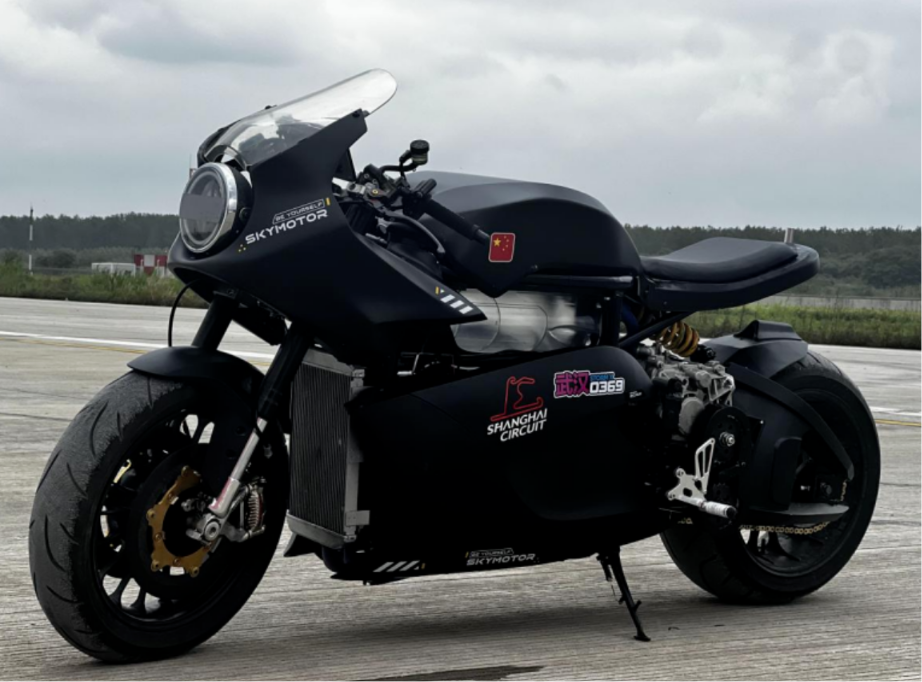
Verdict: The Stormrider X2 is not a motorcycle. It is a statement of national industrial capability disguised as a motorcycle. At 369km/h tested top speed, it is the fastest two-wheeled vehicle ever built. The fact that it achieves this with 99.99% domestic Chinese components makes it politically significant. For the ten people who will buy it at 559,900 RMB ($77,000), it is an exclusive trophy. For everyone else, it is proof that China’s EV supply chain has matured.
SKYMOTOR Stormrider X2 world’s fastest electric motorcycle
The Speed: Beyond Meaningful
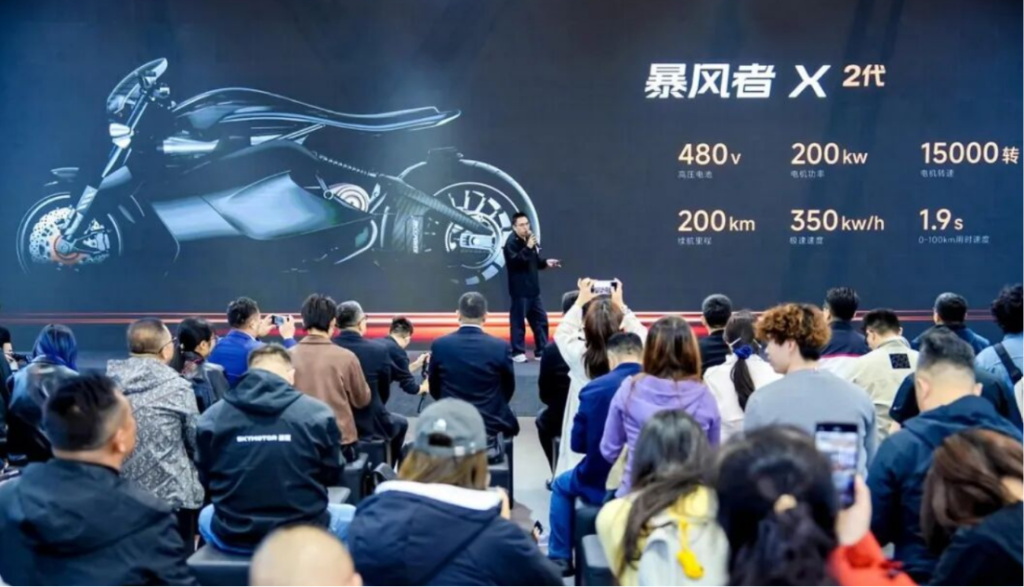
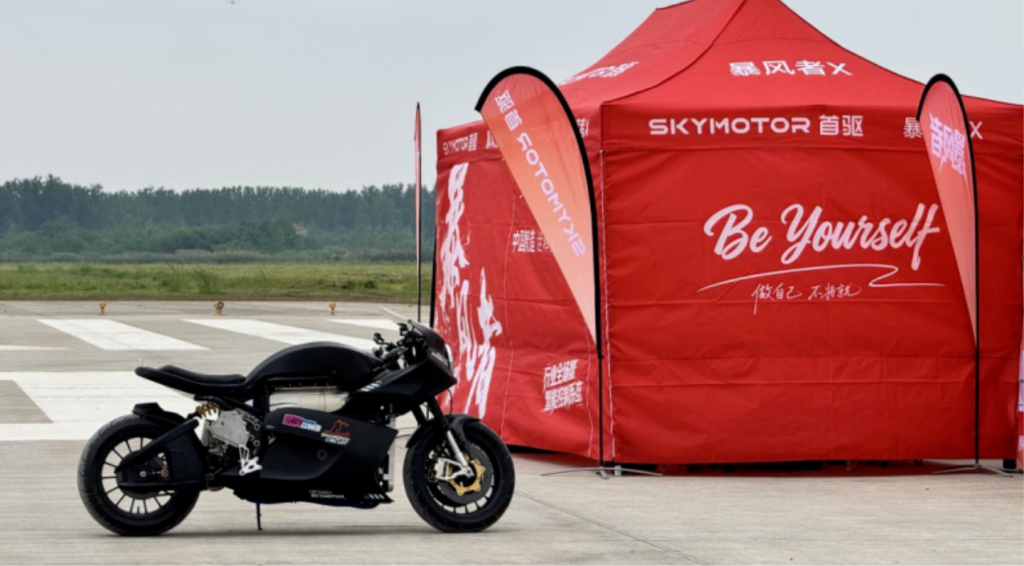
The numbers are absurd. 369km/h tested at Wuhan airport. 350km/h official rated speed. 0-100km/h in 1.9 seconds. These figures place the Stormrider X2 in a category with no competitors.
The 200kW peak motor delivers torque instantly through a direct-drive system. No gearbox, no clutch, no chain. Power goes from motor to rear wheel with mechanical simplicity. This enables the acceleration figures and makes the bike terrifying at speed.
What separates the Stormrider is sustained high-speed stability. At 300km/h, the bike does not shake or weave. The aerodynamic profile—developed in Tsinghua University’s wind tunnel—generates downforce that increases with speed, pressing the bike into the pavement. This is active stability.
The F1 Hardware: Racing Tech for the Street
SKYMOTOR’s partnership with the 2026 F1 Chinese Grand Prix was not marketing. The company supplied 20 electric vehicles for track logistics, then used the same suppliers for the Stormrider X2. The carbon-ceramic brake discs are identical to F1 units. The magnesium forged wheels use the same alloy and forging process. The 4130 chromoly steel frame is the same material from the same mill.
This is F1-sourced, not F1-inspired. The brake discs handle repeated 300km/h-to-0 stops without fade. The magnesium wheels reduce unsprung mass by 25-30%, allowing faster suspension reaction. The chromoly frame maintains structural integrity under loads that deform aluminum alternatives.
The brake system is the most critical safety component. At 369km/h, stopping distance is measured in football fields. The carbon-ceramic discs provide consistent friction from -20°C to 1000°C. The F1-spec brake fluid does not boil under hard braking. The ABS system prevents lockup while allowing threshold braking that challenges professional racers.
Stormrider X2 product launch event
The AI Brain: Making Speed Manageable
The Stormrider X2’s most significant innovation is the AI whole-vehicle coordinated control system—the first application of AI to manage power delivery, suspension damping, and energy recovery simultaneously in a production motorcycle.
The AI electronic damping system learns rider behavior through sensors. After 50 kilometers, the system builds a profile of acceleration, braking, and cornering style. It then adjusts damping rates in real-time—stiffening for aggressive riders, softening for cautious ones, and balancing dynamically when conditions change.
The result is a motorcycle that adapts to its rider. A novice receives a planted, forgiving bike. An expert receives instant response without filtering. The same hardware, two different personalities, determined by software.
The AI also manages thermal limits. At sustained high speeds, the motor and battery generate enormous heat. The system predicts thermal buildup and pre-emptively reduces power before temperatures reach critical thresholds. This prevents the power cuts that plague lesser electric motorcycles.
The 99.99% Domestic Supply Chain
Every critical component—from brake discs to battery to motor controller—is manufactured in China. The only non-domestic elements are trace materials in brake pad compounds and certain semiconductor packages.
This demonstrates the maturity of China’s EV component ecosystem. Five years ago, building this would have required German brakes, Japanese bearings, and American controllers. Today, SKYMOTOR sources equivalent components domestically. If China can build the world’s fastest electric motorcycle from domestic suppliers, it can build anything electric.
Practical Reality: Who Is This For?
The Stormrider X2 is not practical. At 559,900 RMB ($77,000), it costs more than a Porsche 911 in China. Production is limited to 10 units. It cannot be ridden legally at rated speed on any public road. It requires specialized charging infrastructure. Tires last approximately 1,500 kilometers at normal speeds.
Buyers are collectors, technology enthusiasts, and individuals who want to own a piece of Chinese industrial history. The first unit was reportedly reserved within hours of announcement.
The practical value lies in technology transfer. The AI damping, thermal management, and carbon-ceramic brake processes will filter down to SKYMOTOR’s mass-market products. The T-series, S-series, and K-series motorcycles—priced from 3,000 to 15,000 RMB—will benefit from the Stormrider’s engineering validation.
369kmh tested performance at Wuhan airport
Limitations
Range: At track speeds, battery drains in approximately 15 minutes. At road speeds, range extends to 200km.
Weight: The battery and frame push curb weight to 280kg, challenging to maneuver at low speeds.
Tire availability: Specialized tires for 350km/h are manufactured in limited quantities, requiring replacement every 1,000-2,000 kilometers.
Service network: Maintenance requires trained technicians with proprietary diagnostic equipment. Network limited to major Chinese cities.
Regulatory ambiguity: Classification varies by jurisdiction, creating legal complications for international buyers.
Bottom Line
The SKYMOTOR Stormrider X2 is not a conventional product. It is a technology demonstration, a national achievement, and a halo vehicle for a brand that did not exist two years ago. The fact that it works at 369km/h with predictable handling and reliable braking is the significant achievement.
For the motorcycle industry, the Stormrider X2 establishes a new performance ceiling and demonstrates that electric powertrains can surpass internal combustion in every metric. For China’s manufacturing sector, it proves that domestic suppliers can build the most extreme vehicle components in the world. For SKYMOTOR, it is the foundation of a brand identity built on speed, technology, and national pride.
The ten buyers will receive an exclusive, terrifying, and historic machine. Everyone else will receive the technological benefits as they cascade down to affordable products. That is the proper function of a halo vehicle: to be unattainable, but inspiring.