Category: AI Cameras

AI smart cameras are smart hardware devices designed for everyday consumer scenarios such as homes, individuals, and small shops. They incorporate AI vision algorithms and feature intelligent recognition, automatic alarms, and convenient interaction capabilities. AI smart camera features include human detection, face/family member recognition, pet recognition, crying/abnormal noise detection, motion tracking, and human tracking.

  • Yantu Smart LENMORY M1 Review: Can AI and E-ink Kill Instant Film?

    Yantu Smart LENMORY M1 Review: Can AI and E-ink Kill Instant Film?

    Yantu Smart LENMORY M1 Review

    The biggest charm of instant cameras is that ritualistic wait after you press the shutter. But that ritual comes with a brutal cost: ruined shots are gone forever.
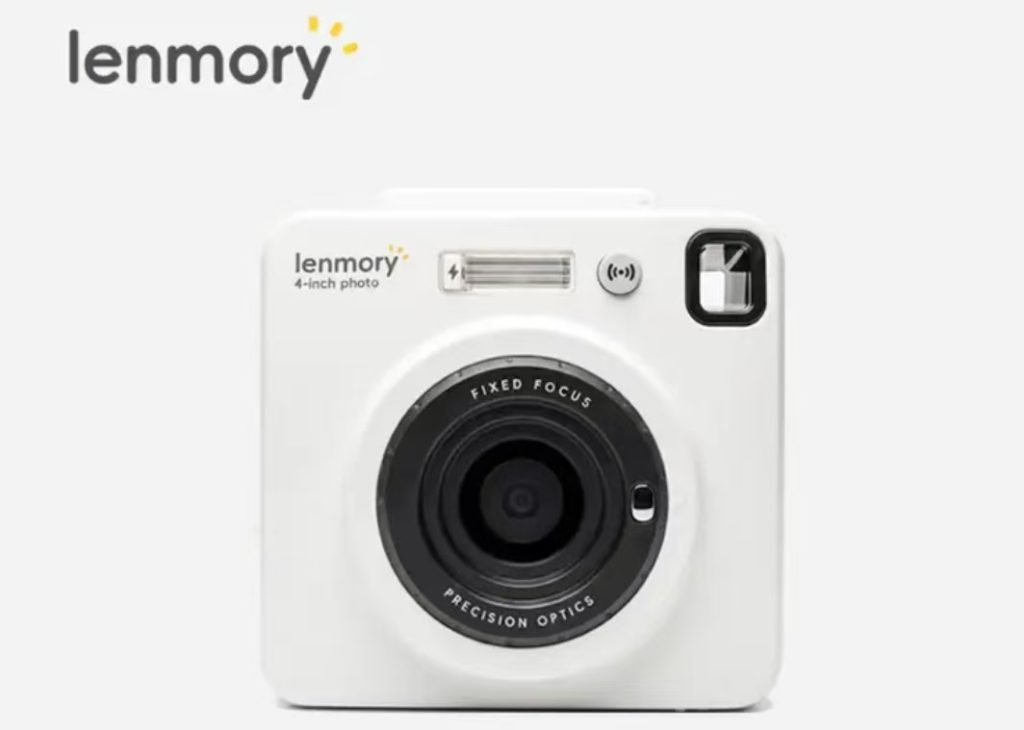
    Yantu lenmory M1 AI instant camera front view with fixed focus lens
    Yantu lenmory M1 AI instant camera front view

    Blinks, shaky hands, bad composition—in the world of traditional instant photography, any mistake means one sheet of film goes straight to the trash. Shoot 200 photos a year with a Fujifilm Instax Mini, and you are burning through $100–$160 in film alone. That does not even count the moments you hesitate to press the shutter because you are terrified of wasting another sheet.

    Now a Chinese startup called Yantu Smart says: AI and E-ink can fix this.

    Their new LENMORY M1 instant camera boils the pitch down to three words: reusable paper, AI assistance, zero waste. It sounds like a perfect tech marriage. But here is the real question—does it actually work?

    From NAS to AI Imaging: This Is Not a Pivot, It Is a Deepening

    Yantu Smart, based in Xiamen, was founded in May 2022. Its founder, Xie Fayan, has spent 16 years in the hardware industry. If you have never heard of Yantu, you have probably heard of his earlier hit: the Meow Machine , the product that basically created the “error-printer” category for students.

    Yantu’s first product, “Princess Tu”, was a NAS device targeting women aged 21–39, especially mothers who needed to store and manage family photos. NAS is a mature but slow-growing market with high user-education costs and non-trivial technical barriers. When the AI imaging boom exploded in 2025–2026, Yantu made a sharp turn: from storage to creation, from backend to frontend, from a stagnant market to a growing one.

    Yantu lenmory reusable E-ink photo card showing flower still life photograph
    Reusable E-ink photo card displays flower image

    In 2025, the company raised funding from Wenzheng Asset and Hillhouse Venture Capital. More recently, Alpha Startups joined the cap table. When investors keep writing checks, it usually means the direction is at least defensible.

    Tech Breakdown: What E-ink Plus AI Actually Changes

    The M1’s headline feature is straightforward: it replaces traditional chemical instant film with next-generation E-ink display paper. This swap creates three immediate differences:

    DimensionTraditional Instant CameraM1 (E-ink Solution)
    Consumable TypeSingle-use chemical film, irreversibleReusable, erasable, rewritable
    Error RecoveryNone—ruined shots are permanentRetake and redraw if you are not happy
    Digital BackupNone—only the physical print existsTransfers to mobile app, keeps digital negative

    But here is the catch: E-ink technology still lags behind chemical film in refresh rate, color accuracy, and contrast. Yantu calls the M1’s panel “next-generation E-ink,” yet the exact specs remain undisclosed. That spec sheet is the single variable that will make or break this product.

    On the AI side, the M1 packs several smart features: automatic blur and blink detection, AI-powered stabilization, real-time filters, and intelligent crop preview. These tools lower the barrier to entry and boost your keeper rate. In traditional instant photography, the “one-shot” nature magnifies the cost of failure. AI steps in as a computational safety net against physical limitations.

    Market Context: Instant Photography Is Growing Backward

    Instant photography looks retro, but the market is growing. Global instant photography revenue is projected to expand at 8–12% CAGR between 2023 and 2028. Gen Z’s nostalgia for physical objects, the “tangible social media” trend, and steady gift-market demand are all pushing the category forward.

    Yet the pain points are just as obvious: expensive film, irreversible mistakes, no digital backups. These gaps create room for innovators.

    Yantu is not alone here. Pai Island Tech, founded by former DJI Ronin product lead Su Tie, is chasing the same AI instant camera opportunity. When ex-big-tech founders swarm a niche, it signals both technical feasibility and commercial potential. It also means competition will heat up fast.

    Yantu lenmory E-ink photo card displaying portrait photo with animal stickers
    E-ink photo card shows portrait with sticker frame

    The core tension in this category is brutal: users are highly price-sensitive, but innovation demands expensive components. Entry-level instant cameras typically sell for $70–$110, with film as the profit engine. The M1, however, needs E-ink panels, AI chips, and wireless modules—none of which come cheap.

    Yantu’s answer seems to be a hybrid hardware-plus-services model. Reusable E-ink cuts long-term consumable costs. AI features justify a higher upfront price. And the ecosystem—combining the camera, NAS photo box, “super film,” and a creator community—locks in user stickiness. The company brands it as “the world’s first AI-driven zero-waste instant imaging ecosystem.”

    The Verdict: Big Vision, Real Challenges

    The upside is genuine. If the M1 succeeds, it redefines the instant camera cost model from “sell film” to “sell hardware plus services,” which is a healthier business. The AI-plus-E-ink combo is extensible into education, office work, and creative tools. And Xie Fayan’s track record proves he knows how to create new categories from scratch.

    But the challenges are equally real:

    First, E-ink maturity. Can refresh rates, color fidelity, and panel lifespan meet the expectations of “instant” photography? If the display looks noticeably worse than chemical film, will users trade image quality for the ability to retake?

    Second, user psychology. Will instant camera fans pay a premium for “undo”? Part of the magic of instant photography is precisely that one-shot irreversibility—the sense that this moment is unique. Remove that, and you might remove the emotional hook.

    Third, ecosystem execution. Is the NAS-plus-community-plus-camera integration actually smooth, or is it feature bloat masquerading as strategy? Getting listed on JD.com and Taobao is one thing. Delivering at scale is another.

    Fourth, supply chain risk. E-ink supply stability, cost control, and mass-production yield are all unproven at this price point.

    Conclusion: An Experiment in Redefining “Instant”

    At its core, the Yantu Smart LENMORY M1 is not trying to build a better instant camera. It is trying to redefine what “instant imaging” means as a product category.

    The question it poses is simple: in an age of AI and reusable displays, does instant photography still need single-use consumables?

    If the answer is no, the M1 could become an inflection point for the entire category. If the answer is “not yet—the tech still has gaps,” then it is simply a fascinating experiment in a crowded AI hardware race.
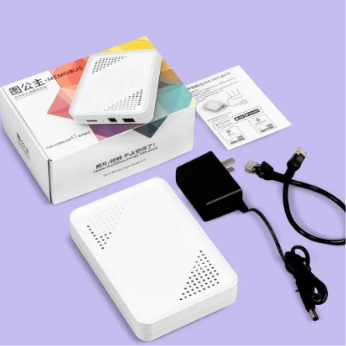
    Yantu Princess Tu MEMOBUS NAS device unboxing contents with cables
    Princess Tu MEMOBUS NAS device and accessories

    Either way, this is a space worth watching. Because any technology that can make dead film walk again is, by definition, worth paying attention to.


    This review is based on publicly available information and product specifications. Actual user experience may vary. AICrunchX will continue tracking developments in the AI imaging hardware space.
  • OBSBOT Meet Flip Launch: 4K AI Webcam for $83

    OBSBOT Meet Flip Launch: 4K AI Webcam for $83

    One-sentence verdict: If you’re tired of laptop webcams delivering unflattering angles and muddy image quality, the Meet Flip proves at $83 that professional meeting experiences don’t require professional budgets.

    OBSBOT Meet Flip laptop video meeting scene
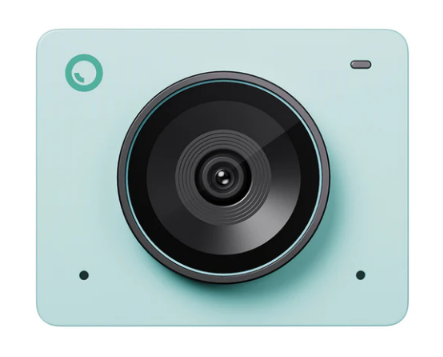
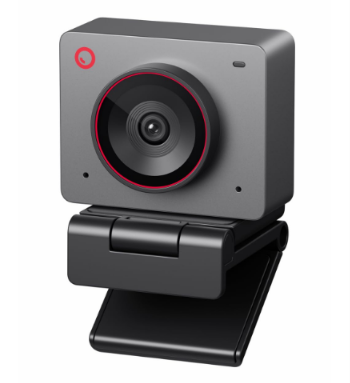
    OBSBOT Meet Flip foldable AI webcam design

    Breaking News

    On June 17, 2026, OBSBOT officially launched the Meet Flip, a next-generation 4K AI conference camera. Featuring an integrated flip-fold design weighing only 37.7 grams, the device packs a Sony 1/2-inch stacked CMOS sensor and F/1.8 large aperture, supporting 4K 30fps output. Embedded AI portrait optimization and smart framing algorithms target mobile office, online education, and remote interview scenarios. Priced at 599 RMB ($83), Chinese comedian Li Xueqin serves as brand ambassador.


    Full Story

    OBSBOT is no stranger to the consumer imaging market. The brand, which built its reputation on AI tracking gimbal cameras, has already accumulated mindshare among remote workers through its Tiny series conference cameras. The Meet Flip launch marks OBSBOT’s strategic extension from “desktop fixed devices” to “pocket portable devices.”

    The flip-fold design is Meet Flip’s most immediate product language. When closed, the device resembles a small power bank; flipped open, it reveals the camera and stand without requiring additional installation or calibration. At 37.7 grams, it fits in a pocket alongside keys and lipstick without becoming a burden. The user insight behind this form factor is clear: remote work scenarios have expanded from “home fixed workstations” to “coffee shops, hotels, and co-working spaces”—users need a tool that can set up a professional meeting environment anywhere, not a device that requires careful staging.

    On the hardware front, the Sony 1/2-inch stacked CMOS exceeds conventional configurations for the $83 price tier. For reference, competitors at this price point typically employ 1/4-inch or smaller sensors, with noticeably limited noise control and dynamic range in low-light environments. The F/1.8 large aperture further enhances dark-light performance, meaning even a single hotel room lamp delivers sufficient brightness and detail.

    The 4K 30fps output specification ranks as premium in the conference camera category. Most competitors remain at 1080p 30fps, while 4K resolution presents clearer text edges and graphic details in screen-sharing presentations, whiteboard writing, and document display scenarios. Notably, 4K output demands higher network bandwidth; the device automatically downscales to 1080p or 720p in weak network conditions to maintain fluidity.

    AI capabilities represent OBSBOT’s traditional strength. Meet Flip’s embedded portrait optimization algorithms cover skin tone reproduction, lighting balance, and background blur, while smart framing supports single-person tracking, multi-person split-screen, and close-up switching. These features prove particularly valuable in remote interview scenarios—candidates need not manually adjust camera angles, as the AI automatically ensures facial positioning at optimal screen placement, leaving professional first impressions with interviewers.

    OBSBOT Meet Flip front lens and body detail
    OBSBOT Meet Flip 4K lens front view detail

    Analysis

    The Tactical Intent Behind $83 Pricing

    The conference camera market has long been polarized: on one side are high-end professional products from Logitech and Poly, priced between $200 and $400; on the other are unbranded 1080p cameras costing less than $20. There is an obvious market gap for branded offerings in the mid-range price bracket of $70–$140.

    Priced at $83, OBSBOT precisely fills this market gap. For remote employees, the choice is no longer a simple matter of whether to purchase a conference camera, but rather to pick between premium professional gear or cost-effective alternatives. The $83 price point lowers the psychological purchasing barrier, framing the expense as comparable to the cost of a cup of coffee under mental accounting logic. Meanwhile, its Sony CMOS sensor and native 4K output deliver credible quality validation, reassuring consumers that the device is far from low-end cheap hardware.

    The selection of Li Xueqin as brand ambassador warrants in-depth analysis. Tech hardware brands usually partner with tech-savvy influencers or business elites for endorsements, yet Li Xueqin’s relatable “everyday office worker” persona closely matches Meet Flip’s core audience: regular remote employees, online learners and content creators. Her brand messaging does not emphasize cutting-edge tech; instead, it frames the device as a daily essential for working people — a far stronger market positioning than mere hardware specifications.

    “Flip Open and Use” Scenario Reconstruction

    Meet Flip’s product philosophy can be summarized in four words: reduce activation cost. The traditional conference camera workflow is: remove from bag → find USB cable → connect to computer → open meeting software → adjust angle → test image. Meet Flip compresses this to: flip open → place → auto-connect.

    This experience optimization proves particularly critical in high-frequency, low-value scenarios. Remote meetings are not film productions; users unwilling to spend five minutes calibrating equipment for a ten-minute standup. Meet Flip’s flip design is fundamentally behavioral design—using physical form to guide users toward a conditioned reflex of “flip open = start meeting.”

    Differentiated Positioning Against Competitors

    FeatureOBSBOT Meet FlipLogitech Brio 500Hikvision DS-U68Laptop Built-in
    Price$83~$165~$110Free
    Weight37.7g~300g~400gN/A
    SensorSony 1/2″ Stacked CMOS1/2.5″ CMOS1/2.8″ CMOS1/6″ or smaller
    ApertureF/1.8F/2.0F/2.0F/2.2+
    Resolution4K 30fps1080p 60fps1080p 30fps720p-1080p
    AI FeaturesPortrait optimization + smart framingAuto-framingBasic trackingNone
    Form FactorFlip-fold portableDesktop fixedDesktop fixedIntegrated

    Meet Flip’s competitive advantage is combinatory: half the price and lighter than professional-tier products, multiples better image quality than laptop webcams, and larger sensors than same-price competitors. This “triangular positioning” leaves it with virtually no direct rivals.

    OBSBOT Meet Flip laptop video meeting scene
    OBSBOT Meet Flip webcam in remote meeting setup

    Industry Impact

    The Meet Flip launch may accelerate the conference camera market’s “consumer-grade” transformation.

    Market impact: The $83 pricing may trigger industry price wars, forcing Logitech, Hikvision, and other brands to adjust entry-level product pricing. Meanwhile, the下放 of Sony stacked CMOS proves supply chain costs have dropped to consumer-acceptable ranges.

    Consumer impact: Professional equipment barriers for remote workers drop significantly. The previous perception that “good cameras = expensive” is shattered, with more users willing to pay for image quality upgrades rather than settling for laptop built-ins.

    Industry impact: The flip-fold design may become a new form factor standard for conference cameras. If Meet Flip sales validate success, expect numerous imitators in the second half of 2026, pushing the entire industry from “desktop fixed” toward “pocket

  • Insta360 Luna Ultra: Leica Optics Meet Pocket-Sized Gimbal Power

    Insta360 Luna Ultra: Leica Optics Meet Pocket-Sized Gimbal Power

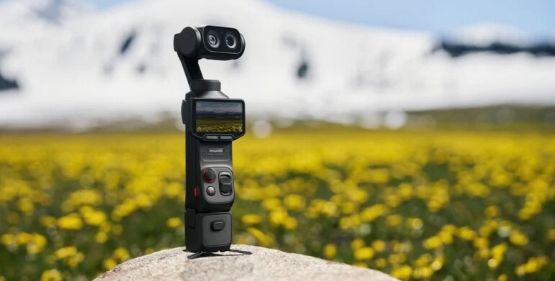
    Insta360 Luna Ultra dual-lens gimbal camera outdoor scene
    Insta360 Luna Ultra

    Verdict: Insta360 has built the most ambitious pocket gimbal camera to date. The Luna Ultra is not just an Osmo Pocket competitor—it is a fundamentally different proposition that trades absolute miniaturization for genuine creative flexibility. For creators who want Leica color science and real zoom range in a genuinely pocketable form, this is the new benchmark.

    What Makes It Different

    The Luna Ultra breaks from the single-wide-angle-lens tradition that has defined pocket gimbals since the category began. Insta360 partnered with Leica on a dual-lens system: a 1-inch 8K main sensor with 20mm equivalent focal length and F1.8 aperture, plus a 1/1.3-inch telephoto sensor with F2.0 aperture delivering 3x optical zoom, 6x lossless zoom, and 12x total hybrid zoom.

    This is not digital cropping pretending to be zoom. The telephoto lens is a separate optical path with its own sensor. The difference shows immediately in portrait shots, where background separation approaches mirrorless camera quality, and in the 15cm minimum focus distance that enables genuine macro photography from a pocket device.

    The zoom lever on the camera body snaps between 1x, 2x, 3x, and 6x focal lengths. Combined with the three-axis mechanical gimbal, you can execute smooth zoom transitions that were previously impossible without a dedicated cinema rig. The gimbal itself is not new technology, but the integration with a dual-lens zoom system is a first for this form factor.

    Image Quality: Leica Means Business

    Insta360’s six-year partnership with Leica has produced five co-developed products. The Luna Ultra represents that collaboration entering the gimbal category. The Leica color profiles—Leica Natural, Leica Vivid, and Leica Chrome—are available for both video and stills, not just photos as with many competitors.

    Video specs are class-leading. 8K30fps Dolby Vision recording delivers four additional stops of dynamic range over standard SDR. 4K120fps slow-motion captures action with genuine temporal resolution. The 10-bit I-Log format provides 14 stops of dynamic range for color grading, natively compatible with ACES and DaVinci Resolve workflows. A built-in timecode generator enables multi-camera sync for professional productions.

    For photography, the camera outputs 37MP ultra-resolution stills and 200MP 2:1 panoramic landscape photos. The Leica watermark is available in-camera, which will matter more to some users than any technical specification.

    The AI triple-chip architecture—a Qualcomm 4nm flagship processor paired with dual independent imaging chips—drives the computational photography pipeline. The most visible benefit is PureVideo mode, which enables real-time 4K60fps night scene enhancement. In practice, this produces genuinely usable footage in city neon and dim restaurant environments where previous pocket gimbals produced noisy, color-shifted mush.

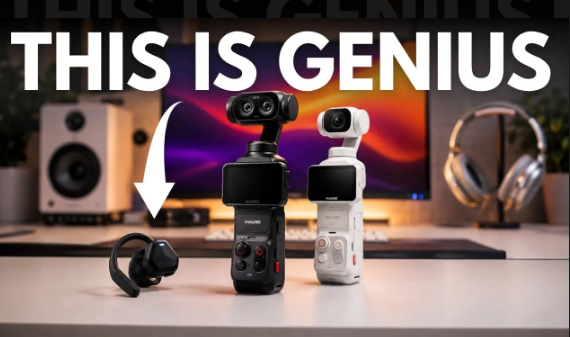
    Insta360 Luna Ultra 黑白模型带头部追踪器
    Luna Ultra

    Form Factor: Innovations That Matter

    At 232 grams, the Luna Ultra is roughly 20% heavier than the DJI Osmo Pocket 4 and noticeably taller. The extra bulk accommodates the dual-lens module and larger battery. Whether the trade-off is acceptable depends on whether you value zoom capability over absolute pocketability.

    The detachable 2-inch OLED touchscreen is the standout design innovation. It separates from the camera body and functions as a wireless monitor and controller up to 20 meters away. The screen contains its own microphone for wireless audio recording, solving the single-shooter audio problem that has plagued solo creators. For self-filming, travel vlogging, or group shots where the operator needs to be in frame, this transforms the shooting experience.

    The first-person head-tracking module is more niche. Wearing an ear-hook accessory, the gimbal and lens follow head movement direction, enabling hands-free POV capture with angles that traditional chest mounts cannot achieve. The implementation works, but the use cases are specific: cycling, skiing, hands-on tutorials. It is not a feature most users will employ daily.

    A sliding rear shell protects the lens module when not in use—no separate case required. The camera powers on by sliding the shell down, a mechanical solution that feels more reliable than software-based quick-start systems.

    Performance in Practice

    Battery life reaches four hours of continuous recording from the 1550mAh cell. Fast charging hits 80% in 23 minutes. Built-in 47GB storage handles emergency shooting when you forget the microSD card, with support for cards up to 1TB.

    The Deep Track 5.0 subject tracking system includes auto tracking, active zoom tracking, group tracking, and smart framing. In testing, tracking lock holds reliably on moving subjects even during zoom transitions, though fast erratic movement can occasionally confuse the algorithm.

    Audio capabilities are comprehensive. The built-in wind guard reduces outdoor noise, and direct pairing with Insta360 Mic series wireless microphones supports dual-transmitter setups with automatic timecode alignment. This is professional audio integration in a consumer-priced body.

    Portrait and Skin Tone Handling

    Insta360 has clearly targeted the Asian vlogging market with dedicated portrait optimization. The camera recognizes facial contours and skin texture, applying beautification that preserves natural detail rather than creating plastic doll effects. Skin tone calibration covers multiple ethnicities through AI adaptation, not just defaulting to lighter complexions. Brightness, smoothing, and tone parameters are adjustable across multiple levels.

    A dedicated color temperature sensor automatically calibrates white balance across mixed lighting environments—warm indoor, cool outdoor, and complex hybrid scenes. The result is consistently accurate skin tones without manual intervention.

    Competition and Pricing

    The Luna Ultra launches at $549 (3999 RMB) for the standard kit, with a creator bundle at $669 (4849 RMB) adding a battery handle, wide-angle lens, and microphone transmitter.

    The direct competitor is DJI’s Osmo Pocket 4P, which also features dual lenses but arranges them vertically rather than horizontally. The Pocket line has ecosystem advantages—DJI Mic integration, broader accessory compatibility, and established workflow integration. The Luna Ultra counters with superior optical zoom range, Leica color science, and the detachable screen innovation.

    Action cameras like the GoPro Mission 1 Pro offer ruggedization and waterproofing that the Luna Ultra lacks. The Insta360 X5 360-degree camera provides immersive capture but sacrifices traditional framing flexibility. The Luna Ultra occupies a distinct position: the best image quality in a genuinely pocketable stabilized form factor.

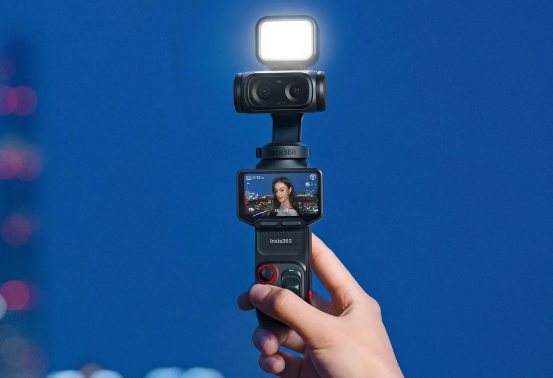
    Insta360 Luna Ultra handheld shooting with LED light
    Luna Ultra handheld vlogging with fill light

    Limitations

    • No waterproofing: IP rating is unspecified; rain and dust require caution
    • USB-C only: No wireless charging or magnetic accessory mount
    • Learning curve: Leica color profiles and I-Log require post-processing knowledge
    • Telephoto quality drop: The 1/1.3-inch telephoto sensor performs below the 1-inch main sensor in extreme low light
    • Ecosystem lock: Best audio and accessory integration requires staying within Insta360’s product line

    Bottom Line

    The Insta360 Luna Ultra is the most capable pocket gimbal camera ever released. It sacrifices the absolute minimalism of the Osmo Pocket line for genuine creative tools: optical zoom, Leica color science, and a detachable screen that solves real shooting problems. The 8K capability is partially future-proofing—few delivery platforms support it today—but the 4K120fps and night enhancement deliver immediate value.

    For travel vloggers, solo creators, and anyone who wants mirrorless-quality output without mirrorless bulk, the Luna Ultra is now the default recommendation. It does not replace action cameras for rugged scenarios or 360 cameras for immersive capture, but for traditional framed video in a pocketable form, nothing else comes close.

    Score: 8.5/10

    • Image Quality: 9/10
    • Stabilization: 8/10
    • Form Factor Innovation: 9/10
    • Low-Light Performance: 8/10
    • Value: 8/10
    • Ecosystem Maturity: 7/10
  • DJI Osmo Pocket 4 : It’s Finally Here After Such A long Wait

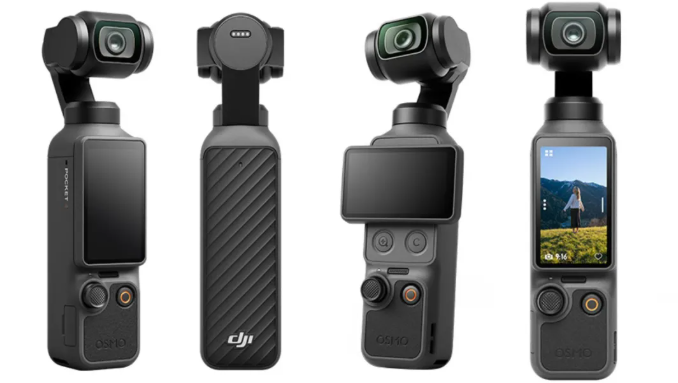
    DJI Osmo Pocket 4 product view
    DJI Osmo Pocket 4 product view

    After a long wait by global consumers, DJI has finally released the Osmo Pocket 4 !

    DJI will officially release the Osmo Pocket 4 at 8:00 PM on April 16, 2026. With the slogan “A myriad of images in an inch, light and shadow on the go,” this pocket gimbal camera, which has been iterated after two and a half years, once again pushes the balance between “portability” and “professionalism” to a new level.

    consumers who are holding off on buying , piling up specifications is not the end goal. The real “decisive moment” lies in how to transform paper data into actual productivity and how to combine accessories to build an efficient workflow .

    aicrunchx will provide you with an objective and practical product preview guide, starting from core performance, storage architecture, control ecosystem, and version differences. Once the product is officially released, we will purchase it and conduct a review as soon as possible .

    I. Image Quality and Optical System: The Synergy Between a 1-inch Sensor and Hardware-Level 2x Zoom

    The most fundamental upgrade in the Pocket 4 is the replacement of the sensor with a 1-inch image sensor. The increased light intake per pixel, combined with 14 stops of dynamic range, significantly improves detail retention in backlit, nighttime, and high-contrast scenes. Optimized shadow clarity and highlight suppression mean that the output images have high commercial delivery potential. For users with post-processing needs, the new 10-bit D-Log color mode (different from the previous generation’s D-Log M) offers wider color gradation latitude, and 1.07 billion color depth makes sky gradients and skin tone transitions smoother, greatly reducing the risk of color banding when applying LUTs or manually adjusting colors.

    On the optical level, the all-new hardware-level 2x lossless zoom is an unmissable highlight. Compared to digital cropping, this feature uses sensor area reading and lens optical axis coordination to magnify the image without sacrificing resolution. Combined with a three-axis mechanical stabilization system (not the previously rumored four-axis magnetic levitation), the gimbal provides more precise smooth compensation during zooming, resulting in images free of breathing or tearing. In everyday composition, 2x zoom allows for quick switching between portrait close-ups and environmental details, reducing the risk of continuity errors caused by frequent movement, making it extremely user-friendly for solo vloggers.

    II. High Frame Rate and Cropping: The Practical Boundaries of 4K/240fps

    Slow-motion performance is doubled to 4K/240fps, stretching dynamic moments nearly 10 times, making it ideal for capturing action, pet interactions, or fluid effects. However, it’s important to note that this mode introduces approximately 1.2 times image cropping. This is not a design compromise, but rather an engineering optimization to ensure sensor data throughput, heat dissipation control, and image stabilization processing power at high frame rates.

    In actual shooting, a 1.2x crop is only equivalent to a slight extension of the focal length. It is recommended to leave about 15% of the ambient space when composing the shot, and then crop it again in post-processing to perfectly restore the original image. If a full wide-angle view is required, 4K/120fps or 4K/60fps modes remain the primary formats, and the image quality is still maintained at 10-bit full sampling level. Treating 240fps as an “emotional embellishment” rather than a daily recording format will maximize its creative value.

    III. Storage Architecture Restructuring: Workflow Transformation with 107GB Built-in Flash Memory

    Eliminating the traditional MicroSD card slot and featuring 107GB of high-speed internal storage as standard is the most revolutionary design of the Pocket 4. Read and write speeds of 800MB/s exponentially improve the efficiency of media export: via USB-C direct connection to a computer or mobile phone, tens of gigabytes of 4K Log footage can be transferred in under a minute, significantly reducing post-production waiting time during outdoor shooting. The card-free design also eliminates memory card compatibility issues and the risk of media loss due to physical damage, resulting in higher system stability.

    New habits need to be established for capacity management. 107GB can support a day’s high-intensity creative work under normal 4K/30fps recording, but if 4K/240fps or 10-bit Log is frequently used, the capacity will be consumed significantly faster. It is recommended to develop a light workflow of “shooting and archiving on the same day” and backing up regularly with a high-speed NVMe external hard drive or NAS. If an official docking station or Pro version is released in the future, the capacity anxiety of heavy users will be further alleviated.

    IV. Tracking, Reception, and Control: The Leap from “Usable” to “Effective”

    At the algorithm level, the intelligent tracking feature has been upgraded to version 7.0, integrating an independent intelligent focus module, which significantly improves the recognition accuracy and focus smoothness for faces, pets, and irregularly moving objects. When the subject is briefly obscured or turns rapidly, the coordinated response of the gimbal and focus system is more decisive, significantly reducing the rate of unusable shots.

    In terms of audio, the four-channel Osmo Audio microphone matrix achieves 360° ambient sound field acquisition, with wind noise suppression algorithms and human voice enhancement frequency bands optimized simultaneously. The physical controls have also been redesigned: a new independent zoom lever and a customizable C button have been added. The probability of accidental touches during two-finger pinch zoom is reduced to zero, and the C button can be used to switch frame rates, activate slow motion, or bind frequently used filters, improving blind operation efficiency. The 1545mAh battery, after power consumption optimization, offers a combined battery life exceeding 200 minutes. The Wi-Fi 6 protocol results in lower latency for mobile app monitoring, stronger anti-interference capabilities for image transmission, and a more stable experience for multi-camera collaboration or remote control.

    The leap from usable to truly usable
    The leap from usable to truly usable

    V. Version Selection and Price Prediction: Standard Edition vs. All-in-One Set

    Based on DJI’s product line pricing logic and imaging market trends, the Pocket 4 is expected to continue with a dual-version strategy:

    • Standard version : Includes the main unit, charging case, and basic adapter. Suitable for existing DJI Mic series microphones and tripods, or for users who simply need a lightweight upgrade. Estimated price: $499–$549 USD .
    • The Creator Combo adds a wireless lavalier microphone, wide-angle/telephoto adapter lenses, a multi-functional carrying case, spare batteries, and a fast-charging cable to the standard version. It allows you to build a complete vlog workflow right out of the box, eliminating the hidden costs of purchasing items separately later. Estimated price: $699–$749 USD .

    If the shooting scenario involves outdoor interviews, long-term follow-up shooting, or has strict requirements for sound recording/protection, the all-in-one kit offers better overall value; if it is only used for daily recording and a mature audio solution is already available, the standard version can still deliver core performance when paired with third-party accessories.

    VI. Purchase Decision Recommendations

    • Highly recommended for : Vloggers, travel photographers, short video creators, and pet/sports enthusiasts. 1-inch screen, 200 minutes of battery life, and four-channel audio recording precisely address the core pain points of mobile video.
    • It’s advisable to wait and see : This is suitable for users who only want to take casual family photos and don’t need post-processing color correction. The performance of the Pocket 4 is somewhat excessive; older models or entry-level mirrorless cameras may offer better value for money.
    • Not suitable for : Professional film and television teams that need to shoot RAW video, use interchangeable lenses, or work in extremely harsh environments. The Pocket series is always positioned as an “efficient portable recording tool,” not a replacement for a main unit.

    Conclusion

    DJI Pocket 4 Login Instantly
    DJI Pocket 4 Login Instantly

    The Osmo Pocket 4 is not simply an iteration of stacked parameters, but a systematic reconstruction centered around the “on-the-go creation” scenario. From the 1-inch sensor to 107GB high-speed flash memory, from 2x hardware zoom to Smart Follow 7.0, every upgrade directly addresses the pain points in real workflows.

    After its official release on April 16th, aicrunchx will bring you an in-depth review as soon as possible. At that time, readers are welcome to refer to the actual test results to confirm whether the firmware stability and the color calibration of the output meet their personal aesthetics, and then make a choice based on their budget and accessory ecosystem.

    The essence of video creation is capturing moments, and the significance of Pocket 4 is to make every press of the record button easier and more reliable.