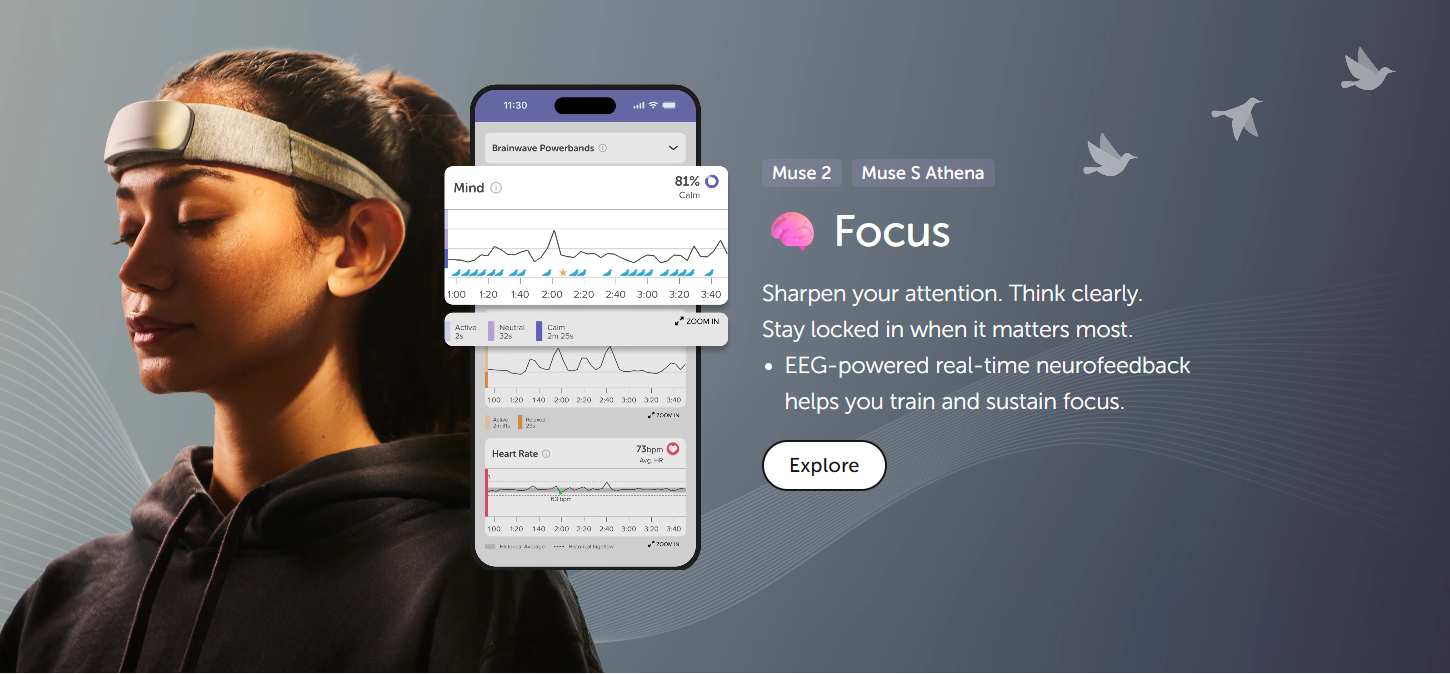
In today’s high-pressure world, “high-quality sleep” and “continuous focus” have become scarce commodities. InteraXon, a Canadian sleep technology company, has launched the Muse S Athena smart headband, attempting to break this deadlock by positioning itself as a “brain fitness coach”—it’s more than just a sleep tracking device; it claims to help users train focus and improve mental resilience through EEG monitoring.
However, its high-end price of $474.99 has made this device controversial since its launch: is it a cutting-edge technology that democratizes clinical-grade EEG technology, or an expensive toy that exploits anxiety? This newspaper, through two weeks of testing, analyzes the true value of this “brain marvel” from three core dimensions: functional practicality, data accuracy, and cost-effectiveness.
I. Wearing Experience: A “Seamless Design” for Long-Term Use
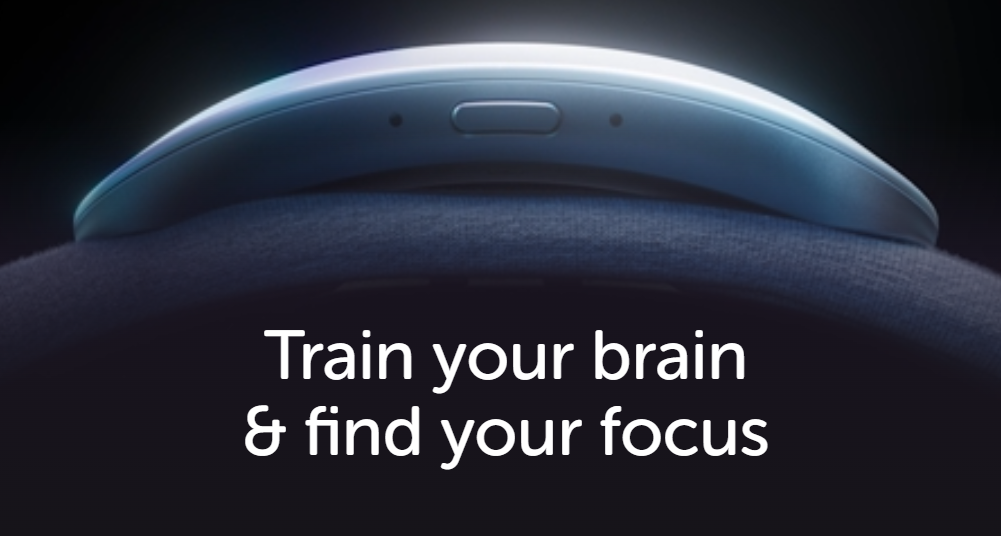
For wearable devices, wearing comfort directly determines usage rate—this is one of the core advantages of the Muse S Athena. Unlike traditional rigid plastic EEG devices, this headband is made of soft fabric, more like a wide sports headband, and embeds seven high-precision sensors, covering core monitoring modules such as EEG brainwaves, PPG heart rate, and accelerometers.
Real-world testing shows that its presence is extremely minimal, whether during meditation or sleep at night. Especially for side sleepers, the sensors are flattened, eliminating any discomfort, a significant advantage over similar EEG devices. Furthermore, the headband is machine washable (after removing the electronic modules), solving the cleaning pain point of long-term close-fitting wear.
It is worth noting that there is still a compatibility barrier for people with extremely sensitive skin or those who resist head constriction during sleep—these users are advised to try it on in-store first. However, for most consumers, its comfort level is among the best in wearable devices, sufficient for long-term daily use.
II. Core Function Testing: What is the Actual Value of EEG Technology?
The core competitiveness of Muse S Athena lies in the consumerization of EEG (electroencephalography) technology, originally used in clinical settings. Its three core functions all revolve around this technology, with each demonstrating different strengths in real-world testing.
- Focus Training: Quantifying Attention with “Audio Feedback”
This is the most classic function of the Muse series and the core support for its “brain fitness” positioning. It captures brainwave activity in real time through an EEG sensor, and the accompanying app converts this into intuitive audio feedback: when thoughts are calm and focus is adequate, soft birdsong or ocean waves sound; when distraction or anxiety occurs, the sound becomes rapid, even switching to a storm sound.
In two weeks of testing, this “biofeedback” mechanism showed significant training effects—helping users quickly identify moments of distraction and actively bring their attention back to the target, significantly shortening the time to enter a deep focus or meditative state. Compared to traditional meditation apps, its advantage lies in “quantified feedback,” rather than simple guidance; users can clearly see their focus duration and state fluctuations.
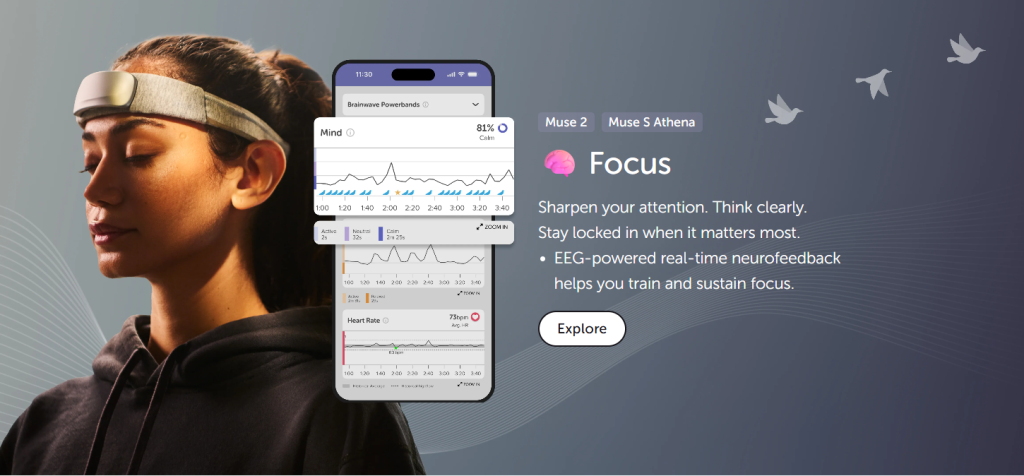
Its applicable scenarios are concentrated on warming up before deep work, calming down before high-pressure meetings, and attention training for students and mental workers. For people with ADHD (Attention Deficit Hyperactivity Disorder), it is also one of the most direct brainwave training tools currently available in the consumer market.
- Mental Endurance and Physiological Monitoring: “Empowering” Rather Than “Replacing” Athletic Performance
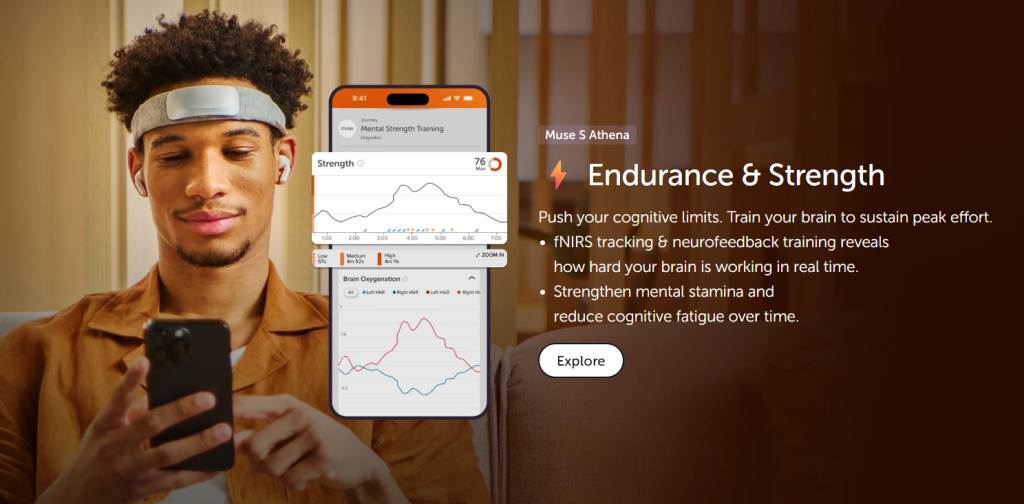
It should be clarified that the Muse S Athena is not a muscle training device. Its claimed “endurance and strength” are essentially training in mental endurance and assisting in exercise recovery.
In terms of mental endurance, its breathing training and stress monitoring functions can help athletes remain calm under extreme conditions—by monitoring cortisol levels in real time, it guides users to adjust their breathing, reduce anxiety, and thus maintain mental stability during long-distance endurance sports or heavy weight training. This has practical auxiliary value for serious runners and fitness enthusiasts.
In terms of physiological data, the new version of the device integrates HRV (Heart Rate Variability) monitoring—a key indicator for measuring the body’s stress and recovery capabilities. Users can use HRV data to determine their physical condition for the day: whether it’s suitable for high-intensity strength training or requires active rest to avoid injury from overtraining. Furthermore, the app’s accompanying sports psychology guidance courses help users quickly enter a “flow” state, improving training efficiency.
However, it’s important to understand that it cannot directly increase muscle strength or athletic performance. Its value lies in indirectly breaking through psychological bottlenecks and raising the upper limit of training performance by optimizing the nervous system.
- Sleep and Recovery: The True “Ace Feature” and the Core Support for Pricing
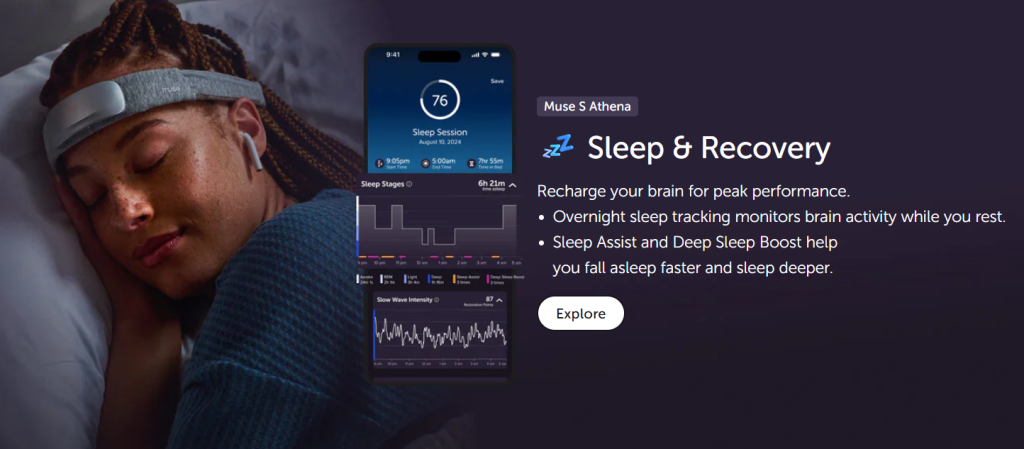
If focus training is Muse’s “feature,” then its sleep and recovery function is the core reason for its $474.99 price tag. Unlike ordinary smartwatches and sleep rings, it doesn’t determine sleep state through motion tracking, but rather uses EEG monitoring to accurately identify three key stages: light sleep, deep sleep, and REM (rapid eye movement) sleep. The data has higher medical reference value.
In real-world testing, its “active intervention” function performed exceptionally well: when it detects difficulty falling asleep, it automatically plays specific sound waves such as pink noise to guide the brain into a Delta wave state, accelerating sleep onset; when the user wakes up at night, it also uses gentle sounds to redirect sleep. Furthermore, the intelligent wake-up function wakes the user with a slight vibration when they are in a light sleep stage, avoiding the grogginess caused by “sleep inertia” and improving morning alertness.
Some models also support snoring detection, recording nighttime snoring through ambient sound monitoring, providing data for potential sleep breathing problems. For insomniacs or those with extremely poor sleep quality, this is one of the few devices in the consumer market that can achieve “active intervention” rather than “passive recording.”
III. Price Breakdown: Where Does the $474.99 Premium Go?
The $474.99 price tag places the Muse S Athena in the high-end wearable device category. Compared to similar products, its price advantage isn’t significant; the premium logic mainly focuses on four aspects:
- Technology Demographic Cost: Transforming clinical-grade EEG monitoring technology into a consumer-grade product requires substantial R&D investment—this is the core difference between it and the Ora Ring (approximately $300, focusing on sleep, no brainwave monitoring) and Whoop 4.0 (subscription-based, focusing on exercise recovery, no brainwave monitoring).
- Software Ecosystem Value: Hardware purchases typically include a limited-time premium app membership, containing hundreds of meditation, sleep guidance, and psychological training courses, accessible without additional payment.
- Data Accuracy Advantage: In core scenarios such as sleep staging and stress monitoring, brainwave data is more authoritative and has higher reference value than photoelectric heart rate (PPG) monitoring from ordinary devices.
- Long-term holding costs: It should be noted that some premium features may require additional subscriptions after the free membership expires, which will increase long-term usage costs. Consumers should confirm whether lifetime app service is included before purchasing.
IV. Advantages and Disadvantages Review: A Rational View of the Boundaries of “Brain Gadgets”
Advantages:
- Accurate Data: EEG brainwave monitoring is irreplaceable in the fields of sleep and concentration, with data accuracy superior to most consumer-grade wearable devices;
- Active Intervention: Unlike simple “monitoring tools,” it can actively improve sleep and concentration through voice guidance and sound wave intervention;
- Wearable User-Friendly: The fabric design is suitable for long-term wear, comfortable for side sleeping, and easy to clean;
- Privacy and Security: As a Canadian company, its data privacy protection policy is relatively strict, avoiding the risk of user data leakage.
Disadvantages (Cons):
- High Price: The nearly $500 price tag deters many early adopters, making it unfriendly to those with limited budgets.
- Frequent Charging: Under heavy use (daily meditation + nighttime sleep monitoring), it needs to be charged every 2-3 days, resulting in mediocre battery life.
- Steep Learning Curve: Users need time to learn how to interpret brainwave data and incorporate breathing exercises to fully realize the device’s value.
V. Purchase Guide: Who Should Buy This “Brain Mirror”?
The Muse S Athena is not a “mirror of wonders,” but rather a “mirror of the brain”—by quantifying focus, stress, and sleep patterns, it guides users to confront their own physical and mental issues and provides tools for improvement. Whether its value is realized depends primarily on whether users are willing to invest time in practice and adjustment. Based on our hands-on testing experience, we offer the following purchase recommendations:
Highly recommended for:
- Individuals with chronic insomnia or extremely poor sleep quality: They need proactive intervention rather than passive recording. Its brainwave guidance function can effectively improve problems such as difficulty falling asleep and nighttime awakenings.
- High-pressure mental workers/corporate executives: They need to quickly restore focus, manage stress levels, and improve work efficiency.
- Deep meditation enthusiasts: They want to quantify their meditation progress and overcome the confusion of “not being able to determine whether they have entered a meditative state.”
- “Biohacker” enthusiasts: They pursue ultimate body data management and hope to combine HRV and brainwave data to optimize their lifestyle and training.
Not Recommended for:
- Those with limited budgets: When $474.99 represents a significant portion of your budget, a regular sleep ring or smartwatch offers better value.
- Purely performance-oriented users: If you only focus on basic exercise data such as pace and weightlifting, devices like Garmin and Apple Watch are more targeted.
- Those who cannot accept head-mounted devices: Regardless of comfort, the feeling of restriction on the head remains a psychological barrier for some, making long-term use difficult.
Conclusion: An Investment in “Self-Awareness”
The Muse S Athena won’t make you smarter or stronger while you sleep. Its core value lies in “quantifying yourself”—for $474.99, you’re buying a complete system for monitoring and improving your mind and body. If you’re experiencing high-pressure times or undergoing a health transition, and are willing to invest time in meditation, breathing exercises, and sleep hygiene, then the long-term health benefits of this device are worth anticipating.
For consumers, it’s advisable to keep an eye on InteraXon’s official website for promotions before making a purchase—some promotions include extended warranties, extra accessories, and other benefits, which can slightly lower the barrier to entry. After all, the value of this “brain fitness coach” is never the device itself, but rather its ability to motivate you to make positive changes in your mind and body.
Leave a Reply