Introduction: Logistics Industry AIization Starts with a Pair of Earbuds
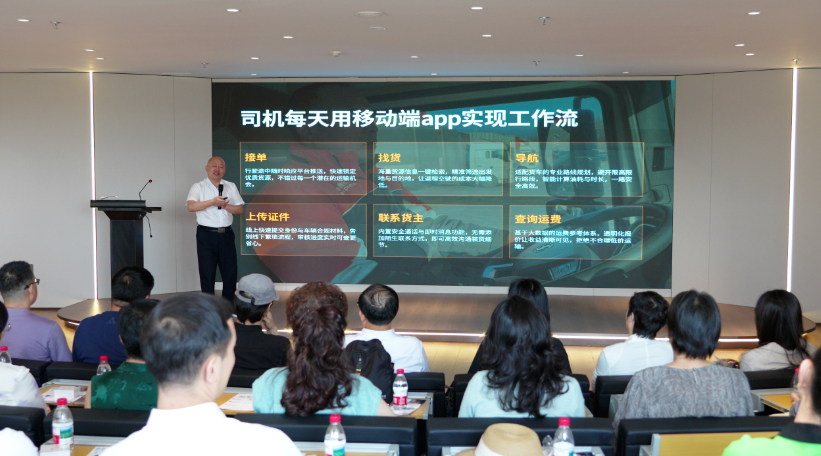
On June 6, Jiangsu Wurun Chuanlian released a very special AI hardware product—the Fanyin AI Smart Earbuds. Not targeting consumers, not emphasizing audio quality, not competing on noise cancellation depth, but specifically designed for truck drivers: voice-driven cargo finding, order acceptance, navigation, fueling, and waybill inquiry. Simply put, it is an “ear assistant” for China’s 30 million truck drivers, letting them work by talking without looking at their phones or tapping apps while driving.
This positioning is extremely vertical and extremely smart. In 2026, when AI hardware generally pursues “all-in-one” capabilities, Fanyin chooses subtraction—not building a general AI assistant, but deeply adapting to logistics scenarios. This “vertical industry AI hardware” approach may be the key path for AI evolving from “toy” to “tool.”
Product Overview: Logistics Intelligent Agent Stuffed into Earbuds
Who is Wurun Chuanlian? A Jiangsu-based enterprise deeply rooted in logistics informatization for years, with main businesses in logistics platforms, shipping management, and freight matching. They are not major consumer electronics manufacturers, without brand premiums, but they understand the pain points of the logistics industry—drivers operating phones while driving is dangerous, cargo information is scattered, waybill status inquiry is troublesome, and gas station selection relies on experience.
The core of Fanyin AI Smart Earbuds is not “earbuds” but the voice entry point for a “logistics intelligent agent.” At the hardware level, it is a pair of TWS true wireless earbuds supporting Bluetooth phone connection; at the software level, it features Wurun Chuanlian’s self-developed logistics intelligent agent system, enabling voice interaction across the full logistics workflow.
Core functions revolve around drivers’ daily workflow:
Smart Cargo Finding: The driver says “find me cargo,” and the AI automatically matches the most suitable orders from the platform cargo database based on current location, vehicle type, load capacity, and destination preferences, voice-broadcasting cargo information, freight rates, and loading/unloading locations. The driver says “accept” or “decline” to complete the operation.
Voice Order Acceptance: Traditional order acceptance requires stopping the vehicle, opening the phone app, browsing the order list, and tapping confirm. Fanyin compresses the entire process into one sentence: “Accept cargo from A to B,” with the AI automatically completing order confirmation, contract generation, and electronic signature (via voice confirmation).
Voice Navigation: Not ordinary map navigation, but “logistics-dedicated navigation”—automatically avoiding height-restricted, weight-restricted, and traffic-restricted roads, prioritizing truck-friendly routes, and real-time broadcasting information about upcoming service areas, gas stations, and repair points.
Voice Fueling: Say “cheapest nearby gas station,” and the AI automatically compares prices of surrounding stations, combining truck tank capacity and current fuel level to recommend the optimal fueling plan, even supporting voice payment (bound to enterprise accounts or driver personal accounts).
Waybill Inquiry: “Check today’s waybill progress,” and the AI automatically summarizes all current waybill statuses, voice-broadcasting the number and key milestone information of completed, in-progress, and pending-loading orders.
Specifications: How Much Logistics Intelligence Can a Pair of Earbuds Carry?
| Spec | Details |
|---|---|
| Form Factor | TWS true wireless earbuds |
| Connectivity | Bluetooth 5.3 |
| Voice Interaction | Offline + online hybrid recognition |
| AI Model | Logistics intelligent agent (self-developed) |
| Noise Cancellation | ENC call noise reduction |
| Battery | 4 hours per charge / 16 hours with charging case |
| Waterproof | IPX4 |
| Wear Detection | In-ear detection |
| Companion App | Fanyin Logistics Assistant |
| Target Users | Truck drivers, logistics professionals |
| Price | Unannounced (expected primarily enterprise procurement) |
Data source: Wurun Chuanlian official launch materials
Fanyin’s hardware configuration is not aggressive—Bluetooth 5.3, ENC call noise reduction, IPX4 waterproofing, 4-hour battery life per charge, these specs place it in the mid-range among consumer TWS earbuds. But Wurun Chuanlian’s smart move is: instead of competing with AirPods Pro on audio quality and noise cancellation, they invest all R&D resources into the “logistics intelligent agent” software layer.
The logistics intelligent agent’s technical architecture divides into three layers:
Perception Layer: Through GPS positioning, vehicle OBD data (optional), and driver voice input, real-time acquisition of vehicle status, location, and task progress.
Decision Layer: AI algorithms generate optimal decision recommendations based on cargo database, route planning engine, real-time fuel price data, and driver historical preferences. For cargo finding, it considers not just distance and freight rates but also loading/unloading efficiency, return cargo probability, and driver fatigue level.
Execution Layer: Voice interaction completes the operation loop, while synchronizing in real-time with Wurun Chuanlian’s logistics platform backend, ensuring seamless data flow of order status, vehicle location, and electronic contracts.
Deep Analysis: Where Is the Value of Vertical AI Hardware?
The emergence of Fanyin AI Smart Earbuds reveals an overlooked trend: the next battlefield for AI hardware may not be “smarter general-purpose devices” but “industry-specialized tools that understand specific sectors better.”
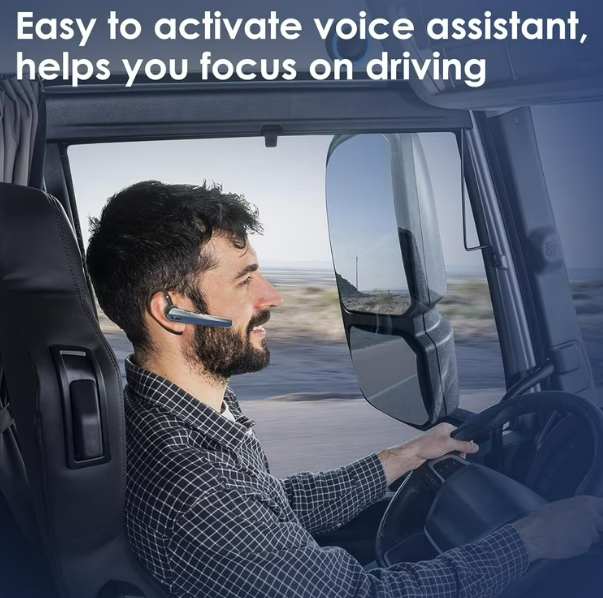
Precise Pain Point Targeting: Truck drivers’ core pain point is not “earbud audio quality isn’t good enough” but “cannot safely operate phones while driving.” Fanyin replaces 80% of phone operation scenarios with voice interaction, minimizing safety risks. This value is far more important than “noise cancellation depth improving by 5dB.”
Data Closed Loop: As a logistics platform, Wurun Chuanlian controls cargo data, waybill data, and driver behavior data. Fanyin earbuds serve as a data collection entry point, not only outputting services but also inputting data—driver voice commands, location trajectories, and operation preferences feed back to optimize AI model decision quality. This “hardware + platform + data” closed loop is a barrier difficult for consumer-grade AI hardware to establish.
Controllable Costs: Vertical AI hardware does not need to pursue “all-in-one” capabilities; models can be smaller, compute requirements lower, and costs more controllable. Fanyin’s logistics intelligent agent does not need to understand Shakespeare, only needs to understand dozens of intents like “find cargo,” “accept order,” “navigate,” “fuel,” and “check waybill.” Model parameters can be controlled within 1B, fully feasible for edge-side execution.
Clear Business Model: The profitability dilemma of consumer-grade AI hardware is “hardware doesn’t make money, software subscriptions are hard to push.” Fanyin’s business model is “enterprise procurement + platform commission”—logistics companies bulk-purchase earbuds for drivers, while Wurun Chuanlian earns service fees through platform cargo matching. Earbuds are “customer acquisition tools,” the platform is the “profit engine”—this logic is healthier than “making money on earbud margins.”
But Fanyin also faces challenges:
Hardware Experience Shortcomings: 4-hour battery life is insufficient for long-distance drivers, requiring frequent charging case recharging; IPX4 waterproofing may be inadequate in rainy or high-humidity environments; ENC noise reduction has limited effectiveness in truck engine noise environments. These issues are already solved in consumer-grade earbuds, but as a software company, Wurun Chuanlian’s hardware capabilities may be a weak point.
Ecosystem Closed Risk: Fanyin currently only connects to Wurun Chuanlian’s own logistics platform. If drivers simultaneously use multiple platforms (such as Huolala, Manbang, Fuyou Truck), Fanyin’s “smart cargo finding” function is limited. Opening APIs to connect third-party platforms is the necessary path for Fanyin to evolve from “tool” to “platform.”
Driver Acceptance: The truck driver demographic skews older, with uneven acceptance of new technology. Fanyin’s voice interaction needs to adapt to various dialects, accents, and speaking speeds; AI recognition accuracy directly affects user experience. If a driver says “find cargo” three times and the earbuds don’t respond, this product will be abandoned.
Comparison: Fanyin vs Consumer AI Earbuds
| Feature | Fanyin AI Smart Earbuds | iFLYBUDS Nano+ | Xiaodu Qinghe Earbuds |
|---|---|---|---|
| Positioning | Logistics vertical scenarios | Meeting transcription/translation | General AI assistant |
| Voice Interaction | Logistics-specific intents | Meeting/translation/general | General Q&A |
| Noise Cancellation | ENC call noise reduction | ANC active noise cancellation | ANC active noise cancellation |
| Battery | 4 hours | 6 hours | 5 hours |
| Ecosystem | Wurun Chuanlian platform | iFLYTEK ecosystem | Baidu ecosystem |
| Target Users | Truck drivers | Business professionals | Young consumers |
| Price | Enterprise procurement | ~699 yuan | ~399 yuan |
| Business Model | Hardware + platform commission | Hardware + subscription | Hardware + content |
Fanyin and consumer-grade AI earbuds are completely different tracks. iFLYBUDS focuses on meeting transcription, Xiaodu Qinghe on general AI Q&A, while Fanyin only does logistics scenarios. This “narrow but deep” positioning gives Fanyin irreplaceability in the logistics industry, but also limits market scale—among 30 million truck drivers nationwide, how many can be covered?
Pros and Cons
| Pros | Cons |
|---|---|
| Deep logistics scenario adaptation, precise pain points | Average hardware experience, battery/waterproofing/noise cancellation shortcomings |
| Voice interaction frees hands, improves driving safety | Currently only connects to own platform, closed ecosystem |
| Data closed loop strengthens AI decision quality | Driver demographic skews older, uneven new tech acceptance |
| Clear business model, enterprise procurement + platform commission | Dialect/accent recognition accuracy to be verified |
| Vertical AI model small, low cost, edge-side feasible | Low brand recognition, limited channel expansion capability |
| Fills logistics industry AI hardware gap | Insufficient battery for long-distance driving scenarios |
Who Should Buy
Recommended for:
- Logistics transportation companies needing to equip drivers with safe operation tools
- Truck drivers frequently using logistics platforms for orders and prioritizing driving safety
- Fleet managers needing real-time monitoring of driver status and waybill progress
- Existing Wurun Chuanlian platform users, best experience within the ecosystem
Not recommended for:
- General consumers not needing logistics functions, where consumer-grade earbuds offer better experience
- Individual drivers using multiple logistics platforms simultaneously, limited by Fanyin ecosystem
- Users with high requirements for audio quality and noise cancellation (recommend AirPods Pro/Sony)
- Short-distance delivery drivers (such as same-city express), limited value of logistics functions
FAQ
Q: Must Fanyin earbuds be used with the Wurun Chuanlian platform?
A: Core functions (smart cargo finding, voice order acceptance, waybill inquiry) require binding a Wurun Chuanlian platform account. Navigation and fueling functions can be used independently, but logistics-dedicated route recommendations require platform data support.
Q: Does it support dialect recognition?
A: Official dialect support list has not been published, but the logistics intelligent agent is optimized for truck drivers’ commonly used phrases. Recommend consulting customer service before purchase to confirm support for your commonly used dialect.
Q: Is 4-hour battery life sufficient for long-distance drivers?
A: 4 hours per charge is somewhat short for long-distance driving, but extends to 16 hours with the charging case. Recommend long-distance drivers equip a car charger or spare charging case, or recharge during rest stops.
Q: Can it connect to other logistics platforms (such as Huolala)?
A: Currently only supports the Wurun Chuanlian platform. Official statements indicate future possible API opening to third-party platforms, but specific timing is unannounced.
Conclusion
Fanyin AI Smart Earbuds are an “unsexy but practical” product. They lack stunning hardware parameters, lack dazzling AI function demonstrations, but they solve a real industry pain point—the safety risk of truck drivers operating phones while driving.
In 2026, when AI hardware generally pursues “all-in-one” capabilities, Fanyin’s choice of “vertical deep cultivation” is worth industry consideration. Logistics, medical, construction, agriculture—every industry has its unique workflow and pain points that general-purpose AI hardware struggles to precisely cover. Fanyin’s model proves that transforming large model capabilities into “industry-specific,” “scenario-specific,” and “voice-driven” forms may be the shortest path for AI hardware evolving from “toy” to “tool.”
But Fanyin’s success does not depend on the earbuds themselves, but on whether Wurun Chuanlian can continuously expand platform cargo sources, optimize AI decision quality, open the ecosystem to third parties, and improve hardware experience. If these issues are resolved well, Fanyin may become a benchmark case for “vertical industry AI hardware;” if not, it will only be a pair of “functionally single, experience average” ordinary earbuds.
Leave a Reply