Preface: The Furniture Industry’s “AI Moment”
As we stand in 2026, artificial intelligence is no longer a novel concept; however, deeply integrating it into traditional furniture remains a significant challenge.
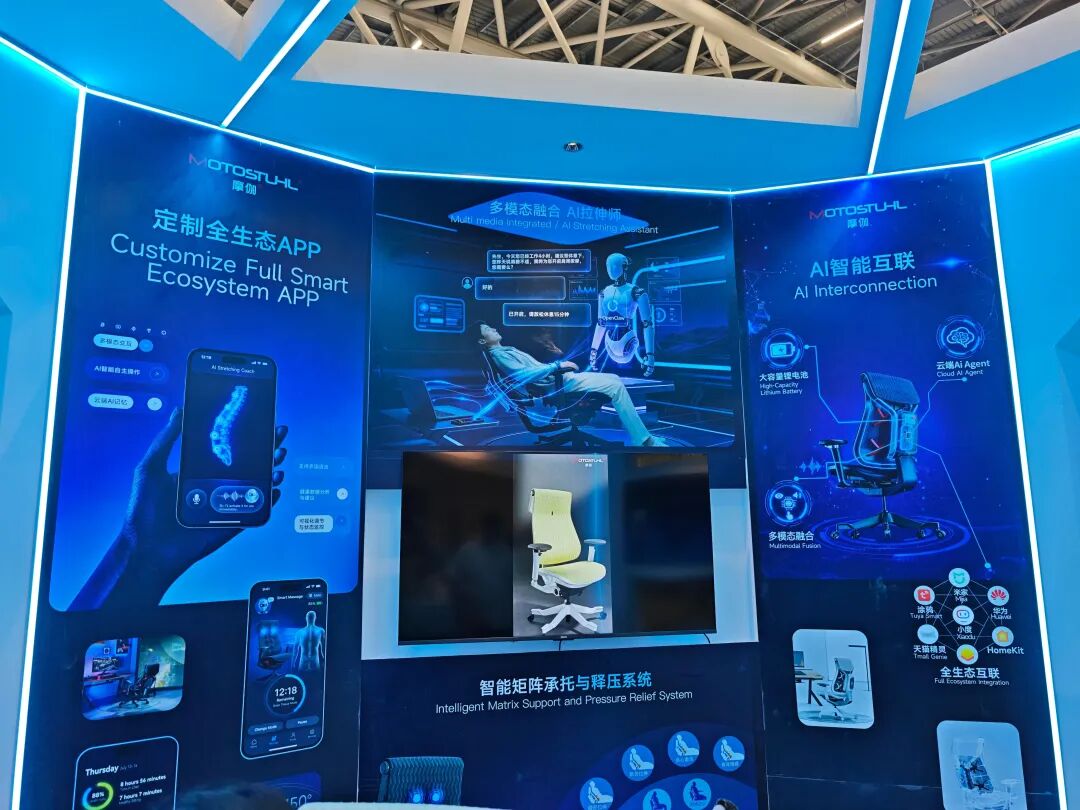
Recently, MOTOSTUHL unveiled its latest product—the Lavenne R9—at the 57th China International Furniture Fair (Guangzhou). The company claims it is a truly authentic “AI chair.”
Rather than merely layering on voice control capabilities, the Lavenne R9 attempts to fundamentally reimagine the sitting experience through sophisticated algorithms.
So, is this high-priced AI ergonomic chair just another gimmick within the AI hardware sphere, or is it a powerful product capable of truly reshaping the landscape of traditional furniture?
AICRUNCHX brings you an exclusive hands-on review and buying guide straight from the 57th China International Furniture Fair (Guangzhou).
Core Hardware: The 16-Airbag Bionic System
The standout feature of the Lavenne R9 is its proprietary “Four-Layer Suspension Backrest Bionic Movement System.”
While traditional ergonomic chairs rely on mechanical structures to provide passive support, the R9 features 16 independently controlled airbags embedded within its backrest. These airbags can precisely inflate and deflate to adjust support at various points along the torso, adapting to the user’s unique body shape. Our on-site testing revealed that these adjustments are remarkably responsive and virtually silent. Furthermore, when combined with its patented “Forward-Tilting Drift” function, the backrest and seat cushion can tilt forward in sync with the user’s posture while working at a desk; this real-time adjustment of support intensity effectively alleviates pressure on the lumbar spine.
The AI Experience: From “Commands” to “Perception”
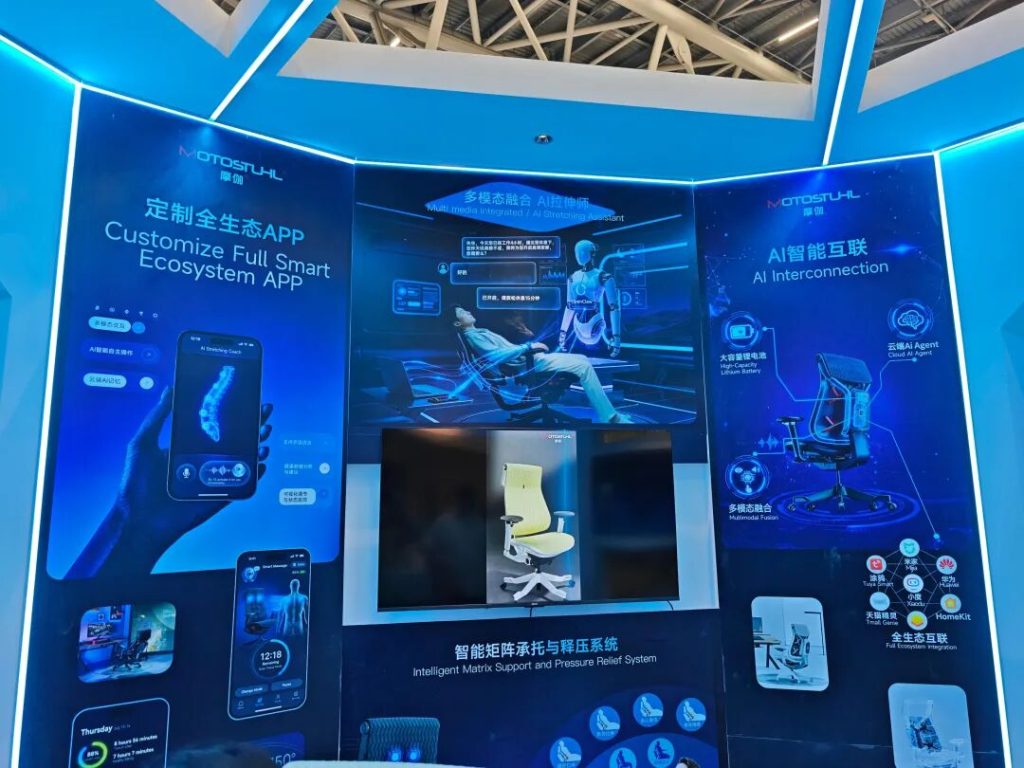
Upon connecting to the OpenClaw collaborative system, the Lavenne R9 demonstrates the level of intelligence one would expect in 2026:
Natural Language Interaction: Users simply need to say, “I’m ready for my lunch break,” and the backrest airbags automatically adjust to an enveloping configuration, creating a comfortable environment for reclining and resting.
Cloud-Based Memory & Health Analysis: The chair records user preferences and automatically switches to the appropriate mode the moment a user sits down. Through future OTA updates, the AI will be able to remember specific health-related needs (e.g., “my shoulders feel stiff”) and proactively ask if the user would like to initiate a massage session during rest periods.
Active Intervention: If sensors detect that a user has remained seated without moving for two hours, the AI will issue a voice reminder to stand up; alternatively, it may utilize subtle airbag adjustments to correct the user’s sitting posture, guiding the spine back into a naturally aligned and balanced state. Ecosystem Integration: The New Hub for Smart Homes
For users with a fully integrated smart home system, the R9’s compatibility is highly appealing. It supports major ecosystems such as Huawei, Mijia, Xiaodu, Tmall Genie, and HomeKit.
The scenarios demonstrated on-site were impressive: as you take your seat, pressure sensors trigger a chain reaction—automatically opening the curtains, powering on your computer, and adjusting the lighting and air conditioning temperature. The chair is no longer merely a passive piece of furniture; it has evolved into the “launcher” for your workspace environment.
Price Speculation and Competitive Analysis
As of March 29, 2026, Moga has not yet officially announced a unified global price for the R9. Based on its flagship positioning, patented technologies, and AI computing costs, AICRUNCHX has analyzed current market trends to offer the following estimates:
Estimated Price: $1,200 – $2,000 USD
Compared to Traditional Flagships (e.g., Herman Miller): Slightly higher in price, but offers a distinct advantage through its active AI adjustments and smart ecosystem integration.
Compared to Standard Smart Chairs: Represents a “tier-above” competitive advantage (a decisive leap in capability), though it comes with a higher barrier to entry.
Buying Guide: Who Should Buy?
Recommended For:
Tech Enthusiasts: Those seeking the latest AI hardware experiences and eager to experiment with new features delivered via OTA updates.
Heavy Desk Users: Individuals who spend over 6 hours a day seated at a desk and require precise lumbar support as well as health-monitoring reminders.
Smart Home Users: Those who already possess a compatible smart home ecosystem and wish to enable “sit-down-and-work” scenario automation.
Proceed with Caution:
Budget-Conscious Buyers: The price point is significantly higher than that of standard ergonomic chairs.
Priority on Stability: Some advanced AI features still rely on network connectivity and cloud services; those who prefer purely mechanical reliability should weigh this carefully.
Environments Without Internet: If a Wi-Fi connection is unavailable, the core smart functionalities of the chair will be inaccessible.
Conclusion
The Moga Lavenne R9 demonstrates the potential for furniture to transition toward “active intelligence.” While some advanced features may still require future OTA updates for full refinement, its 16-airbag system and comprehensive ecosystem connectivity capabilities are sufficient to establish it as a benchmark product in the 2026 smart furniture market.
If you have a generous budget and crave the ultimate office experience, the Lavenne R9 is well worth adding to your shortlist. However, for the average user, a traditional flagship ergonomic chair may still represent a more cost-effective choice.
Leave a Reply