Introduction
For a long time, mobile content creators have faced a dilemma: capturing close-up vlog footage required a pocket gimbal camera, while obtaining aerial panoramas or third-person tracking shots necessitated carrying a separate drone. This meant managing two sets of devices and accessories, resulting in added weight and cost.
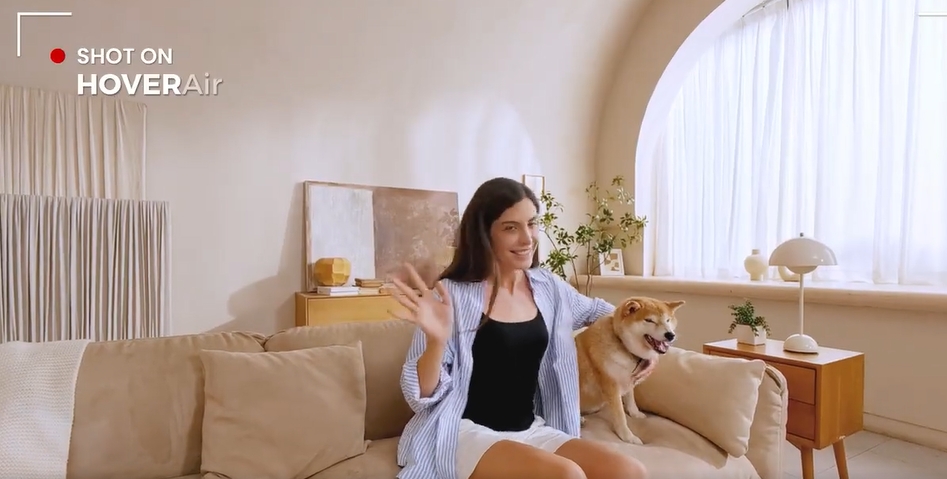
HoverAir Technology’s newly released HoverAir VERSA aims to break these boundaries with a modular hardware design. It is neither merely a selfie drone nor limited to a handheld gimbal; thanks to a detachable flight module, it seamlessly switches between handheld ground use and autonomous aerial flight. Coupled with an on-device AI imaging system, it targets travel vloggers, solo short-form video creators, and outdoor enthusiasts.
I. Appearance and Modular Design: Instant Switching Between Shooting Modes
The core innovation of the HoverAir VERSA is its integrated modular structure. In its flight configuration, the unit weighs under 250g, exempting it from mandatory registration in China and most overseas regions, thereby significantly lowering the barrier to entry for aerial photography.
Once the external protective flight frame is removed, the core unit functions as a standard 3-axis mechanical gimbal camera, comparable to mainstream pocket gimbal devices. The body features a small touchscreen, a dedicated record button, and a control joystick. The gimbal provides physical stabilization across pitch, roll, and yaw axes—effectively counteracting shake during walking or jogging—making it ideal for daily vlogs, venue reviews, and close-up portraiture. An RGB status light strip on the gimbal neck provides real-time feedback on recording, AI tracking lock, and standby status.
Aerial Flight Mode (Attaching the protective wing module)
Assembly is completed in a single step by aligning the rear contact points and snapping the module into place, instantly transforming the device into an autonomous flying camera. The propellers are encased in a fully enclosed, open-structure protective cage, significantly reducing the risk of collisions and ensuring safer operation near grass, trees, or crowds. It supports palm-based takeoff and landing, eliminating the need for a remote controller and removing the steep learning curve associated with operating traditional drones. Switching modes takes only a few seconds, eliminating the need to carry two separate devices for outdoor shoots and significantly reducing the burden on your backpack—a key advantage that sets VERSA apart from the DJI Osmo Pocket series and HoverAir’s previous X1 drone.
II. AI Imaging Capabilities: A Fully Automated Photography Assistant for Solo Creators
As a hardware device centered on AI-powered intelligent shooting, VERSA’s core competitive edge lies in its proprietary on-device AI tracking engine, which empowers both handheld and aerial flight modes.
- Seamless AI Subject Tracking & Intelligent Composition
Whether shooting handheld or tracking a subject from the air, the camera automatically recognizes human figures and maintains a continuous lock on the subject. Algorithms adjust the gimbal angle in real-time and automatically handle composition, keeping the person centered in the frame. This allows for the stable production of dynamic, third-person perspective videos during activities like hiking, cycling, or jogging—without the need for assistance from others. - 10+ Intelligent Automated Camera Movement Scripts
Flight mode features built-in cinematic flight path presets, such as parallel side-tracking, orbiting, pull-away ascents, and dive shots. With a single-tap start, the aircraft autonomously plans its flight path and adjusts speed; beginners can produce narrative-rich short video footage without needing to master complex aerial photography skills. - Signature Feature: 3D Worlds Spatial Reconstruction
This is a major highlight of the new product. While performing a 360° orbital flight, the aircraft uses onboard visual sensors to reconstruct the 3D space. Unlike standard orbital videos, this process generates 3D scene assets that can be freely explored. These assets are compatible with the new interactive content formats found on social media, offering fresh creative possibilities for travel and camping scenarios. - Image Quality
Equipped with an all-new image processor, the device features optimized dynamic range that balances highlight and shadow details, while supporting 4K video recording. Thanks to a 3-axis mechanical gimbal, stable footage is achieved in both handheld and aerial modes. Due to the device’s compact size and weight, the sensor specifications have not yet been disclosed; like most small portable cameras, it faces limitations in extreme low-light conditions, making it best suited for daytime or early-evening outdoor creative work. III. Advantages in Real-World Use and Objective Drawbacks
✅ Core Advantages
Dual-purpose, ultra-portable: Covers both close-range ground shots and long-range aerial views; lightweight gear for solo creators;
Zero barrier to entry: No pilot’s license or remote controller required; fully automated AI shooting allows beginners to get started instantly;
Enhanced safety: Fully enclosed propeller guard, ideal for close-proximity shooting during camping, hiking, or family trips;
Flexible form factor: Handheld gimbal mode for indoors; quick assembly for immediate takeoff in open outdoor spaces; adaptable to diverse scenarios.
⚠️ Current Limitations (Based on official data and preliminary testing)
Battery life constraints: Power is consumed independently in handheld and flight modes; flight-mode battery life is on par with mainstream pocket drones, so spare batteries are recommended for extended shoots;
Limited wind resistance: Lightweight body design makes long-distance flight in strong winds inadvisable;
Image quality limits: Positioned as a consumer-grade portable device rather than a professional camera; unlikely to meet the demands of high-end commercial productions;
Full specifications and pricing not yet officially announced; room for future firmware optimization remains to be seen.
IV. Competitive Positioning Analysis
The portable imaging market is currently clearly segmented:
Pure handheld gimbals (e.g., DJI Osmo Pocket series): Limited to ground-level shooting; lacks aerial perspectives;
Autonomous flying cameras (e.g., DJI Neo, HoverAir X1): Capable only of aerial photography; requires a separate camera for ground shots;
HoverAir VERSA fills the gap between these two categories. Its target audience is clearly defined: content creators, travel enthusiasts, and solo outdoor creators who prefer not to carry multiple devices.
If you frequently go on short trips, camp, or document outdoor sports and want a device that handles both vlog-style selfies and third-person aerial shots, the VERSA is currently the only mature solution on the market combining a gimbal and a drone; however, if you prioritize extreme aerial flight times or ultra-long-range capabilities, it may not be the optimal choice.
V. Summary
At its core, the HoverAir VERSA is not merely an “upgraded drone,” but an all-in-one AI-powered portable imaging system. Its modular, dual-form design solves a long-standing pain point for solo creators: the inability to easily capture both ground-level and aerial shots.
Leveraging mature autonomous flight AI algorithms, a fully protected airframe, and a minimalist user interface, it significantly lowers the barrier to creating cinematic short-form videos. Rather than attempting to rival the extreme image quality of professional-grade gear, it pioneers a new category of lightweight, portable content creation through innovative hardware design.
For everyday creators, there is no longer a need to choose between a handheld gimbal and a drone; a single VERSA unit allows you to capture the magic of daily life in your hand while also taking to the skies to survey the scenery.
Recommended for: Travel vloggers, outdoor enthusiasts, solo short-video creators, and camping enthusiasts.
Not recommended for: Professional aerial cinematographers, those seeking ultimate low-light image quality, or users who frequently fly in strong wind conditions.
Leave a Reply