One-sentence verdict: If Moore Threads can prove that a domestic GPU manufacturer can build a credible consumer AI hub, the MTT AICUBE could redefine what a smart home centerpiece looks like—though at $1,380, it is betting that enthusiasts will pay premium prices for unproven integration.
Quick Summary
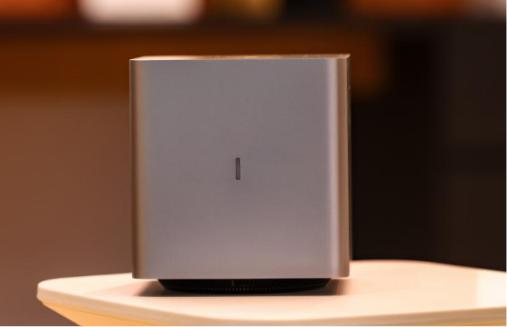
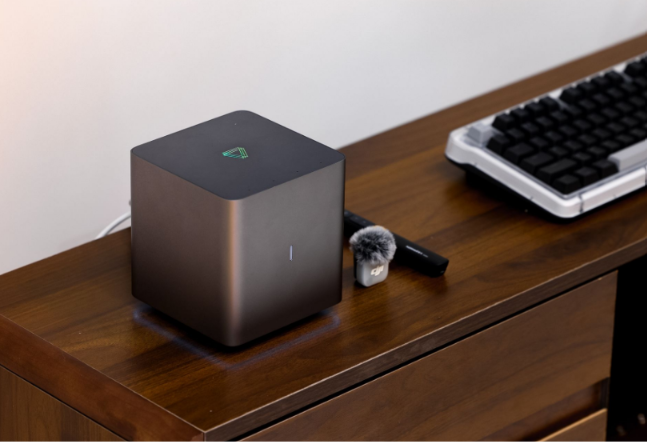
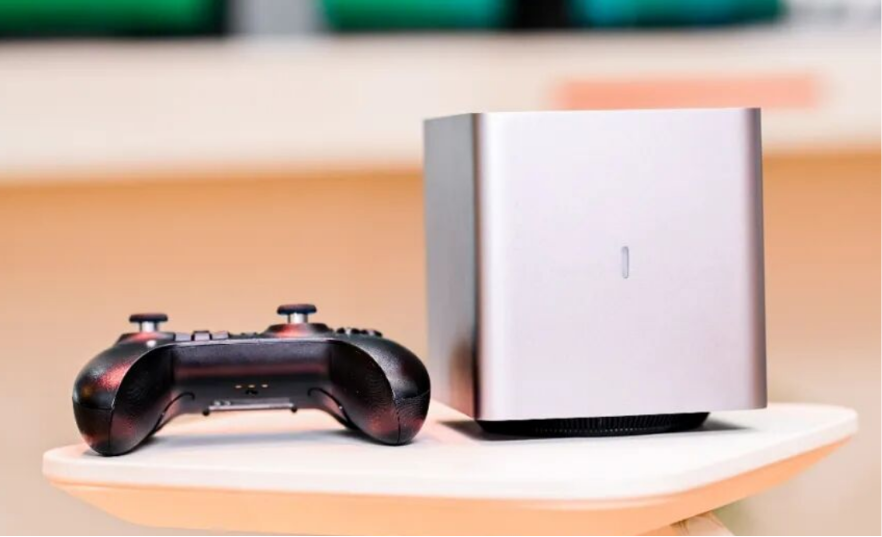
On June 18, 2026, Moore Threads officially opened pre-orders for the MTT AICUBE home AI hub on JD.com. The device integrates AI PC, all-flash AI NAS, and smart speaker capabilities through built-in universal AI agent “Xiaomai.” Powered by the self-developed “Changjiang” intelligent SoC with 50 TOPS on-device compute, it supports cross-app control for 36+ applications. Pricing starts at 9,999 RMB ($1,380) for the 16GB+1TB configuration and 10,999 RMB ($1,520) for 32GB+1TB. This marks the first time a domestic GPU manufacturer has targeted consumer home scenarios with an on-device AI computing product.
What Happened
Moore Threads built its reputation as a domestic GPU challenger, developing graphics processors as alternatives to NVIDIA and AMD in the Chinese market. The MTT AICUBE represents a dramatic strategic pivot—from enterprise and government GPU sales to consumer home electronics.
The product architecture fuses three traditionally separate categories into one chassis. As an AI PC, it provides local compute for AI workloads without cloud dependency. As an AI NAS, it offers all-flash network-attached storage with intelligent classification and retrieval. As a smart speaker, it delivers voice-controlled home management. The unifying layer is “Xiaomai,” a universal AI agent capable of understanding natural language commands and executing them across all three domains.
The “Changjiang” SoC is Moore Threads’ self-developed silicon, delivering 50 TOPS of on-device AI compute. This positions the chip in the mid-range of edge AI processors—sufficient for local inference but not competing with high-end server GPUs. The 36+ supported applications for cross-app control represent the practical demonstration of Xiaomai’s capability: rather than opening individual apps, users issue commands like “find that document from last Tuesday and send it to the TV,” with the AI agent coordinating file retrieval, content transfer, and display output.
The 618 launch timing is strategically significant. China’s mid-year shopping festival provides guaranteed traffic and media attention, while the “first domestic GPU consumer product” narrative generates patriotic technology interest. Moore Threads is leveraging both commercial momentum and national sentiment.
Why It Matters
The MTT AICUBE matters for three reasons beyond its hardware specifications.
First, category creation. “Home AI hub” does not exist as a recognized product category. Existing smart home ecosystems—Xiaomi, Huawei, Apple HomeKit—organize around distributed devices with cloud intelligence. Moore Threads is proposing a centralized, on-device alternative where all computation happens locally. If this architecture gains traction, it challenges the cloud-dependent models that currently dominate.
Second, domestic semiconductor validation. Moore Threads’ GPUs have faced skepticism about performance and software compatibility. A consumer product that actually ships, functions, and satisfies users would provide tangible proof that domestic GPU technology can transcend enterprise niche applications. The 50 TOPS figure is modest compared to NVIDIA’s offerings, but entirely local processing eliminates latency and privacy concerns that cloud solutions cannot address.
Third, integration ambition. AI PC, NAS, and smart speaker are each mature categories with established leaders. Combining all three risks delivering none well. Yet if Moore Threads succeeds in seamless integration—where the AI agent genuinely coordinates across storage, compute, and voice interaction—it creates a user experience no single-function device can match.
The pricing strategy signals confidence. At $1,380-$1,520, the MTT AICUBE sits above most smart speakers and NAS devices, approaching entry-level MacBook territory. This is not mass-market pricing; it targets technology enthusiasts and heavy home digitization users who value integration over individual component excellence.
Impact Analysis
Market impact: The MTT AICUBE could catalyze a “home AI hub” category if sales demonstrate demand for centralized, on-device intelligence. Competitors from traditional NAS manufacturers (Synology, QNAP) to smart speaker leaders (Amazon, Google) might respond with integrated offerings. The domestic GPU angle also pressures international chip vendors to accelerate China-market localization.
Consumer impact: Tech enthusiasts gain a locally-controlled alternative to cloud-dependent smart home ecosystems. For privacy-conscious users, on-device processing means voice commands and personal data never leave the home network. However, the premium pricing limits accessibility, and early adopters face ecosystem immaturity risks.
Industry impact: Moore Threads’ consumer pivot may inspire other domestic semiconductor companies to explore end-user products rather than remaining component suppliers. The “Changjiang” SoC’s success or failure in real-world home scenarios provides data points for China’s broader edge AI chip development.
What’s Next
Several variables will determine whether the MTT AICUBE establishes lasting market presence:
First, cross-app control reliability. Supporting 36 applications is impressive on paper, but maintaining compatibility as those apps update independently creates ongoing engineering challenges. Users will judge Xiaomai by whether “it just works” or requires constant troubleshooting.
Second, NAS performance against established players. All-flash storage is fast, but Synology and QNAP have years of software refinement in data management, backup workflows, and third-party app ecosystems. Moore Threads must match or exceed these capabilities to justify the premium.
Third, developer ecosystem growth. A home AI hub’s value increases with the number of connected devices and services it can control. Moore Threads needs to attract developers to build Xiaomai-compatible integrations, a challenge for a company without established consumer platform experience.
Fourth, production and delivery execution. Moore Threads has historically struggled with GPU availability and software maturity. Translating enterprise supply chain experience to consumer electronics—where user expectations for immediate functionality are far higher—presents operational risks.
Leave a Reply