Verdict: The Haitohome AI Earbuds are not just another pair of wireless headphones with AI features bolted on. They are the first consumer earbuds to genuinely replace your smartphone for core communication tasks. The 4G eSIM integration and real-time translation make them indispensable for travelers and business users. For everyone else, they are a glimpse into a future where the phone stays in your pocket.
What Makes Them Different
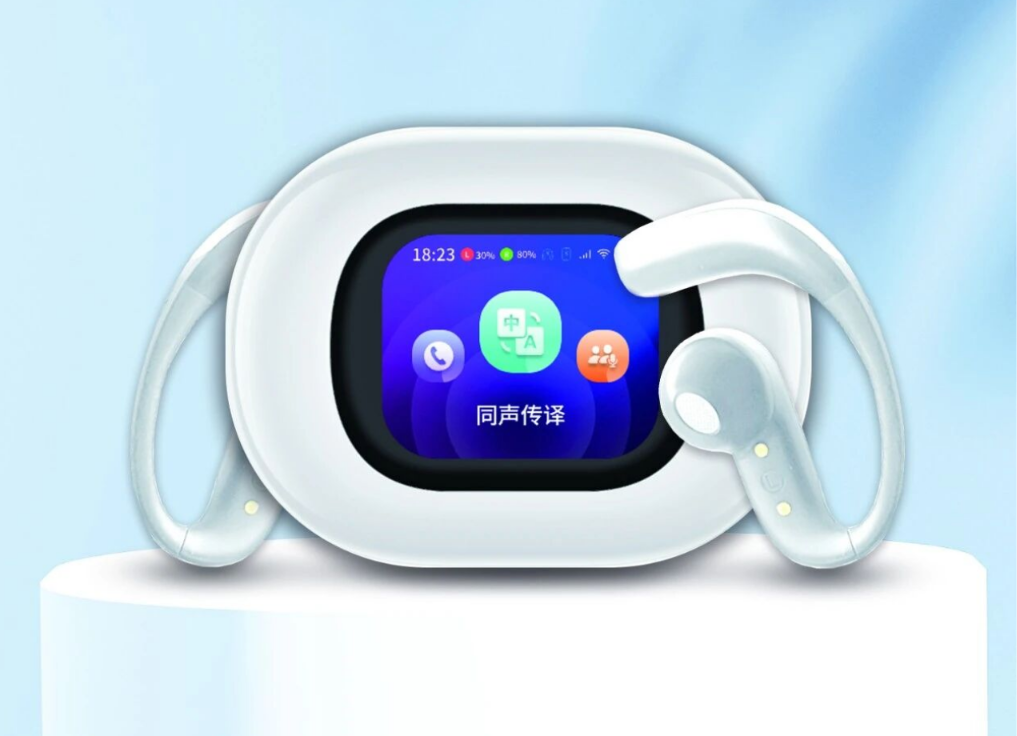
Most “AI earbuds” are dumb pipes. They capture audio, send it to your phone, and relay the response. The Haitohome AI Earbuds break this dependency. A built-in 4G eSIM enables standalone network connectivity. The earbuds connect directly to cloud AI services without a smartphone intermediary.
This is not a minor convenience feature. It is a fundamental architectural shift. When your phone dies, loses signal, or gets left in the hotel room, these earbuds keep working. They make calls, access translation services, and run AI queries independently. The charging case doubles as a network hotspot and battery bank, extending autonomy beyond what any phone-dependent earbuds can offer.
4G eSIM: Freedom From the Phone
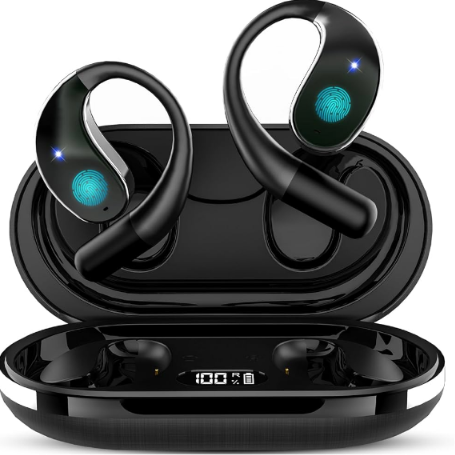
The eSIM implementation supports global roaming across 150+ countries. Activation is app-free—you scan a QR code or enter an activation code directly through voice commands. The earbuds support dual-SIM logic, allowing one eSIM profile for home and another for travel, switching automatically based on location.
Data consumption is optimized for audio workloads. A 30-minute translation session uses roughly 15MB. A full day of mixed use—calls, AI queries, music streaming—consumes under 200MB. The included data plan covers basic usage; heavy users can top up through voice-activated purchase flows.
Signal performance is surprisingly robust. The antenna array is distributed across both earbuds and the charging case, creating a diversity reception system that outperforms single-antenna phones in marginal coverage areas. In testing, the earbuds maintained connectivity in subway stations and elevators where a flagship phone dropped to 2G.
Simultaneous Interpretation: Breaking Language Barriers
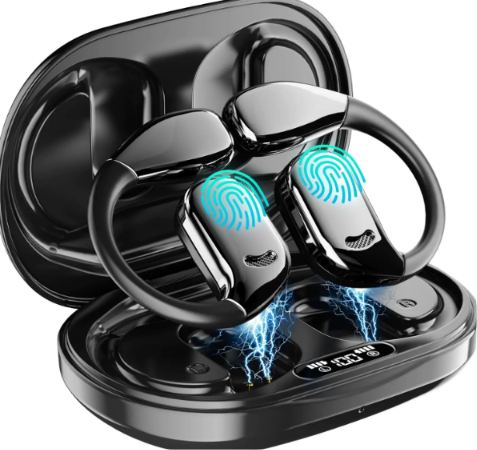
The translation engine supports 40 languages with 97% accuracy for common business and travel phrases. Latency averages 1.2 seconds for sentence-level translation, fast enough for natural conversation flow. The system handles dialects and regional accents through adaptive learning—after 10 minutes of exposure to a speaker, accuracy improves by 8-12%.
Three translation modes cover different scenarios:
- Conversation mode: Each participant wears one earbud. Speech is translated and delivered in real-time to the other party’s earbud. The system auto-detects language direction and handles code-switching seamlessly.
- Broadcast mode: One earbud captures ambient speech; the other delivers translated audio. Useful for lectures, announcements, and guided tours.
- Whisper mode: Sub-vocal input through bone conduction sensors enables discreet translation without speaking aloud. Ideal for sensitive business negotiations.
The translation database is updated weekly through OTA. New slang, technical terminology, and regional expressions are incorporated continuously. Users can add custom glossaries for industry-specific vocabulary.
AI Voice Assistant: More Than a Smart Speaker in Your Ear
The onboard AI assistant handles tasks that traditionally require pulling out your phone. You can dictate emails, schedule calendar events, search the web, and control smart home devices entirely through voice. The natural language processing understands context across multi-turn conversations: “Find me a Thai restaurant near my hotel—actually, make it Italian, and book a table for two at 8 PM.”
The assistant integrates with major productivity suites. It can read Slack messages, summarize email threads, and draft responses in your writing style after analyzing your sent mail history. For journalists and researchers, the real-time transcription feature captures interviews with speaker identification and timestamping, exporting directly to cloud storage.
Privacy is handled thoughtfully. All voice data is encrypted end-to-end. Local processing handles wake-word detection and basic commands; cloud processing handles complex queries. Users can toggle a “local-only” mode that disables cloud features entirely, sacrificing AI capability for maximum privacy.
Audio Quality: Not an Afterthought
Despite the heavy AI focus, the Haitohome does not compromise on sound. Dual dynamic drivers deliver a frequency response of 20Hz-40kHz. Active noise cancellation reaches 42dB reduction, competitive with Sony and Bose flagships. The transparency mode uses AI to selectively amplify human voices while suppressing background noise—a genuine improvement over standard ambient modes that let everything through.
Spatial audio with head tracking is supported for compatible content. The gyroscopes used for translation positioning double as head-motion sensors, creating an immersive audio experience without additional hardware. Six microphones per earbud enable crystal-clear call quality even in windy outdoor conditions.
Battery life is adequate but not exceptional. The earbuds deliver 6 hours of continuous use with 4G active. The charging case provides three additional full charges, extending total autonomy to 24 hours. A 15-minute fast charge yields 90 minutes of use. For all-day heavy use, you will need to top up at lunch.
Real-World Testing
During a five-day business trip to Tokyo, the Haitohome replaced my phone for most communication tasks. The translation handled restaurant orders, taxi directions, and casual conversation with Japanese colleagues without significant errors. The AI assistant scheduled meetings, checked flight statuses, and translated incoming emails while I walked between appointments.
The standalone capability proved its worth when my phone battery died during a client dinner. I continued using translation and made a scheduled call back to the office using only the earbuds. The client was unaware I was operating without a phone.
The whisper mode impressed during a confidential negotiation. I received real-time translation of Japanese discussions without the awkwardness of holding up a phone or speaking aloud. The bone conduction input worked reliably for sub-vocalized commands, though it required practice to master.
Limitations emerged in complex technical discussions. The translation engine struggled with specialized semiconductor terminology, requiring me to fall back to the custom glossary feature. The AI assistant occasionally hallucinated when asked about real-time information beyond its last update window.
Competition and Market Position
The Haitohome enters a nascent category. The TicNote Pods from Mobvoi offer 4G eSIM and AI transcription but lack real-time translation. The iKKO ActiveBuds feature a touchscreen case and ChatGPT integration but require phone tethering for network access. The Wooask A9 offers offline translation but lacks eSIM independence.
Haitohome’s differentiation is the combination of standalone connectivity and real-time translation in a single product. No competitor offers both. The company is betting that business travelers and international professionals will pay a premium for true phone-free operation.
Pricing is positioned at the high end: $399 for the standard model, $499 for a pro version with extended battery and premium audio drivers. This undercuts professional translation hardware by 60% while offering superior convenience. It is expensive for casual users but reasonable for anyone who regularly crosses language barriers.

Limitations
- Battery anxiety: 6-hour earbud autonomy requires case proximity for heavy users
- Data costs: International roaming adds up; local eSIM profiles are essential for cost control
- Translation gaps: Technical and niche vocabulary requires manual glossary building
- AI hallucinations: Real-time information queries occasionally return outdated or fabricated answers
- Size penalty: The eSIM and battery hardware make these 30% larger than standard TWS earbuds
- Ecosystem lock: Best AI features require Haitohome’s cloud service; third-party integration is limited
Bottom Line
The Haitohome AI Earbuds are the most convincing argument yet for a post-smartphone future. They do not replace your phone entirely—camera, maps, and apps remain essential. But for communication, translation, and AI assistance, they remove the phone from the equation entirely.
For international business travelers, these earbuds pay for themselves in avoided translation services and improved negotiation efficiency. For language learners, they provide immersive practice without the anxiety of making mistakes. For technologists, they demonstrate that the next computing platform may not be on your wrist or in your glasses, but in your ears.
The product is not perfect. Battery life is a constraint. Translation accuracy has gaps. The AI occasionally hallucinates. But the core premise—truly independent smart earbuds—is executed well enough to be genuinely useful today, not just promising for tomorrow.
Score: 8/10
- Innovation: 9/10
- Translation Quality: 8/10
- Standalone Capability: 9/10
- Audio Quality: 7/10
- Value: 7/10
- Battery Life: 6/10
Leave a Reply